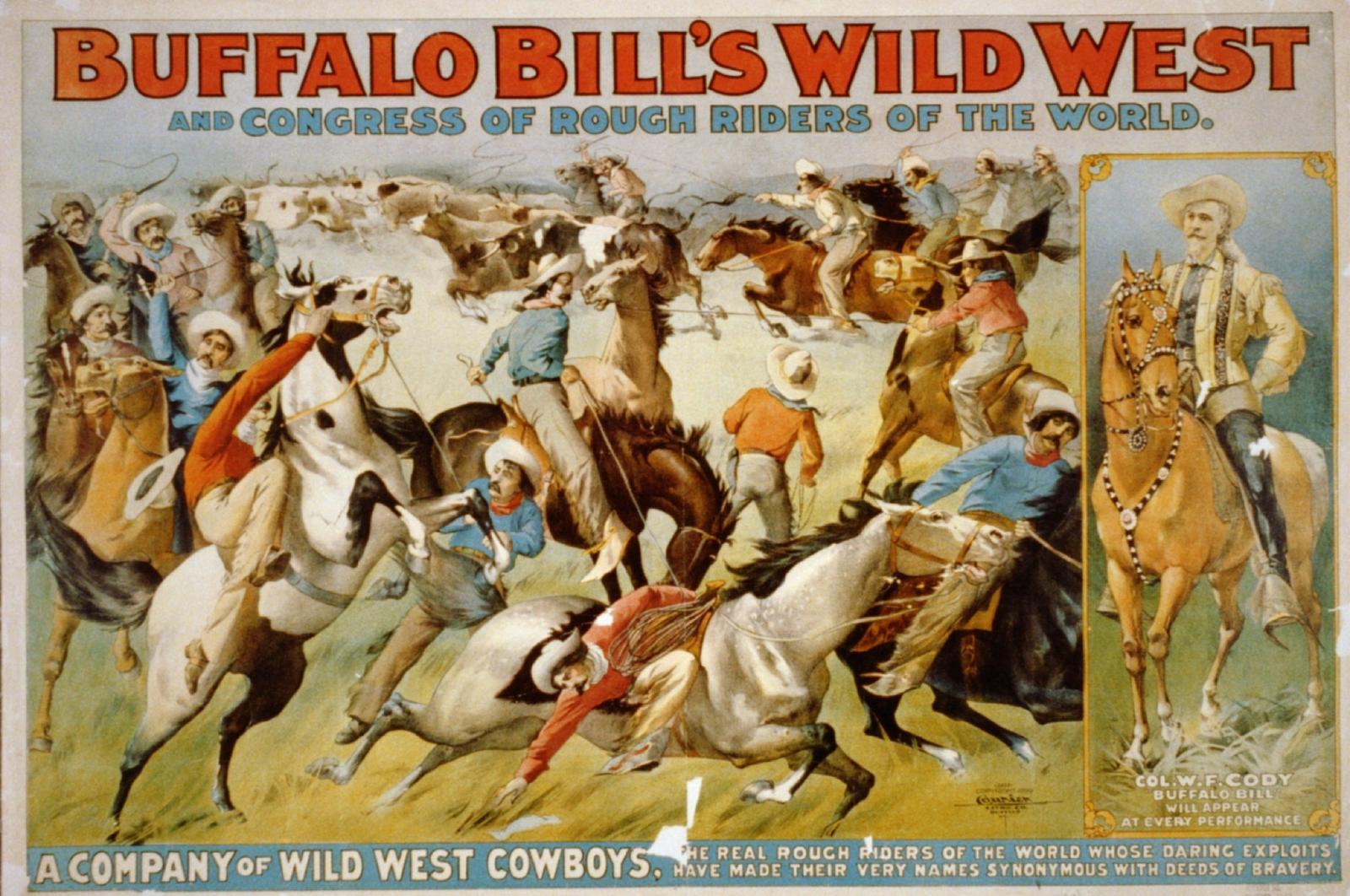
Wild West shows were hugely popular in the days of the Old West, and they still draw crowds today. The American frontier captivated people in the eastern United States, and traveling shows brought it to their towns. See the historic shows further down this page.
The traveling show lost its wide appeal once the movie industry began. Western movies took the place of live Wild West shows, because far more people could see them on a regular basis.
Other forms of entertainment became available as time went on. People around the world took an interest in Western art, and museums started featuring programs on the subject. All of this drew people’s interest away from the Wild West show.
Today these shows are a specialty form of amusement. You’ll find them at festivals, rodeos, historic events, and county or state fairs. They are a regular feature in old Western towns such as Tombstone, Arizona.
Wild West Shows in Tombstone
Tombstone’s Wild West shows are popular with visitors, and several are staged in town. Here are our suggestions.
Shows With an Admission Fee
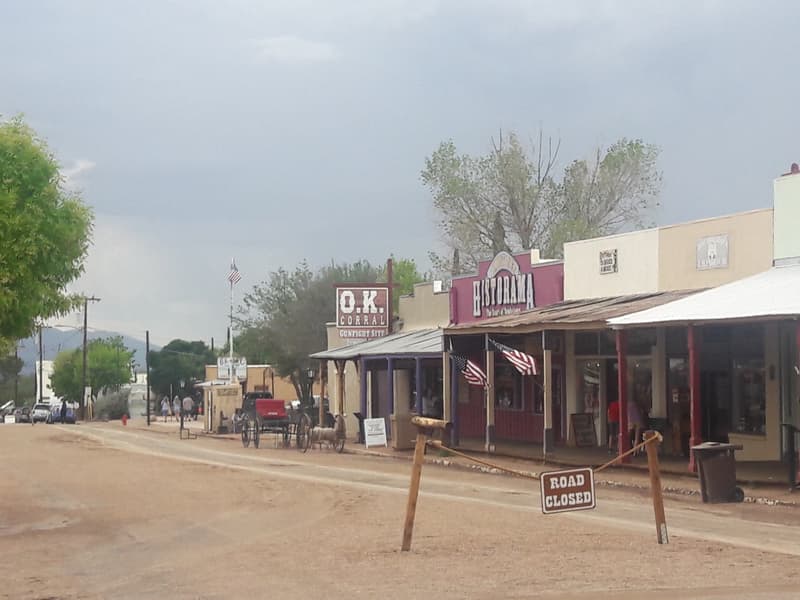
- The O.K. Corral is a must-see when you’re in town. Short skits go over the Earps versus the Cowboys gunfight. It’s on Allen Street, between 3rd and 4th. Learn more about the gunfight at the O.K. Corral.
- The Tombstone Cowboys perform at the Old Tombstone Western Theme Park. The entrance fee covers their gunfights, billed as “World Famous Gunfights.” To find the entrance, go south to the end of 4th Street and cross Toughnut Street.
- The Saloon Theater presents historical gunfights at 109 South 3rd Street.
Free Shows on Allen Street
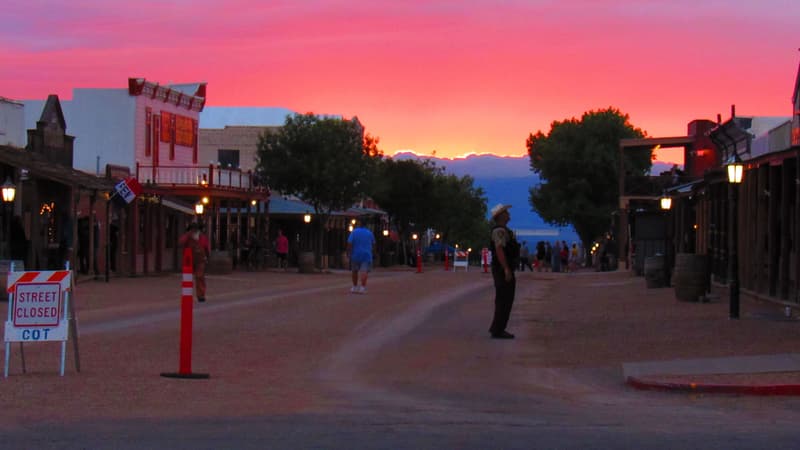
The Tombstone Vigilantes, a volunteer group that has staged street shows since 1946, put on free gunfighter skits on Allen Street on certain Sundays. Other groups, such as The Wild Bunch, have staged hangings and living-history gunfights near the O.K. Corral. Schedules change, so see our current Tombstone events guide before you go. Have your camera ready.
Wild West Shows Elsewhere in the U.S.
- Great American Wild West Show: Don and Sharon Endsley started this traveling arena production in 1996, and the Endsley family still takes it to fairs and livestock shows.

- Springtown, Texas: the Wild West Festival fills the town square each September with a parade, a gunfighters exhibit, children’s activities and hundreds of vendors.
- Hays, Kansas: a great Old West town. Its Fourth of July Wild West Festival ran for three decades but has come to an end. The town’s historical downtown walking tour is still worth doing.
- Branson, Missouri: Silver Dollar City has staged a seasonal Wild West show featuring trick roper A.J. Silver, with sharpshooters, trick riders and more.
- Lagniappe Productions: a professional Western entertainment company offering Old West comedy, stunts, saloon skits and costumed cowboys, gunfighters and saloon girls for events. They also run the murder mysteries at the Texas Star Dinner Theater in Grapevine, Texas.
- Fort Worth, Texas: the historic Cowtown Coliseum in the Stockyards has staged Pawnee Bill’s Wild West Show, a reenactment based on the original touring show, with trick roping, shooting, riding and singing cowboys. Check the Cowtown Coliseum calendar for current shows.
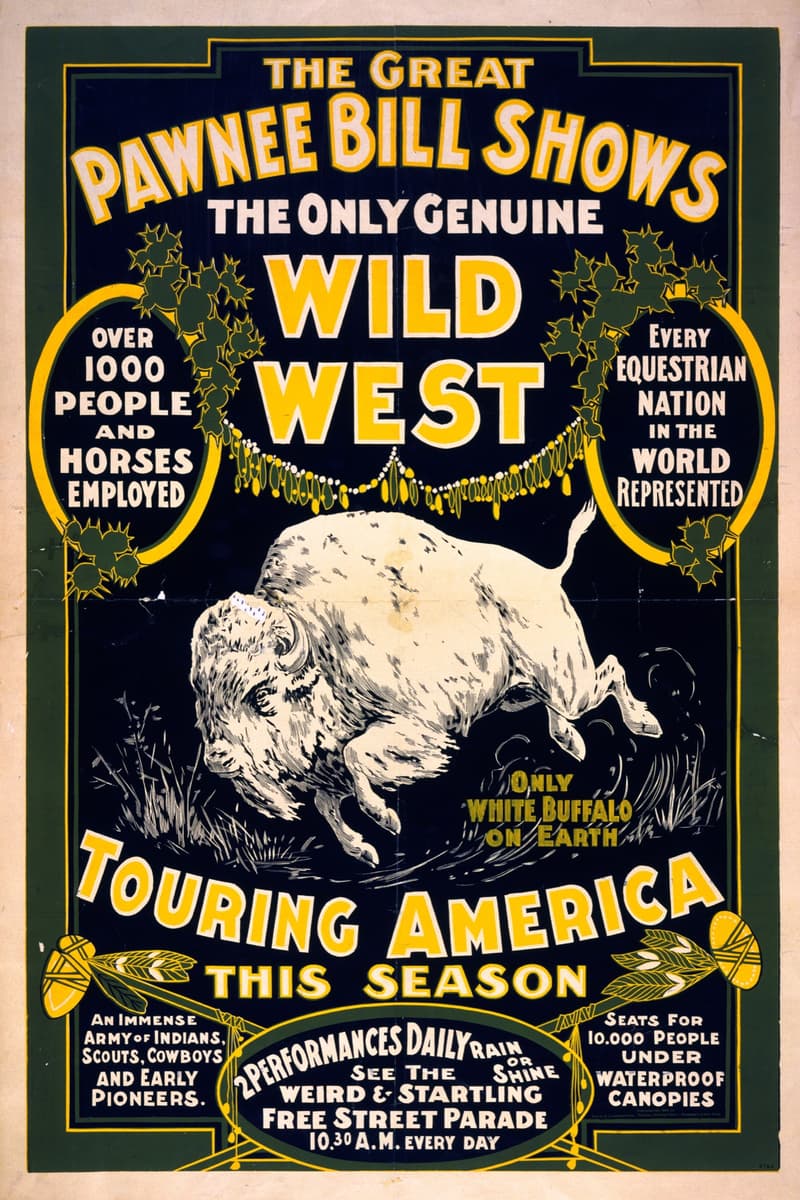
Historic Wild West Shows
Buffalo Bill’s Wild West
William Frederick Cody was born in Le Claire, Iowa, on February 26, 1846. His father died when he was 11, and he went to work for a freight company. He later claimed to have ridden for the Pony Express as a teenager, though historians doubt it.
He got his nickname when he was hired to supply buffalo meat to Kansas Pacific Railroad crews. His good aim kept the crews fed, and his reputation spread. He went on to scout for the army and guide hunting parties from the East.
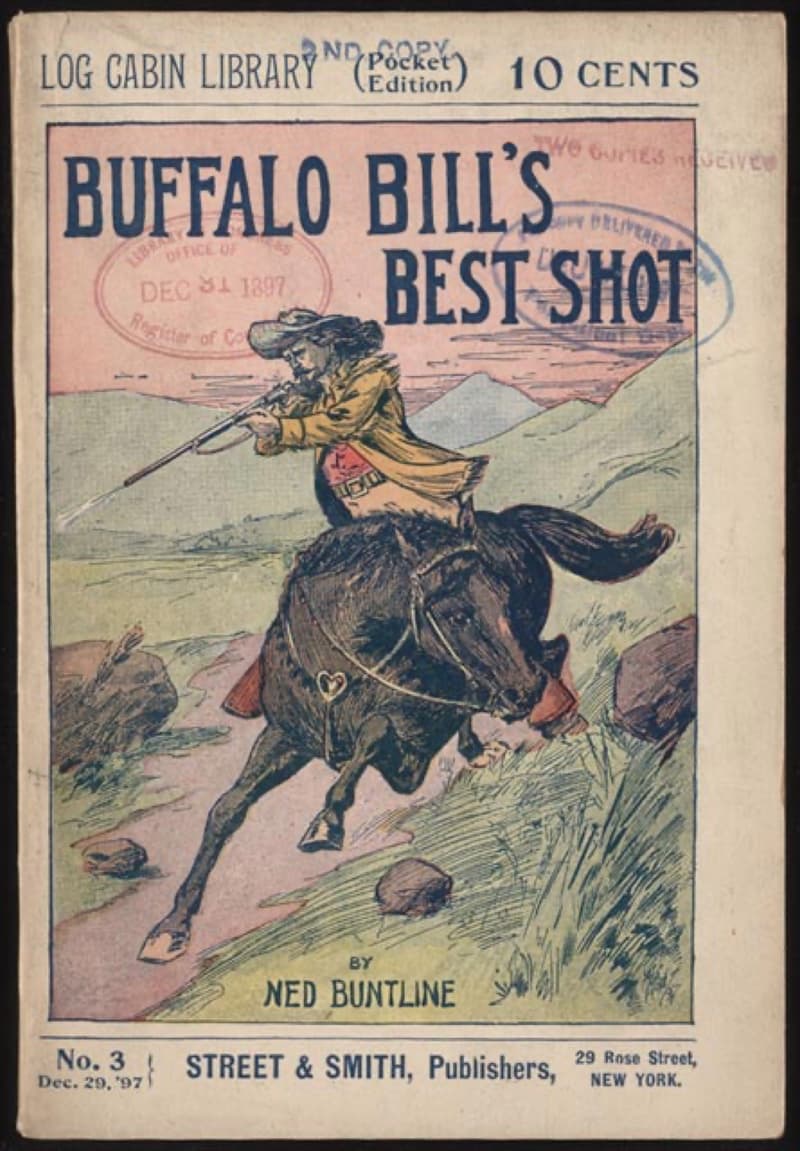
Ned Buntline wrote a dime novel about him, which brought him more fame. The story became a play, and in 1872 Cody began playing himself on stage. That started him thinking.
In 1883 he launched Buffalo Bill’s Wild West, which created a new form of entertainment and is still the most famous show of its kind. It became so popular that he was one of the best-known celebrities in the world. Imitators arose, but he dominated the field. He died in 1917 at the age of 70.
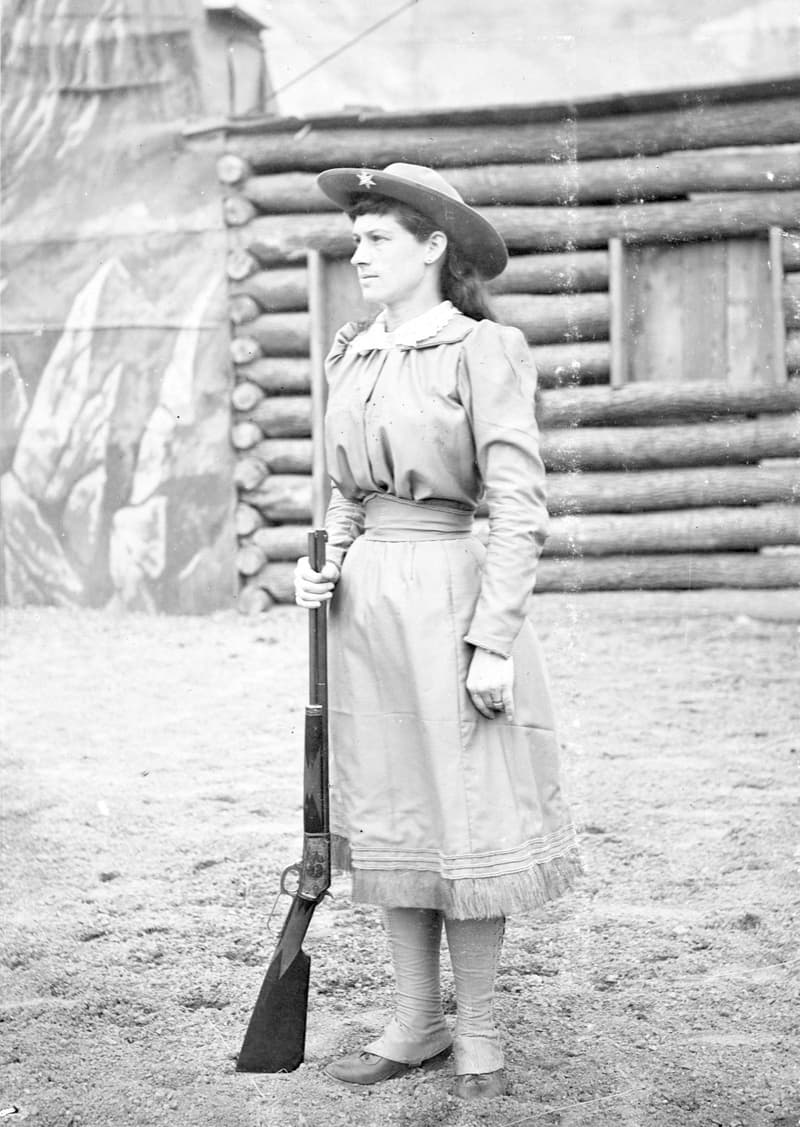
Tombstone’s Historic Wild West Shows
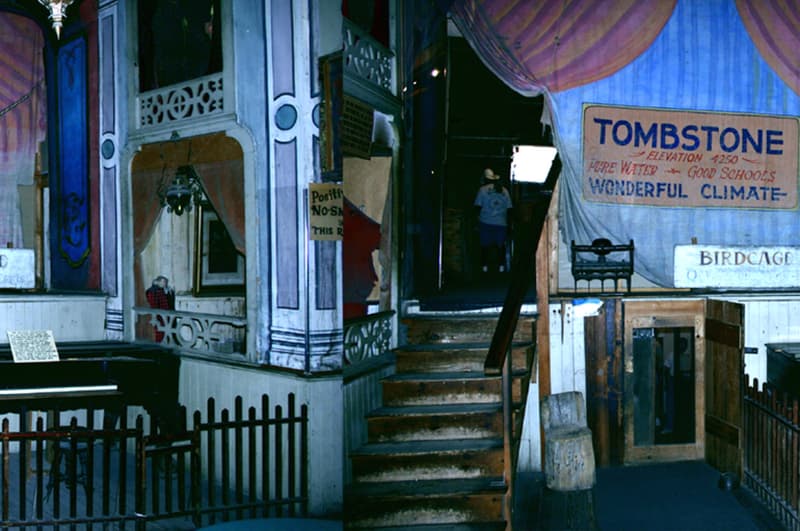
The Bird Cage Theatre was famous for its shows. Its doors opened at Christmastime in 1881, and the owners were Lottie and Billy Hutchinson. At first they presented family entertainment and Ladies’ Nights, but that soon proved a financial flop.
They switched to entertainment for the Wild West crowd: the Cow-boys, ranchers, range hands, miners, and saloon and brothel patrons. The acts the Bird Cage featured included:
- The Female Hercules, also known as the Lady With the Iron Jaw. Mlle. de Granville (born Alma Hayes) performed strength acts. She lifted heavy things with her teeth and placed a cannon on her shoulders.
- The Flying Nymph, a woman named Lizette who “flew” above the guests on ropes that carried her across the room.
- Mademoiselle Zazel, called “The Human Cannonball.” Her real name was Rossa Matilda Richter. Springs propelled her from a cannon across the room.
- Cross-dressing acts, with impudent and shockingly flashy humor, performed by men in flamboyant women’s clothing.
- The Human Fly, very popular in 1889. Scantily clad women wore special shoes that held them to ceiling rigging, and they walked upside down above the crowd. One time the rigging failed, and the woman fell to her death.
- The Happy Hottentots, who specialized in contorted dance moves, thrashing their legs and twisting their bodies.1
Traveling Shows That Came to Tombstone
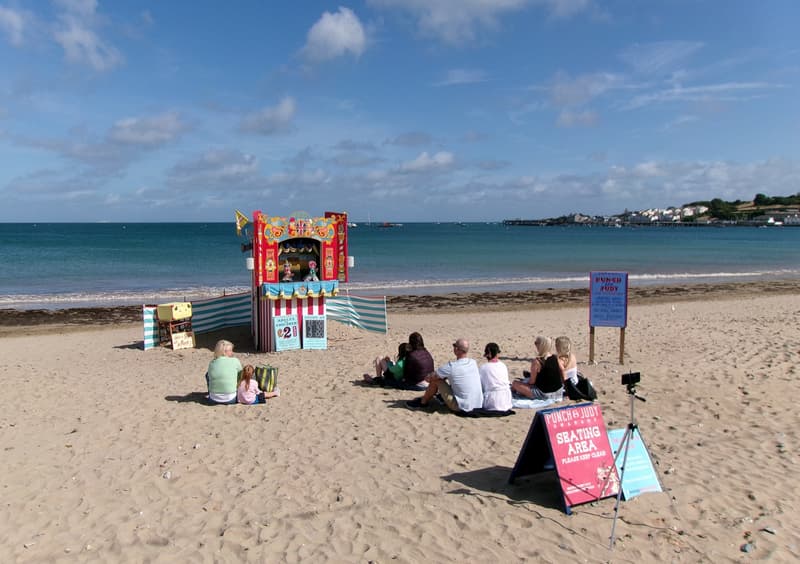
Punch and Judy
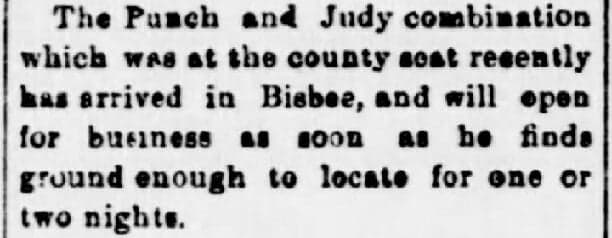
In 1898 Tombstone residents got a chance to enjoy the famous Punch and Judy puppet show. Kids and adults alike enjoyed the antics of these funny characters.
After finishing in town, the show moved on to Bisbee. We can be sure it drew a good crowd there too. See more about the history of puppet shows below.
Bagg’s Agitators
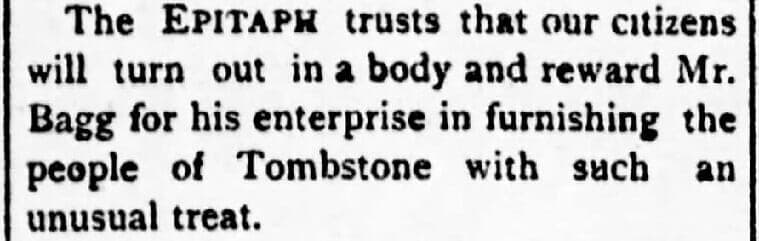
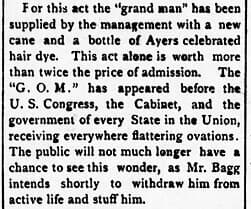
In May 1886 a group of performers came to town. Their leader, a Mr. Bagg, billed them as a “great, unapproachable, aggregation of living marvels.” He drummed up publicity by running curious items in the Tombstone Daily Epitaph, and the paper’s May 4 issue carried a large notice on page 3 for his show at City Hall.
Reserved seats cost 25 cents, general admission 10 cents, and children 5 cents.
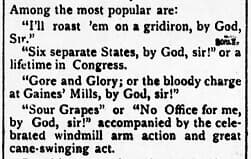
In his Epitaph publicity he described four of the acts in his “Greatest Show on Earth,” under the subtitle “Unprecedented Attractions at City Hall This Evening.” The four acts were:
- The Baboon
- The ASS (Asinus Americanus studendissimus)
- The Hay-Eating Man
- The Grand Old Man
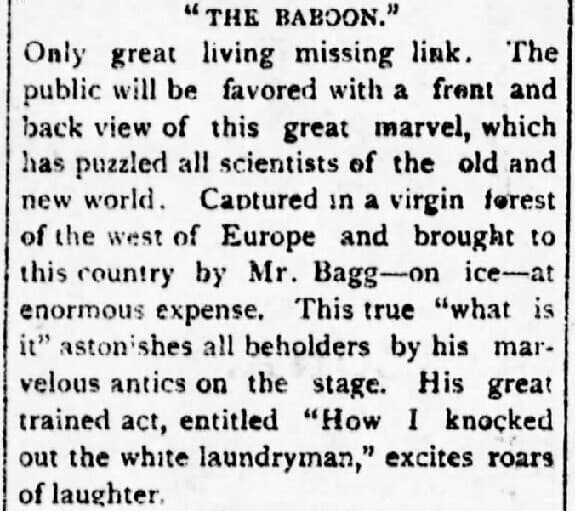
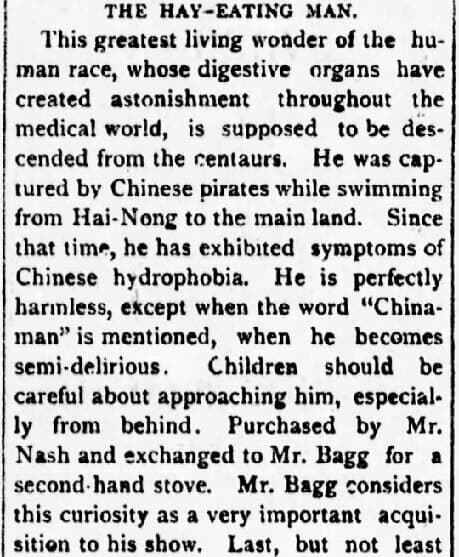
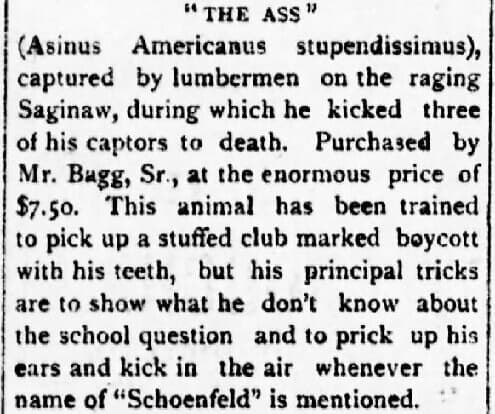
The Grand Old Man, and perhaps more of these acts, was likely some type of political satire. It’s difficult to research exactly what or whom Mr. Bagg was making fun of. If you have an idea, use our contact form to let us know. We’ll add the information here if you can send the details and the reference you found.
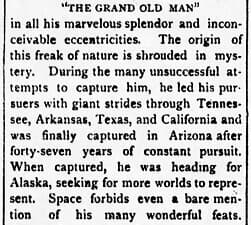
For most people who came to the shows, entertainment was the point. There was no television, no movies and no phones in those days.
Where Bagg’s Agitators Went Next
After Tombstone, Bagg’s Agitators moved on to other small towns in Cochise and Pima Counties. They were on their way to “Stone House, Contention, Pick ’em Up, Quijotoa, Galeyville, Dos Cabezas and other commercial centres.”
Some of these are now ghost towns. Others are hard to place. Here’s what we know from our research:
- Stone House: a gated community in the Sahuarita area of Pima County has this name. It may be named after a village there in the 1800s, but we haven’t found anything to show that. West of Tucson, the Yetman hiking trail passes a “Stone House,” but it’s a ruin from about the 1930s, not a historic town.
- Contention: a silver milling town of the 1880s on the San Pedro River, where ore from the Tombstone mines was processed. The railroad had a station there for a time, and many people traveled back and forth to Tombstone.
- Pick ’em Up: a little spot on the Charleston Road, between Charleston and Tombstone. A few residents lived there by a bar called The First Chance Saloon. It’s now private property, and no remains of the “town” exist. Read more about Pick ’em Up.
- Quijotoa: a silver mining town by Ben Nevis Mountain, west of Tucson. A fire destroyed what was left of it on June 19, 1889. The only public sign of it today is a historical marker on AZ 86.
- Galeyville: a silver mining boom town on the eastern slopes of the Chiricahua Mountains, in the southeastern corner of Arizona Territory. The Cowboys known around Tombstone often hung out there, particularly those who rode with Johnny Ringo and Curly Bill Brocius. Read our Galeyville history.
- Dos Cabezas: a small mining community that thrived in the late 1800s. It sits in the Dos Cabezas Mountains, southeast of Willcox, on AZ 186. Some of the historic buildings still stand.
Other American Traveling Shows
In the Old West, people were ready for any entertainment that came to town. When a traveling show arrived, word got around. The showman would set up and perform out of a wagon or, for a larger operation, a tent.
Posters went up around town. Barkers shouted slogans on the corners and in front of the show entrance, and before long a crowd gathered to hear the spiel. Buffalo Bill’s show drew huge crowds next to the 1893 Chicago World’s Fair, and many others followed with their own imagination and entrepreneurial spirit. What types of shows were there?
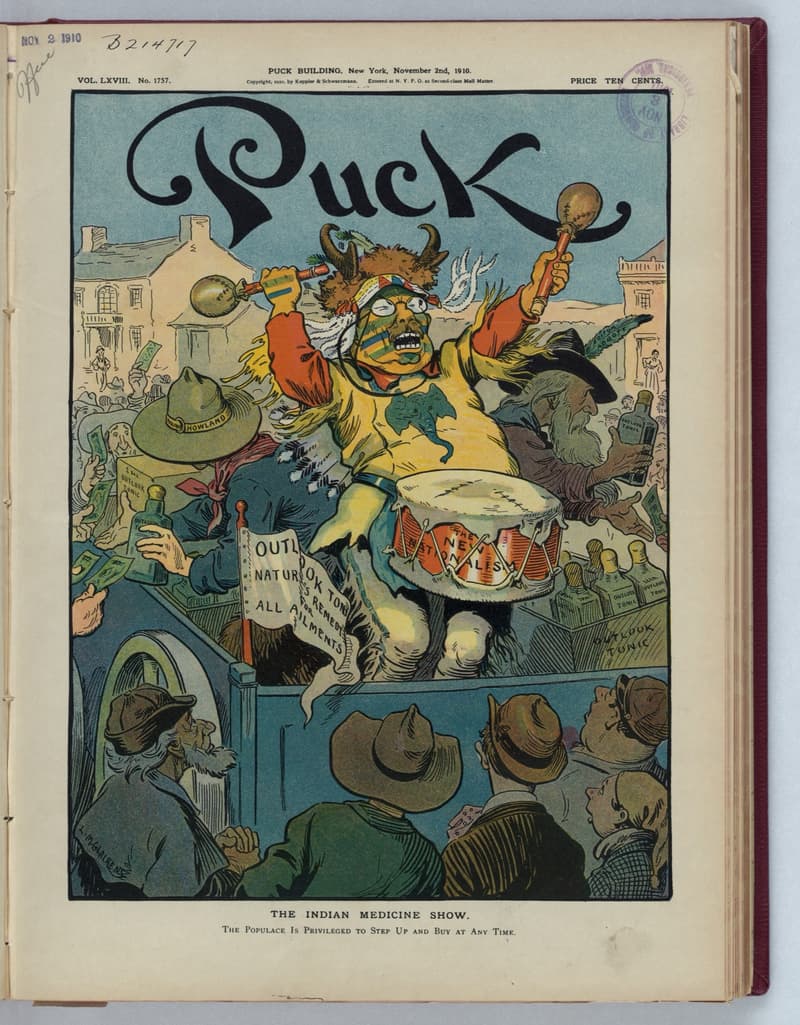
- Patent medicine shows: a barker sold “cure-alls” for whatever ailed you, along with an entertaining performance.
- P.T. Barnum’s Grand Traveling Museum, Menagerie, Caravan and Hippodrome: Barnum founded this traveling circus in 1870. Its prime draw was the “freak show,” which put people with deformities and disabilities on display. Many say they were exploited. It also showed animals with similar conditions.
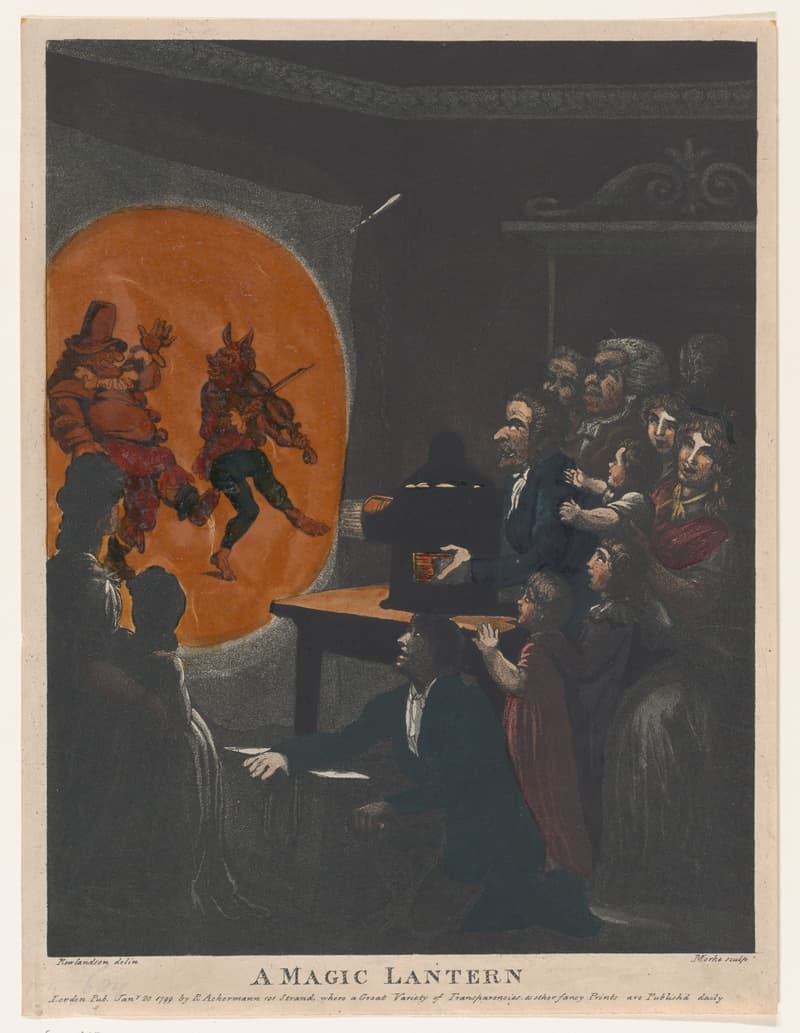
- Magic lantern shows: an early type of projector that showed still images on a screen.
- Puppet shows: the traveling Punch and Judy show was the most famous and most popular, loved by children and adults. It grew out of Italian puppetry in the 1600s and was soon adopted by the English. Americans caught on to this crazily funny act and began their own versions in the 1700s.2
- Vaudeville shows: a variety of acts, including singers, dancers, musicians, animal acts, comedians and acrobats.
- Burlesque shows: a variety show with a bit of lewdness, featuring dancing girls, strip-tease acts, comedians with off-color jokes and shocking novelty acts.
References
1 Agnew, J. (2011). Entertainment in the old west: Theater, music, circuses, medicine shows, prizefighting, and other popular amusements. Jefferson, NC: McFarland & Co. Inc.
2 McRobbie, L.R. (2013). Are Punch and Judy shows finally outdated? Retrieved 11/24/17 on www.smithsonianmag.com/arts-culture/are-punch-and-judy-shows-finally-outdated-10599519/
No comments yet