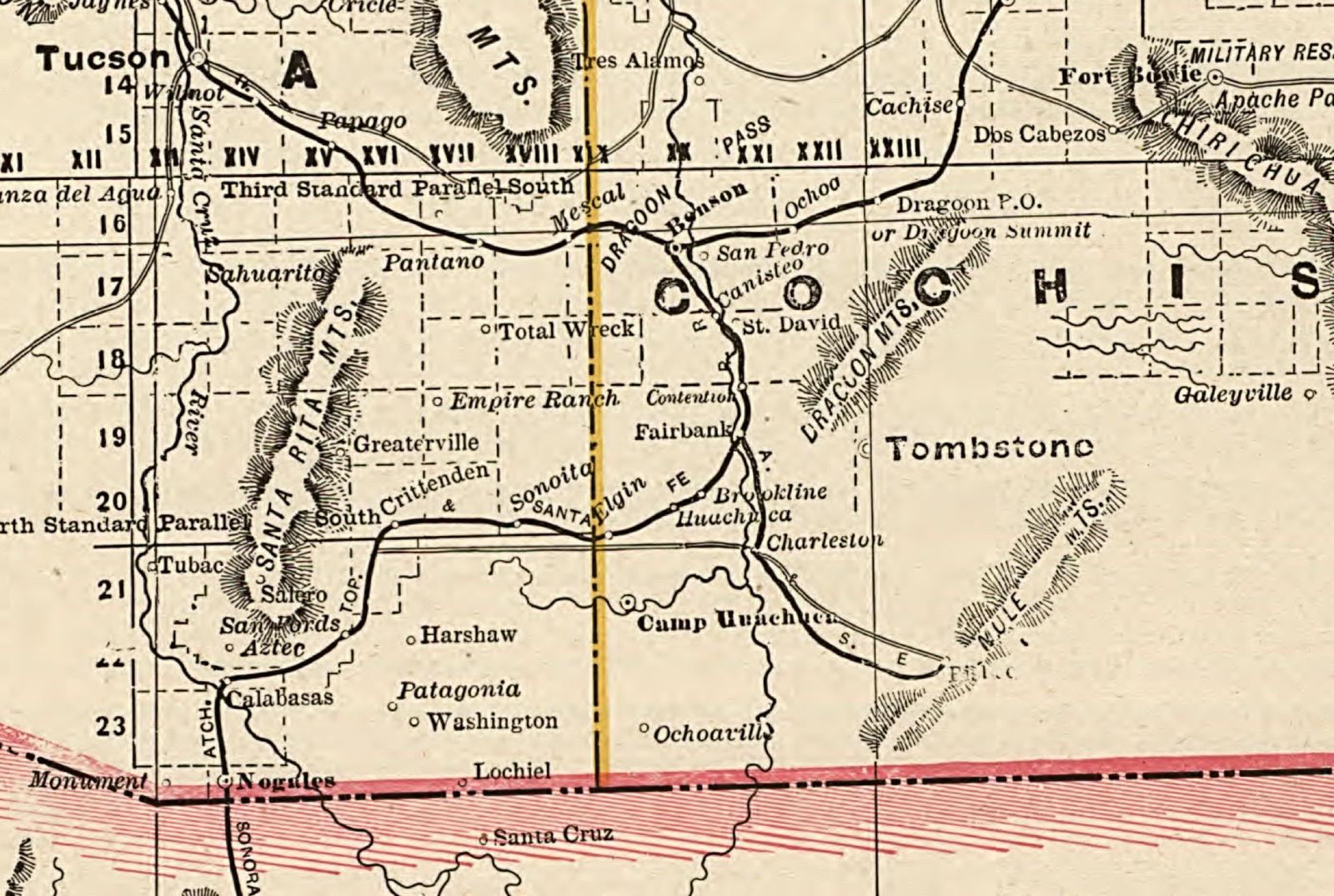
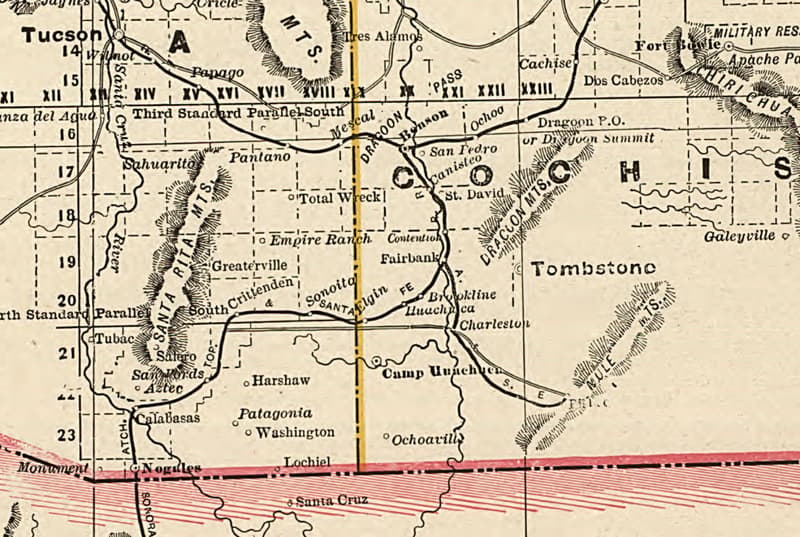
Johnny-Behind-the-Deuce was an 18-year-old gambler who shot a popular mining engineer in Charleston, Arizona, in January 1881. An angry mob chased him to Tombstone, and the story of how the lawmen saved him from a lynching made him famous.
Newspapers across the territory, and even in California, carried the story. Here is what they reported, what Johnny said, and the long-running argument over who really stood up to the mob.
The News Reports That Made Johnny Famous
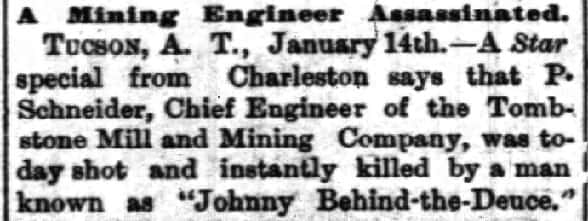
The January 15, 1881, edition of Tucson’s Citizen ran the headline ANOTHER MURDER. It named the shooter as P. Rourke and said he had shot the popular mining engineer P. Schneider in a Charleston saloon. It gave the official version first, then a reporter’s interview with “Rourke.”
As was common in newspapers of the day, the names were wrong. The shooter’s real name was Mike O’Rourke, and most later accounts call the victim Henry Schneider, chief engineer of the Tombstone Mining and Milling Company. O’Rourke was nicknamed “Johnny-Behind-the-Deuce” because his favorite faro bet was on the deuce. The paper called him a “petty gambler.”
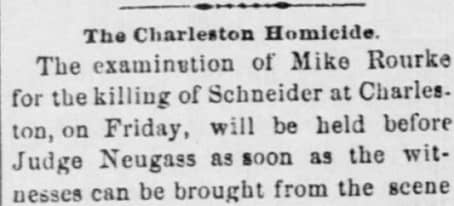
The Official Version, Telegraphed to Tucson
According to the official version, Schneider was eating at the hotel when he and Johnny “had a few words.” Johnny went out, got a gun, came back and said he’d “fix him when he came out.” He said it again, then went out and waited by the corral. (This telegram put the meal just after midnight; other accounts, including the Tombstone Epitaph‘s, put it at lunchtime.)
When Schneider finished eating and came out, he saw Johnny pointing his revolver. Schneider said, “…let me alone. I…wasn’t even talking to you at the table.” Johnny stepped forward and shot him in the head, killing him instantly.
Johnny ran toward the San Pedro River, but Constable George McKelvey caught him. Constable Bell got a wagon and a shotgun guard, and the three of them set off to take Johnny-Behind-the-Deuce to Tombstone.
Johnny’s Version
Johnny said he worked as a miner and barely knew Schneider. He was in the restaurant, had lunch and a few beers, and went over by the fireplace. He heard Schneider say sarcastically, “It must be cold.” When Johnny agreed, Schneider said, “I ain’t talking to you.” Johnny shot back, “You’re a little too smart, anyhow,” and started for the door, but Schneider followed him.
Johnny felt Schneider was about to hit him, but instead he cursed him, and Bob Petty held Schneider back. Johnny said they should take it outside, out of respect for the ladies in the restaurant. He went out and started walking away, then turned and saw Schneider following.
Johnny told him to stop the insults. Schneider again said they weren’t meant for him. Johnny said all right, and Schneider, getting angrier, asked what if they were, and kept coming closer.
Johnny said he then saw a knife handle in Schneider’s hand. Schneider kept pushing at him, and Johnny panicked and pulled the trigger. He “ran a little ways….I didn’t hardly know what I was doing, I guess.”
The Mob Follows to Tombstone
In his interview Johnny said that after the shooting “all the men rushed over from the mill and there was a terrible excitement.” The paper mentioned several times that Schneider was well liked and respected in Charleston.
Those men chased the constables taking O’Rourke the roughly 10 miles to Tombstone. They nearly caught up, but the constables made it to town. Johnny was held under guard in Jim Vogan’s Saloon, and the mob followed, wanting justice on its own terms.
Marshal Ben Sippy took charge with the help of his deputies. Johnny-Behind-the-Deuce was then taken to Benson under an armed posse that included Deputy Sheriff John Behan, and put on the train to Tucson to wait in jail for his trial.
Did Wyatt Earp Save Johnny From the Mob?
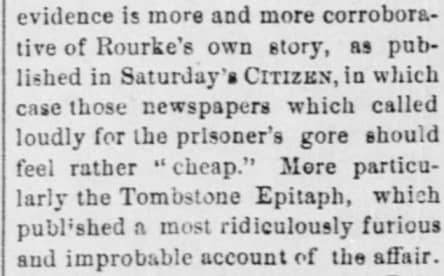
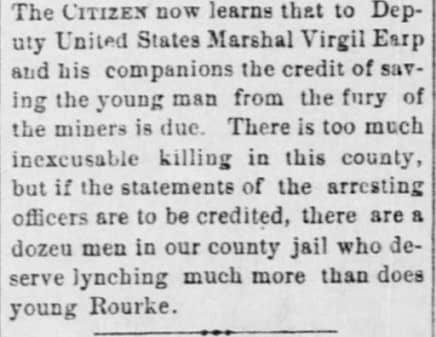
Who defended the prisoner from the lynch mob? Many accounts, including Wyatt’s own later stories, would have you believe it was Wyatt Earp, single-handedly. Wouldn’t the reports written at the time be the most accurate? None of them mentions Wyatt. Those memories only surfaced years later.
George Parsons’s 1881 diary does mention “deputies, themselves gambling men, to help.” That likely means the Earps, possibly including Wyatt, and Doc Holliday. But no 1881 document places Wyatt or Doc at the scene on January 14, 1881, so it’s conjecture. Virgil is specifically named in the accounts.
Wyatt may very well have been among those protecting Johnny-Behind-the-Deuce from the mob. But it’s very unlikely he was the hero of the day. More likely he was one of the deputies in a team effort.
Trial, Escape and Disappearance
On January 15 O’Rourke was held in the Pima County jail without bail, though the case belonged to Cochise County. Tombstone’s jail was still being built, and Johnny was to be moved there eventually. The preliminary hearing heard 10 witnesses, and Justice Neugass charged him with murder on February 1, 1881.
Johnny wasn’t looking forward to his April trial, so he took matters into his own hands. Convinced he was innocent and had acted in self-defense, he escaped on April 18, 1881, climbing the 16-foot wall during the evening break in the jail yard.
Early the next morning Sheriff Shibell set out after him with three Papago (Tohono O’odham) scouts. They didn’t find him. He was reported seen once more, in the Dragoon Mountains that May, and then never again, and there are many theories about what happened to him. It was even said that he might have killed Johnny Ringo. We find that highly doubtful.
For a well-researched account of Johnny-Behind-the-Deuce, look for Roy B. Young’s softcover book, Johnny-Behind-the-Deuce: Guilty Until Proven Innocent. It’s sometimes hard to find, but well worth it.
Stories like this make us want to know the true facts about the people who roamed Tombstone and the Old West, and what became of them. We enjoy sharing what we find, and we hope you’ll see some of these places for yourself when you visit.
No comments yet