- Wyatt Earp’s early years
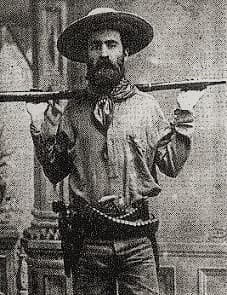
- Wyatt Earp as a young man
- Wyatt Earp’s first trouble with the law
- Wyatt Earp in Kansas
- Wyatt Earp in Tombstone
- Wyatt Earp after Tombstone
- Wyatt Earp in Alaska
- Nevada and the California desert
- Wyatt Earp in Hollywood
- How did Wyatt Earp die?
- The Wyatt Earp legacy
- Books and films we recommend
Wyatt Earp is a name you hear often in Tombstone. Today he’s known mostly for his lawman days and the gunfight at the O.K. Corral, and most of that fame comes from the movies.
So who was the real Wyatt Berry Stapp Earp? Below we follow him from his Illinois boyhood through Kansas, Tombstone, the Alaska gold rush and Hollywood: his brothers and sisters, his wives, his friendship with Doc Holliday, his run-ins with the law, how he died, and why people still argue over whether he was a hero or a scoundrel.
Wyatt Earp’s early years
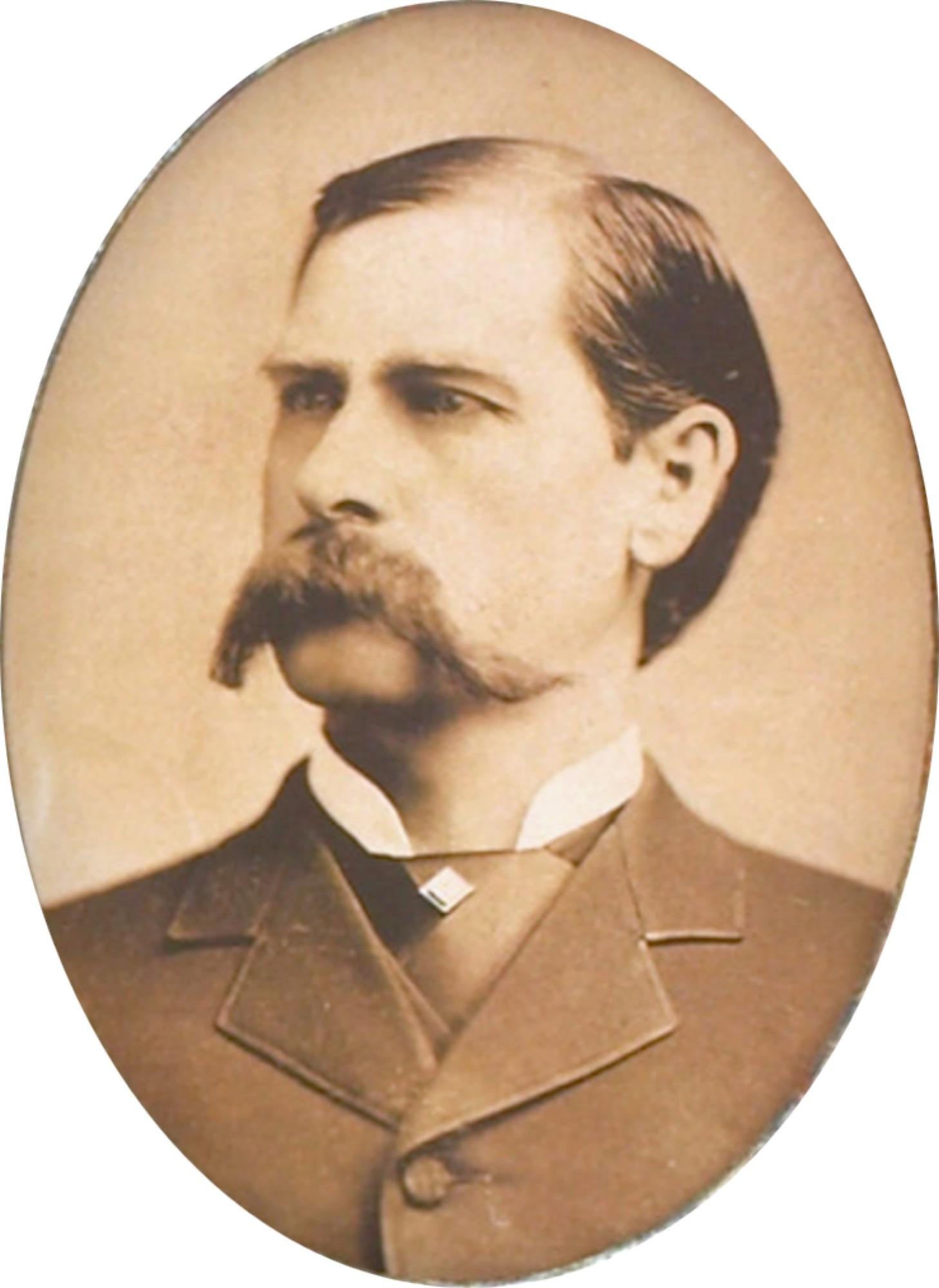
Wyatt Berry Stapp Earp was born on March 19, 1848, in Monmouth, Illinois. He’s not just a movie legend; he was a real person who became legendary.
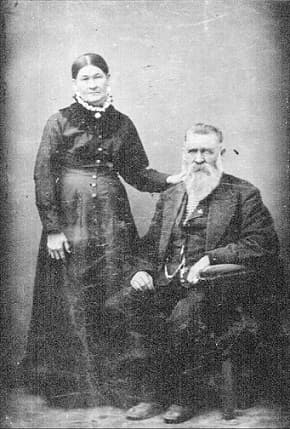
His father, Nicholas, named him after his captain in the Mexican-American War. The family’s first American ancestor, Thomas Earp Jr., came to Maryland from Ireland in 1674.
Wyatt Earp’s brothers and sisters
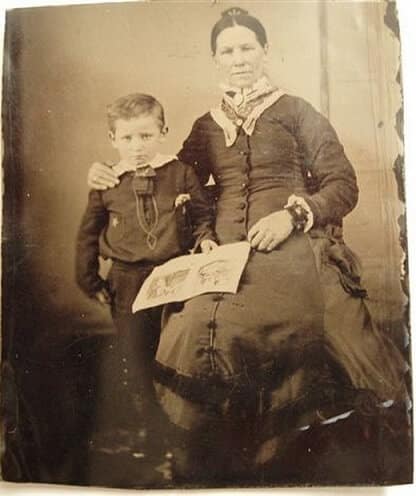
When Wyatt was born, his father and mother, Virginia, already had three sons and a daughter. Newton, the eldest, was born in 1837 to Nicholas’s first wife, Abigail Storm, who had died. James was seven years older than Wyatt and Virgil five years older. His sister Martha was about three when Wyatt was born.
In 1850 the family moved to Pella, Iowa, and took up farming. Morgan was born there in 1851 and Warren in 1855. Sadly, Martha died in 1856. Another daughter, Adelia, was born in 1861.
Teenage years and the move west
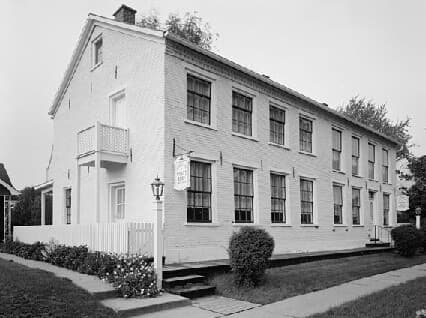
Wyatt was 13 when the Civil War began. Newton, James and Virgil joined the Union Army, and their father worked in support of the Union. Wyatt, Morgan and Warren had to take on most of the farm work. Wyatt tried to join the fight with his older brothers, running away to enlist a few times, and each time his father brought him back to the farm.
In 1864 Nicholas Earp moved the family west with a wagon train. Along the way, Wyatt helped defend the group from attacks on several occasions. They reached San Bernardino, California, on December 17, 1864.
In 1865, still a teenager, Wyatt went to work helping his brother Virgil, who drove for Phineas Banning’s stagecoach line. Wyatt then left home and worked for various freight outfits. Another job was with the Union Pacific Railroad, moving supplies for the line. In his off hours he learned to box and to gamble, skills that served him well later.
Wyatt Earp as a young man
Boxing referee and a friendship with John Shanssey
His boxing knowledge let him referee matches. While working for the Union Pacific in Wyoming Territory, around 1868 or 1869, the young Wyatt refereed a fight between John Shanssey and Mike Donovan.
Shanssey and Wyatt struck up a friendship. Shanssey later became mayor of Yuma, Arizona. The two met again years later in Fort Griffin, Texas, where, according to Wyatt, Shanssey introduced him to John “Doc” Holliday, who became his good friend.
First law job in Lamar, Missouri
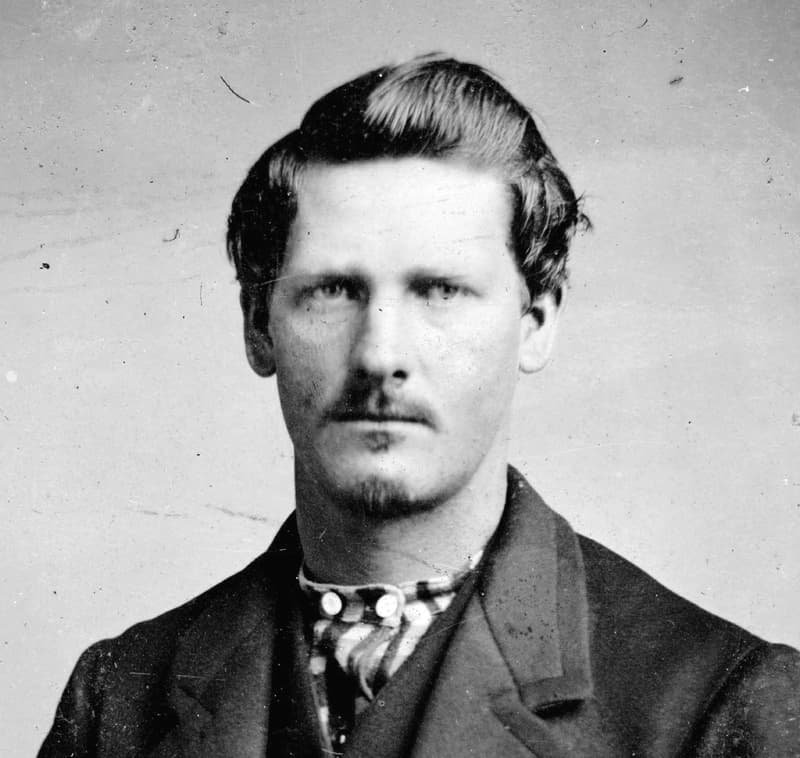
Wyatt’s parents moved again, this time to Lamar, Missouri, where Nicholas Earp became the town constable. Wyatt rejoined them there in 1869, and soon he met and courted Urilla Sutherland.
Nicholas, who was also a justice of the peace, resigned as constable on November 17, 1869, and Wyatt was appointed in his place.
Wyatt Earp’s wife, Urilla Sutherland
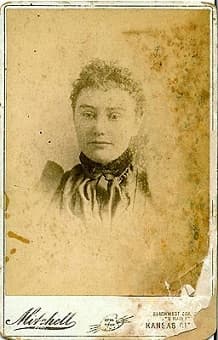
With a steady job, Wyatt was probably confident asking for Urilla’s hand. They married on January 10, 1870, when Wyatt was 21, and his father performed the ceremony. The couple had a home near town, and Urilla soon became pregnant.
She died later in 1870, before the baby was born. Most accounts say the cause was typhoid fever; some say she died in childbirth. A gravestone placed in 1994 at Howell Cemetery, south of Milford, Missouri, marks her burial there, though some think she lies in Lamar’s East Cemetery. She is the only wife Wyatt is documented as legally marrying.
In November 1870 his half-brother Newton ran against Wyatt for constable. Wyatt won by 29 votes, but the loss of his wife and child sent him into a downward spin. His next law job wouldn’t come until Kansas.
Wyatt Earp’s first trouble with the law
Wyatt soon sold his property, got into a fight with Urilla’s brothers and left Missouri. He wandered, hunted buffalo, and met and impressed some men he would reconnect with later. His departure left legal problems behind:
- On March 14, 1871, Barton County sued him for $200, alleging he hadn’t turned over license fees he had collected, money meant for the local schools. He had already left the state.
- On March 28, 1871, Wyatt, Edward Kennedy and John Shown were charged with stealing two horses from William Keys in Indian Territory. John Shown’s wife, Anna, gave a statement implicating Wyatt. He was arrested on April 6, arraigned on April 14 with bail set at $500, and indicted on May 15. Before his case came up, he escaped through the jail roof. He never stood trial.
- His next stop was Peoria, Illinois, where he and his brother Morgan worked for brothels. On February 24, 1872, police raided a brothel and arrested both of them; they were fined $20 plus costs. They were arrested again on May 11, and in September 1872 Wyatt was arrested aboard the Beardstown Gunboat, a floating brothel on the river. He may have met his next long-term companion, Celia Ann “Mattie” Blaylock, in Peoria.
By late 1872 he appears to have left Peoria.
Wyatt Earp in Kansas
Wichita
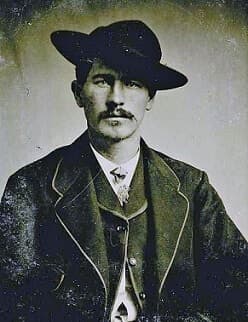
By late 1874 Wyatt was in Wichita, Kansas. On April 21, 1875, after Mike Meagher was elected city marshal, Wyatt was hired onto the police force. His work was satisfactory until the next year’s election.
On April 2, 1876, Wyatt got into a fistfight with Bill Smith, Meagher’s opponent in the election, who had made disparaging remarks about Wyatt’s brothers. Wyatt was fined $30 and dismissed from the force. The incident became common knowledge, and the town didn’t want him back.
Dodge City
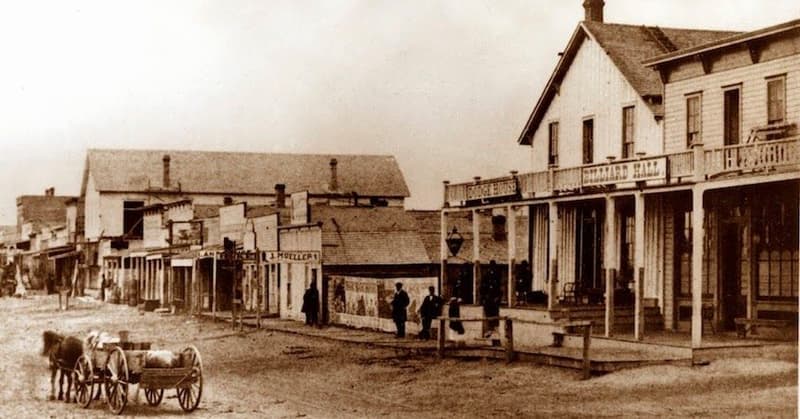
By late May 1876 he was in Dodge City. A Wichita paper reported on May 24, 1876: “Wyatt Earp has been put on the police force at Dodge City.”
Wyatt was in and out of Dodge City for several years. There he became friends with Bat Masterson, and he rode with posses. He spent the winter of 1876 to 1877 in Deadwood, Dakota Territory, selling firewood, and on occasion he rode shotgun for stagecoach companies.
Wyatt Earp and Doc Holliday
A July 7, 1877, Dodge City Times item shows Wyatt rehired as an officer on his return to town. In January 1878 he was reported at Fort Clark, Texas. It’s on this Texas trip that he’s thought to have first met Doc Holliday, most likely at Fort Griffin.
Wyatt returned to Dodge City in May 1878 and was hired as assistant marshal. Doc Holliday came to Dodge too, for the gambling. That year, Texas cowboys led by Ed Morrison shot up the town and the Long Branch Saloon. As Wyatt told it, two of them had their guns on him when Doc came up behind them and covered them, and Wyatt took them into custody. From then on, Doc Holliday was Wyatt Earp’s friend for life. However, the book “My Friend Doc Holliday,” which Wyatt supposedly wrote, is a myth from the movie Tombstone.
Wyatt resigned from the Dodge City police on September 9, 1879, and headed for Las Vegas, New Mexico, staying there until he moved on to Arizona.
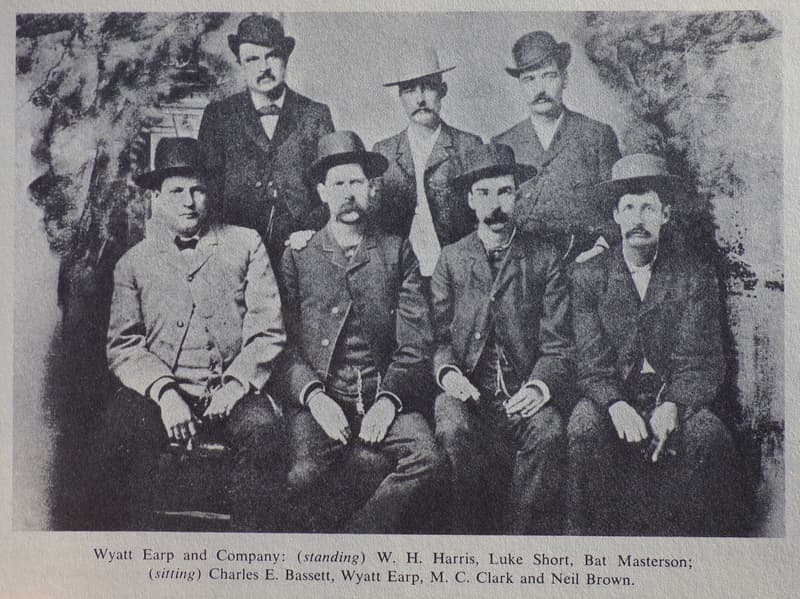
On a later visit to Dodge City, in June 1883, he posed at Conkling’s studio for a group photograph that the National Police Gazette published on July 21, 1883, as “The Dodge City Peace Commission.”
Wyatt Earp in Tombstone
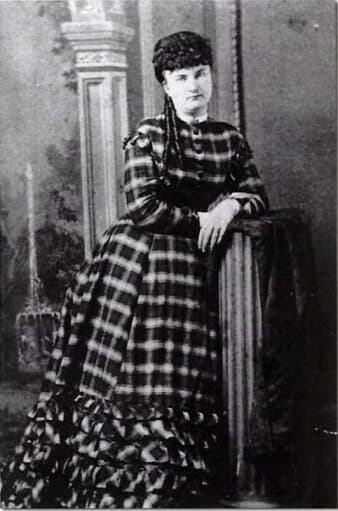
In Las Vegas, New Mexico, Wyatt was with Mattie Blaylock. His friend Doc Holliday was in town with his companion, Mary Katherine Horony-Cummings, better known as Big Nose Kate. Wyatt’s brother James and his wife, Bessie, were there too.
In November 1879 the group headed for Prescott, Arizona, where Wyatt’s older brother Virgil Earp lived with his wife, Allie. Virgil, who had been a constable in Prescott, had accepted an appointment as deputy U.S. marshal for the Tombstone area. He talked up the mining town’s opportunities, and Wyatt and Mattie and James and Bessie joined Virgil and Allie in moving there. Doc Holliday stayed in Prescott for the time being and joined his friend in Tombstone in September 1880.
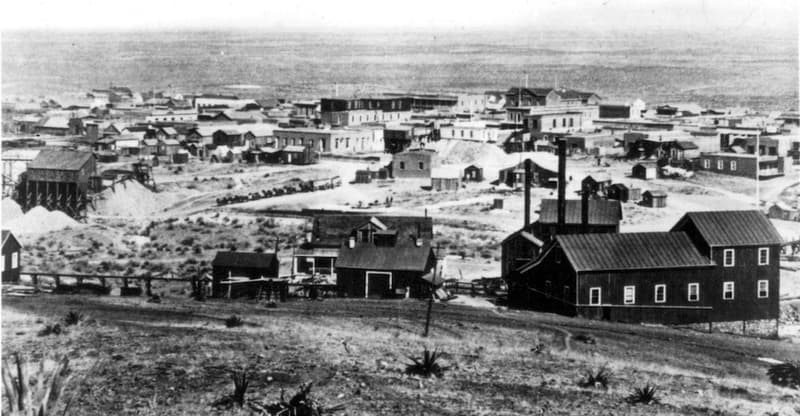
The Earps arrived in Tombstone on December 1, 1879. Wyatt and his brothers looked for ways to earn a living: they filed mining claims, ran gambling games, tended bar and rode shotgun for stagecoach lines.
With money coming in, Wyatt bought a lot for a house for himself and Mattie. Read more about Wyatt Earp’s house in Tombstone.
Lawman in Tombstone
Wyatt sometimes helped Virgil with his law duties. That soon put him at odds with the local ranch hands and rustlers known as the Cowboys, which led to many complications and heartaches down the road.
On July 27, 1880, Wyatt became deputy sheriff for the Tombstone area. He held the job for about four months. It added to his problems, but it also added to his earnings.
The gunfight at the O.K. Corral
Wyatt’s law work and his feuds led to the shootout he’s most famous for today, the gunfight at the O.K. Corral, on October 26, 1881. The Earps and Doc Holliday killed three Cowboys: Billy Clanton and Tom and Frank McLaury. Tombstone split over whether to back the Earps and Doc. Being lawmen didn’t mean citizens thought they were in the right. Here are the details of the battle.
Wyatt probably used a Smith & Wesson Model 3 revolver in the shootout. Was he one of the fastest draws in the West? He never had that reputation. His interests ran to gambling, horse racing and travel, and to taking advantage of the next good opportunity.
The vendetta ride
The Cowboy faction struck back. In December 1881 Virgil was ambushed and maimed by gunfire. In March 1882 Wyatt’s brother Morgan Earp was shot dead while playing billiards.
Wyatt didn’t let these attacks go unanswered. He gathered a posse, beginning what’s called the Earp vendetta. While escorting Virgil and Allie to the train for California, Wyatt shot Frank Stilwell, a suspect in Morgan’s murder, dead among the railroad cars in the Tucson rail yard. The next day a warrant was issued for Wyatt’s arrest.
Wyatt returned to Cochise County with a posse that included his brother Warren, Doc Holliday, Sherman McMasters, “Turkey Creek” Jack Johnson and “Texas Jack” Vermillion. For about two weeks they roamed southeastern Arizona hunting the men Wyatt believed had helped murder Morgan. Coroner’s reports credited the posse with killing Curly Bill Brocius, Indian Charlie and Johnny Barnes.
Those reports and years of rumor kept alive the story that Wyatt killed Curly Bill on the vendetta ride. It was never proven, though Wyatt later told it that way. Another tale says the posse found Johnny Ringo and Wyatt killed him. That’s highly unlikely.
During the ride, the posse stopped at Henry Hooker’s Sierra Bonita Ranch, northwest of Willcox, for fresh horses and meals before moving on to New Mexico. To avoid arrest, Wyatt went on to Colorado and eventually to California.
Wyatt Earp after Tombstone
Josephine Marcus
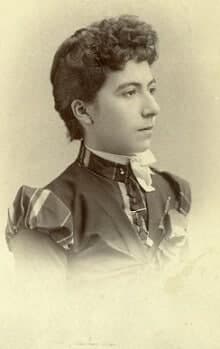
While still in Tombstone, Wyatt got to know Josephine Marcus, who had been linked with his political rival, Sheriff Johnny Behan.
It’s hard to pin down when their relationship began. Josephine started calling herself Josephine Earp after Wyatt came to San Francisco around 1882. In her memoir she claimed they were married in 1892 aboard Lucky Baldwin’s yacht off the California coast, but no record of the marriage has been found.
They stayed together for the rest of Wyatt’s life, about 46 years. She always protected his interests, from her own point of view, even when she bent the truth, and even though both had their bad habits.
From Colorado and Idaho to California
After leaving Arizona, Wyatt Earp kept moving:
- In 1882 he camped near Gunnison, Colorado. A Tombstone paper reported that he was Gunnison’s city marshal, but he never held that job.
- In late May 1883 he went back to Dodge City to help his friend Luke Short.
- In 1884 Wyatt and Josie were in booming Eagle City, Idaho, with his brothers Warren and James and James’s wife, Bessie. They opened the White Elephant, a saloon and dance hall in a big tent, and filed mining claims. Wyatt was appointed deputy sheriff and got mixed up in mining claim and real estate disputes.
- By 1887 the couple were living in the Brooklyn Hotel in San Diego, California. Wyatt bought four saloons and gambling halls, among them the Oyster Bar on Fifth Avenue. He ran his own racehorse and judged boxing matches.
- In 1891 Wyatt and Josie moved to San Francisco, where her family lived. Wyatt’s finances were failing with the end of the San Diego real estate boom, and he sold his properties there.
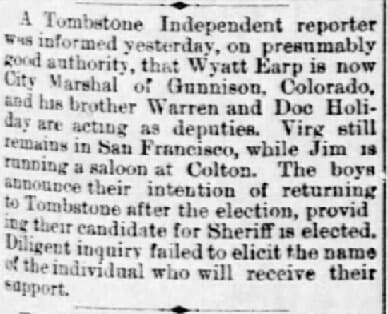
The Arizona Weekly Citizen reprinted the Gunnison rumor on July 30, 1882: “A Tombstone Independent reporter was informed yesterday, on presumably good authority, that Wyatt Earp is now City Marshal of Gunnison, Colorado, and his brother Warren and Doc Holiday are acting as deputies. Virg still remains in San Francisco, while Jim is running a saloon at Colton. The boys announce their intention of returning to Tombstone after the election, providing their candidate for Sheriff is elected. Diligent inquiry failed to elicit the name of the individual who will receive their support.”
Wyatt’s notorious boxing decision
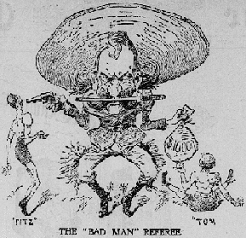
The heavyweight fight between Bob Fitzsimmons and Tom Sharkey was set for December 2, 1896, at the Mechanics’ Pavilion in San Francisco. With his boxing experience, Wyatt was chosen as referee, and the whole country was watching.
Fitzsimmons was the favorite and had the upper hand. In the eighth round Sharkey went down after a Fitzsimmons punch, rolling on the mat and clutching his groin. Wyatt ruled it a foul, a punch below the belt, stopped the fight and awarded it to Sharkey.
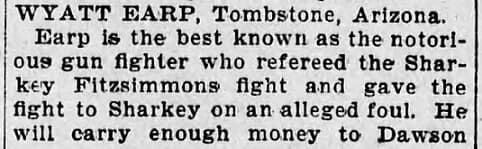
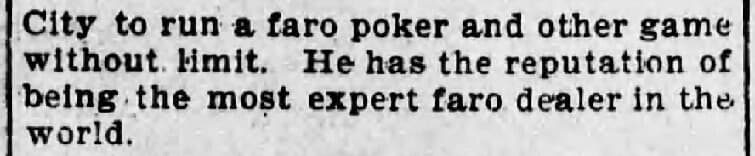
Most of the roughly 15,000 fans in the arena booed. Many had bet on Fitzsimmons, and they thought the fight was fixed and that Wyatt had bet on Sharkey at long odds. Newspapers across the country denounced Wyatt as a crooked referee and dredged up his old reputation.
Fitzsimmons took the matter to court. On December 17 the judge ruled that prizefighting was illegal and that the courts would not decide the winner, so Sharkey kept the purse. It was another stain on Wyatt’s name; in fact, this publicity made him more notorious than anything before.
Wyatt Earp in Alaska
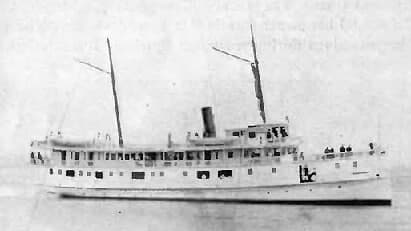
In August 1897 Wyatt and Josie boarded a northbound steamship. The Klondike gold rush was on, and they were heading for Dawson in the Yukon to open a gambling house.
On the way they stopped in Wrangell, Alaska, where Wyatt was offered the job of marshal. He held it for only ten days, and that October they returned to San Francisco.
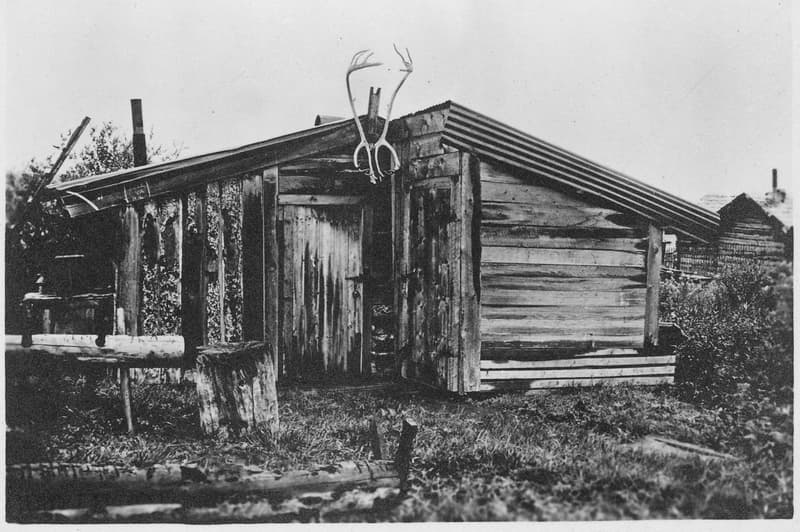
They set out again for Dawson, but when they reached Rampart, Alaska, everything was too frozen to go on. They rented a cabin from the writer Rex Beach and spent the winter of 1898 to 1899 there. In the spring of 1899 they went to St. Michael on Alaska’s west coast, where Wyatt sold beer and cigars for the Alaska Commercial Company.
Nome and Seattle
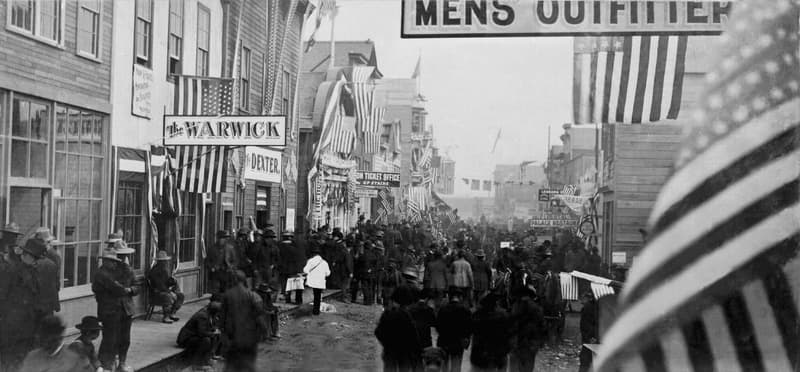
Wyatt felt the Yukon gold rush was fading. In September 1899 he and Josie set out for Nome instead. Wyatt partnered with Charles E. Hoxie, and together they built the Dexter Saloon, the town’s largest, with a brothel upstairs.
Nome’s population swelled to as many as 20,000. Wyatt’s acquaintances there included the future playwright Wilson Mizner and the boxing promoter Tex Rickard. Wyatt had his troubles with the local law and was arrested twice for minor offenses, but he was never tried.
Restless again, Wyatt left for Seattle late in 1899, planning to open a gaming house. Gambling was illegal in Washington, but John Considine, who owned many gambling clubs, had a “blind eye” arrangement with the police chief, and he wasn’t happy with Earp’s plans. Wyatt teamed up with a Seattle local, Thomas Urguhart, and they opened a saloon and gambling hall, the Union Club.
It did well, despite Considine’s harassment, until the state filed charges in the spring of 1900. Their property was confiscated and destroyed.
Where is Wyatt Earp’s gun?
Within a few months of leaving Washington, Wyatt and Josie went back to Alaska. Along the way they stopped in Juneau before returning to Nome, and they stayed in Alaska until the end of 1901.
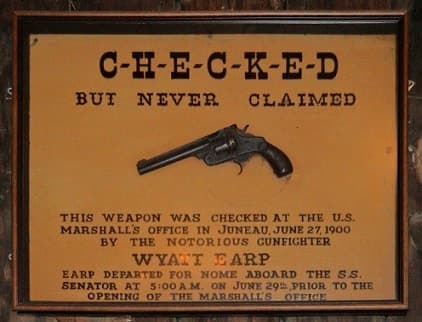
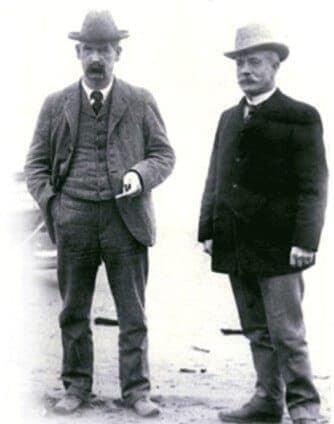
Was the gun he left behind in Juneau the one he used at the O.K. Corral? It’s hard to say. It’s even hard to verify that the gun displayed in Juneau was his.
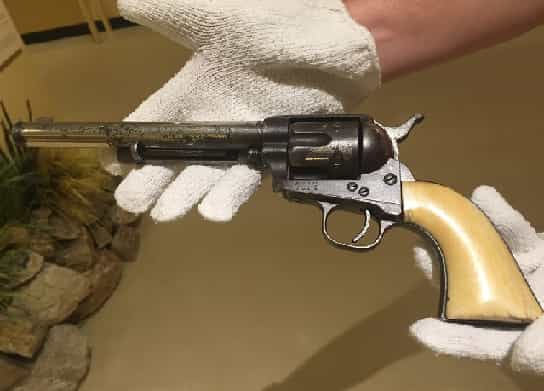
A revolver at the Arizona History Museum, near the University of Arizona campus in Tucson, is also claimed to be Wyatt Earp’s. That’s difficult to authenticate too. Tombstone historian Ben Traywick and other Old West historians are skeptical, for well-researched reasons.5
Nevada and the California desert
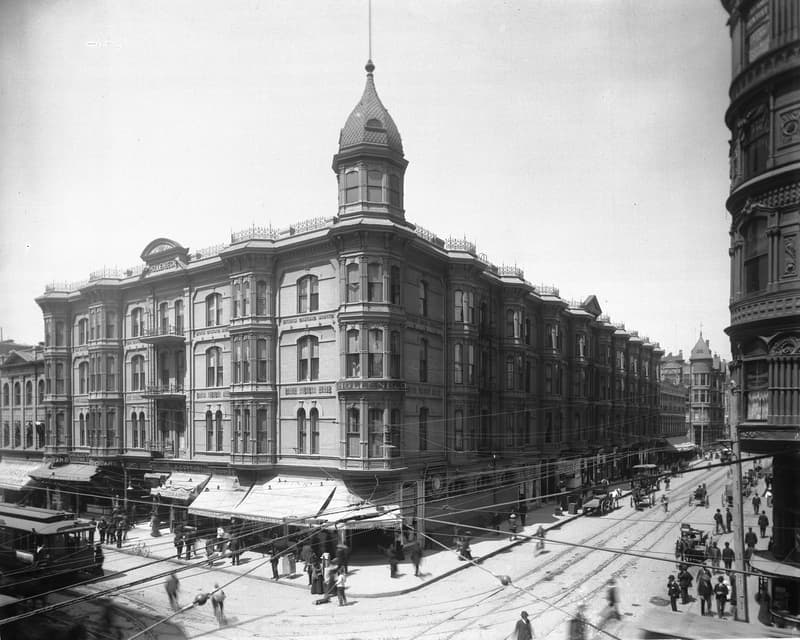
In December 1901 Wyatt and Josephine left Alaska for California, bringing a fortune with them, by one estimate $80,000. They checked into the Hollenbeck Hotel in Los Angeles on December 13, 1901, and stayed a few months before heading for Nevada.
Tonopah and Goldfield
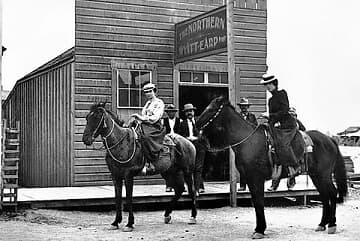
Gold and silver were booming in Tonopah, Nevada. The Earps arrived in February 1902, and Wyatt and a partner, Al Martin, opened the Northern Saloon. Wyatt was also briefly a deputy U.S. marshal under Marshal J.F. Emmitt, mostly serving papers.
When Tonopah’s opportunities slowed, the couple moved on to Goldfield, Nevada, where brother Virgil was a deputy sheriff. Wyatt’s friend Tex Rickard had opened another Northern Saloon there and briefly hired Wyatt as pit boss of the gambling room.
Mining and trouble in California
By 1906 Wyatt was mining gold, with claims across the California desert near Vidal. For years the couple worked their claims in the cooler months and spent summers in small rented places in Los Angeles, away from the desert heat.
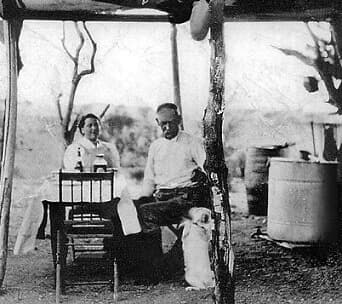
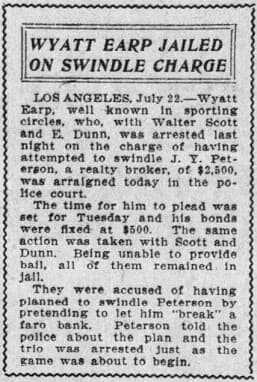
Wyatt seems to have scrambled for ways to earn money, and news items surfaced showing him crossing the line. The Los Angeles Police Department paid him for jobs “outside the law,” and this shady work got him into hot water again.
In October 1910 Wyatt led a posse protecting surveyors for the American Trona Company in a dispute over mining claims, and there was an armed standoff. A U.S. marshal arrested Wyatt and 27 others for contempt of court.
Wyatt and Josie’s Vidal cottage
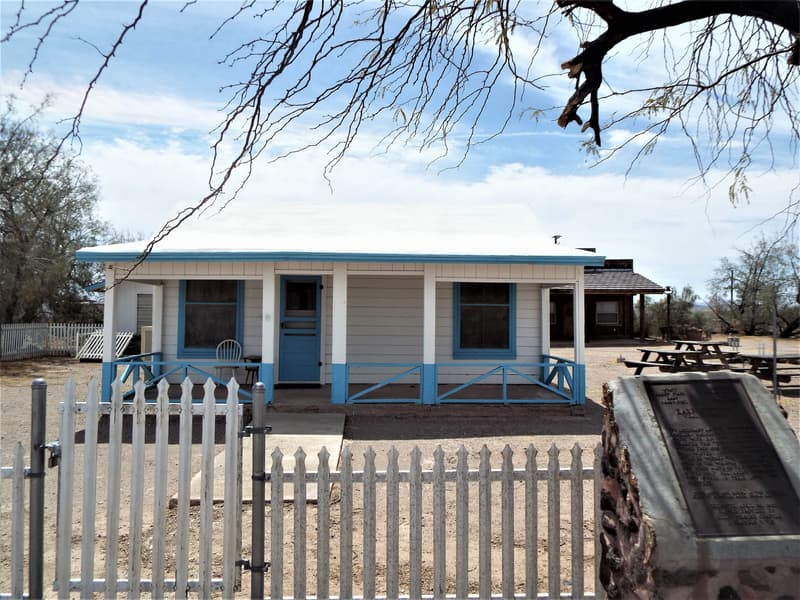
Wyatt and Josie bought a small cottage in Vidal, California, a little town west of the Colorado River and the Arizona line. It was the only home they ever owned. Wyatt worked the Happy Days gold mine in the Whipple Mountains, a few miles north of town.
Did Wyatt Earp have children? After the death of Urilla and their unborn child, he never had any.
Wyatt Earp in Hollywood
In Los Angeles, Wyatt got to know the movie makers. In 1915 director Allan Dwan invited him to the set of The Half-Breed, where he mingled with actors, producers and directors and offered his views on the realism he felt was needed. In 1916 Jack London took him to Raoul Walsh’s set, and at a restaurant during that visit Charlie Chaplin stopped to greet him.
On his set visits he met the cowboy actors William S. Hart and Tom Mix, who became his friends. He visited silent movie sets when John Ford was starting out, and they talked about Wyatt’s Tombstone experiences; later Earp often visited Ford’s sets.
It was around Ford that he met a young John Wayne. Wayne said he based much of his screen persona on talks with Wyatt Earp: “There’s a guy that actually did what I’m trying to do.”3
Wyatt encouraged his friend Hart to make a movie about his life. He wanted a film that would reflect well on him and set the record straight for “a public which has always been fed lies about me.”1 Hart wrote back that Wyatt should find a biographer to write a book first.
Telling the story of Wyatt Earp
Wyatt talked his friend John Flood into writing his biography, and they began work in 1925. Wyatt talked while Flood wrote, with Josie on hand for input.
Josie insisted the book make Wyatt look like a saint. For instance, she wanted him portrayed as a non-drinker, which wasn’t true; in Alaska he had been arrested for being drunk and disorderly. She also wanted the word “CRACK” added for liveliness, and it appears 109 times in the gunfight chapter.
They sent the finished manuscript to publishers. One rejected it with harsh words: pompous, stilted, florid.2 Hart tried to help, urging the Saturday Evening Post to run it in 1926, but publisher after publisher turned it down, and it was never published. A carbon copy eventually went to the Ford County Historical Society in Dodge City, and a few copies were sold in 1981.
In 1931, after Wyatt’s death, Stuart Lake published another biography, Wyatt Earp: Frontier Marshal. Lake had interviewed Wyatt and corresponded with Josephine, who wanted the book to tell their lives her way. Lake didn’t go along with her.
The book is regarded as historical fiction. Lake made up dialogue, left out Wyatt’s other wives and portrayed all of his actions as heroic. It’s written in the style of its day, and it’s a good read.
How did Wyatt Earp die?
After such a varied and sometimes dangerous career, you might expect an adventurous death. It wasn’t that way. He lived a long life compared with many of his contemporaries, and his end was quiet.
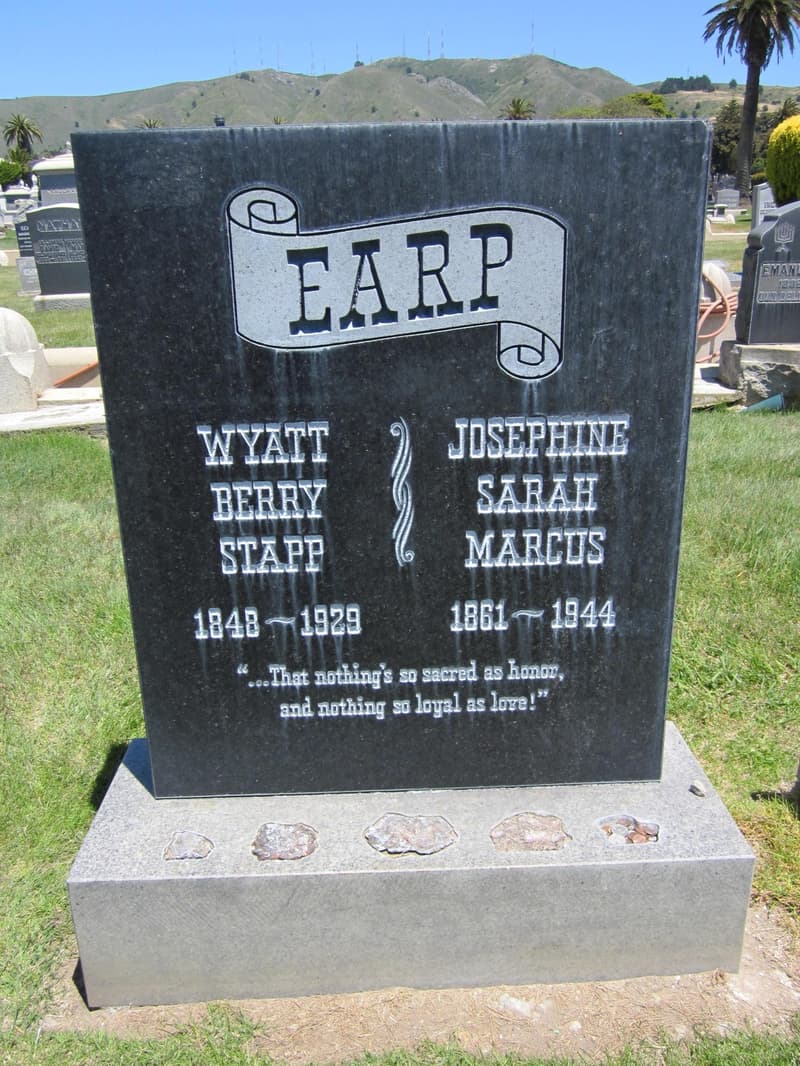
Wyatt Earp died on the morning of January 13, 1929, in the couple’s rented cottage at 4004 West 17th Street in Los Angeles. He was 80. The Arizona Daily Star‘s death notice the next day said his health had been failing for some time.
His brothers had all died before him; of his siblings, only his sister Adelia survived him. Grace Spolidora, daughter of his old Dodge City friend Charlie Welsh, was among the few present at his cremation.
The funeral was held on January 17, 1929, at the Pierce Brothers Chapel in Los Angeles. The pallbearers included John Clum (Tombstone’s mayor and Epitaph editor), George W. Parsons (the Tombstone diarist), William J. Hunsaker, Jim Mitchell, Wilson Mizner (his friend from Alaska), William S. Hart and Tom Mix.
Josephine didn’t attend the funeral. She had Wyatt cremated and secretly buried his ashes in her family’s plot at the Hills of Eternity, a Jewish cemetery in Colma, California.
The Wyatt Earp legacy
In his later years Wyatt Earp often felt he didn’t get a fair shake from the public, and especially that his actions weren’t portrayed accurately.
There’s truth to that. Some books contain vast inaccuracies about the lives of Wyatt and his brothers, and even newspaper articles sometimes printed fantasy.
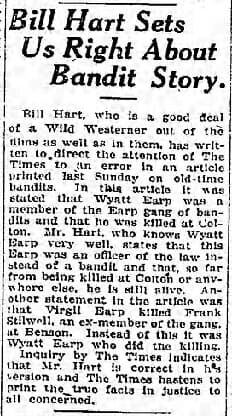
A March 1922 Los Angeles Times article titled “Lurid Trails Are Left by Olden-Day Bandits” compared the Earp brothers in Tombstone to bank- and train-robbing gangs such as the Daltons.4 Much of the story was wrong. Josephine and Wyatt’s friend William S. Hart were both outraged and wrote to the Times demanding a correction, which the paper printed.
Many people take an extreme view. Like Josephine, some remember him as a law-abiding, heroic champion of honest citizens. Others see a scoundrel who preyed on others for his own benefit while trying to look innocent. The accurate assessment is probably somewhere in the middle.
Whichever view you hold, reading about his life helps you judge for yourself. Many small details shed light on his personality; the trouble is sorting fact from fiction and opinion from truth. Visit the places he frequented, watch the movies about him, both the fact-based and the fanciful, and read the books. Putting yourself in his shoes may help.
Books and films we recommend
- The book Wyatt Earp Speaks!: we have an edition, and it’s full of excellent information.
- The PBS American Experience documentary on Wyatt Earp, narrated by Michael Murphy, is well worth watching.
- Kevin Costner’s movie Wyatt Earp starts out well and fairly accurate, then veers further from the truth toward the end. We still recommend it.
- Another great read we own is A Wyatt Earp Anthology: Long May His Story Be Told.
References
1 Murray, Tom G. (June 1968). “Wyatt Earp’s Letters to Bill Hart”. SCVHistory.com. True West. Retrieved September 26, 2017.
2 historynet.com/john-flood-and-wyatt-earp.htm. Wild West Magazine (January 29, 2008). Retrieved September 27, 2017
3 Hughes, Johnny (2012). Famous gamblers, poker history, and Texas stories. Iuniverse. ISBN 978-1-4759-4215-6
4 Boyer, Glenn G. (Autumn 1976). “Postscripts to Historical Fiction about Wyatt Earp in Tombstone”. Arizona and the West. 18 (3): 217–236. JSTOR 40168503
5 Pleeter, Z. (2015, Oct. 8). What became of Wyatt Earp’s guns? University of Arizona School of Journalism: Arizona Sonora News Service. Retrieved from arizonasonoranewsservice.com/mystery-wyatt-earps-guns/
General references for statements without notes:
- Young, R.B., Roberts, G.L., Tefertiller, C., et al. (2019). A Wyatt Earp anthology: Long may his story be told. Denton TX: University of North Texas Press.
- Barra, A. (1998). Inventing Wyatt Earp: His life and many legends. ISBN: 0-7867-0562-0. New York: Carroll & Graf Publishers, Inc.
- Gatto, S. (n.d.). Wyatt Earp History Page. Retrieved from www.wyattearp.net/
- “Earp Historical Timeline”. Retrieved from web.archive.org/web/20080211122451/http://www.gv.net:80/~syd/WyattSEarp/history.html
One comment
Hello, I’m a Belgian journalist writing a book about the legends of the American West. I discovered many interesting photos on your site, especially of Wyatt Earp and Jesse James. Would you allow me to publish them? I’ll cite you as the source, of course. Thank you very much.