
Tombstone AZ weather is worth knowing when you plan a visit. Here is a link to the current forecast, plus what we have learned about the local climate from living with it.
Weather patterns in Tombstone are typical of the deserts of the American Southwest. There just isn’t much rain, and even less snow.
Tombstone weather forecast
For the current conditions and the days ahead, see the National Weather Service forecast for Tombstone or the AccuWeather forecast for Tombstone. For sunrise and sunset times on the day you visit, SunCalc is handy.
Tombstone’s climate through the year
The weather in Tombstone comes from its place in the high Chihuahuan Desert. The climate is semi-arid, which means quite dry, and the rainy seasons follow a regular yearly pattern.
All of that precipitation adds up to only about 13 inches a year in Tombstone, going by the 1991 to 2020 climate averages. More than half of it falls during the summer monsoon. So there’s not much worry about spoiling outdoor plans, but there’s enough to keep the desert plants happy.
Spring and early summer
April through June is the driest time of year, usually with little or no rain, but you’re heading into some of the hottest days. Spring often brings annoying windy days. A local radio DJ calls it the “stinkin’ wind.”
Autumn and winter
Autumn and winter can be the ideal times for weather, in general. There is a winter rainy season, too. Storms come in from the Pacific, and when they reach Arizona we get rain. In the highest elevations, like the Huachuca Mountains, snow falls. December through March usually brings the most winter storms.
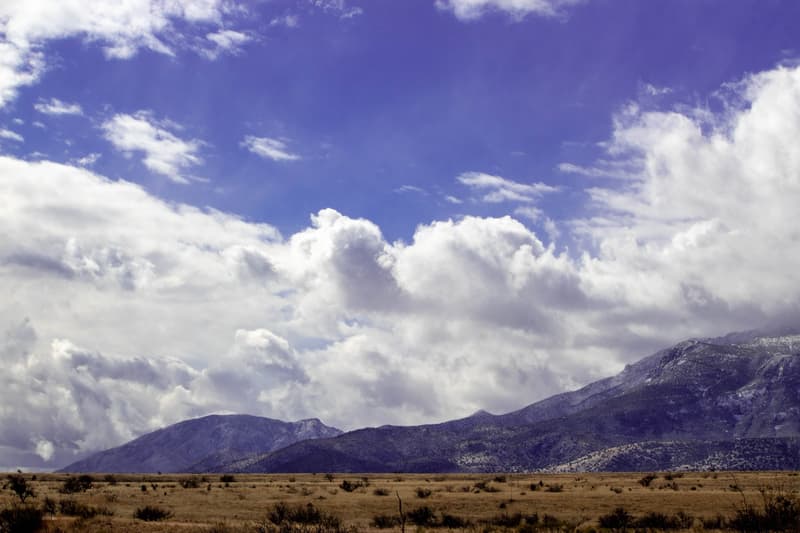
Mountain ranges near Tombstone, such as the Huachuca and Chiricahua Mountains, have a different climate and plant life from the desert floor. The difference comes mostly from their elevation.
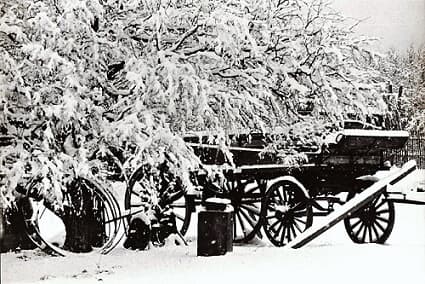
Once in a while, snow even reaches the desert floor in town. Brian Joe Jones shared the photo below of one of those rare snowfalls, on a December 5th.
We say any time of year has its ideal weather. Just wait for a better time of day, or a little later, or tomorrow, or plan the day around the weather. When you’re coming for one of the Tombstone events, it helps to know what to expect, so take the weather into account in your vacation planning.
The monsoon season in Tombstone
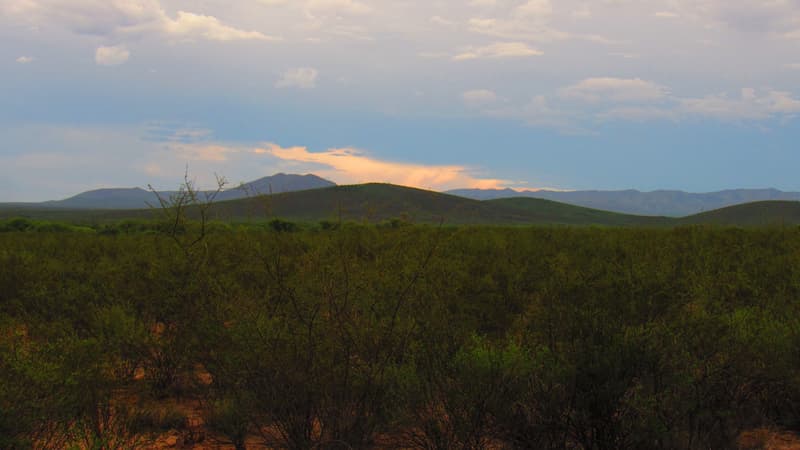
The monsoon season is when Tombstone weather is at its most dramatic. Clouds begin building, usually to the south, turning darker and moving closer. When the storms arrive they can be powerful, with lightning bolts and thunder all around. Rain can come down in torrents, though it often doesn’t last long. Afterward, watch for rainbows; they often appear, sometimes doubled.
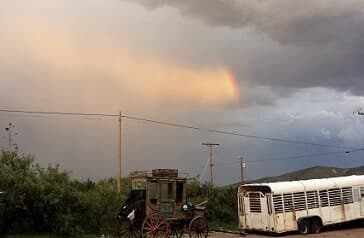
Who could love this? Many Arizonans do, and many in Tombstone look forward to it all year. We love to watch, but from under a sheltered roof. These cloudbursts can be hair-raising.
Storms can come and go through the day, and they bring welcome cooling afterward, often 15 or even 20 degrees. There won’t be storms every day during the monsoon, and some parts of Arizona get more monsoon rain than others.
Monsoon and summer precautions
If the forecast calls for thunderstorms, this may be a day for an indoor activity. At least don’t plan to be out in the wilderness. If a storm does come in, know the basics of lightning safety ahead of time.
Be aware of flash floods, too. Never drive into a flooded “wash” where it crosses a road. Here is what can happen:

Tombstone is in the desert, so keep desert conditions in mind, particularly in summer. People have died from the heat after not bringing enough water. Drink plenty, even in this “dry heat.”
Sunrises and sunsets
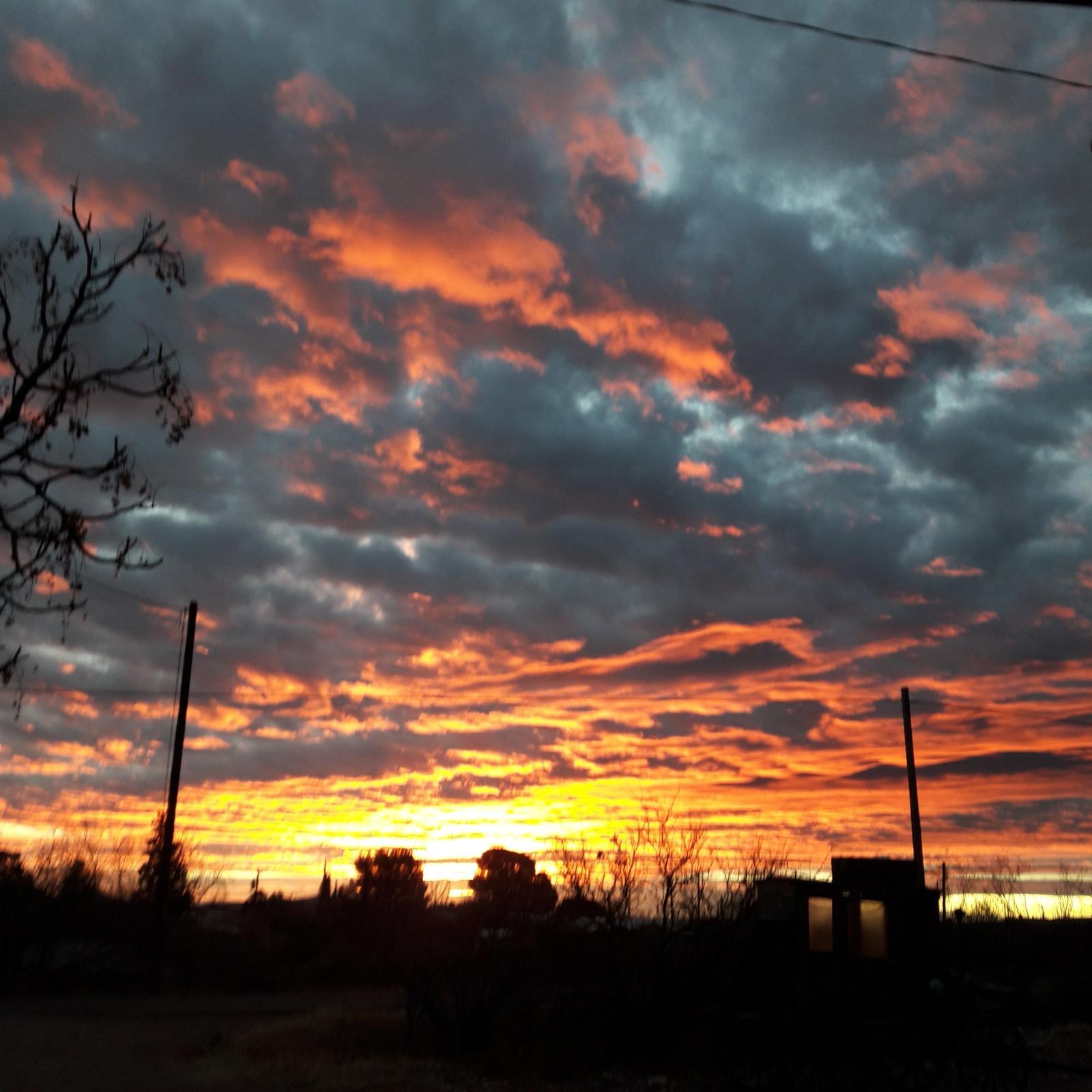
When the time is right, you can see gorgeous sunrises and sunsets in Tombstone. I believe the deserts of Arizona have the best sunsets in the world. We haven’t seen all the world’s sunsets, of course, but Tombstone’s must rival the best. Add some storm clouds and the sky glows even more.
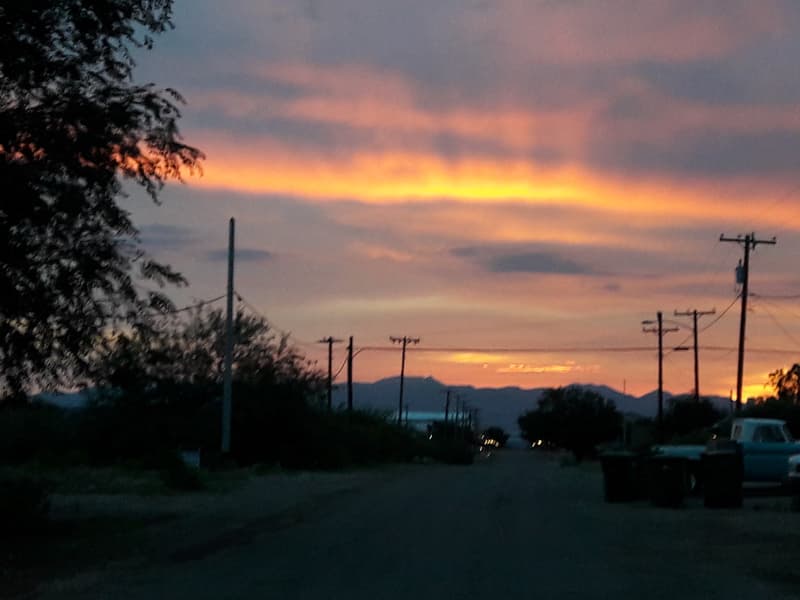
There’s an old sailors’ saying: “Red sky at morning, sailor take warning. Red sky at night, sailor’s delight.” It’s supposed to predict oncoming storms. Does it apply in the Arizona desert? Not necessarily.
When we see deep shades of red at sunrise here, it isn’t a predictor of Tombstone weather. The clear, clean air is what makes these great photo opportunities. If you’re skeptical, here’s the scientific explanation from the National Weather Service’s Storm Prediction Center.
So when you see one of these skies, don’t assume the weather will interrupt your plans. Check the forecast, then make your plans. Our trip planning tips can help. Remember the surrounding area, too, like a nearby ghost town. Most of us in Arizona love our special seasons, especially the monsoon.
No comments yet