
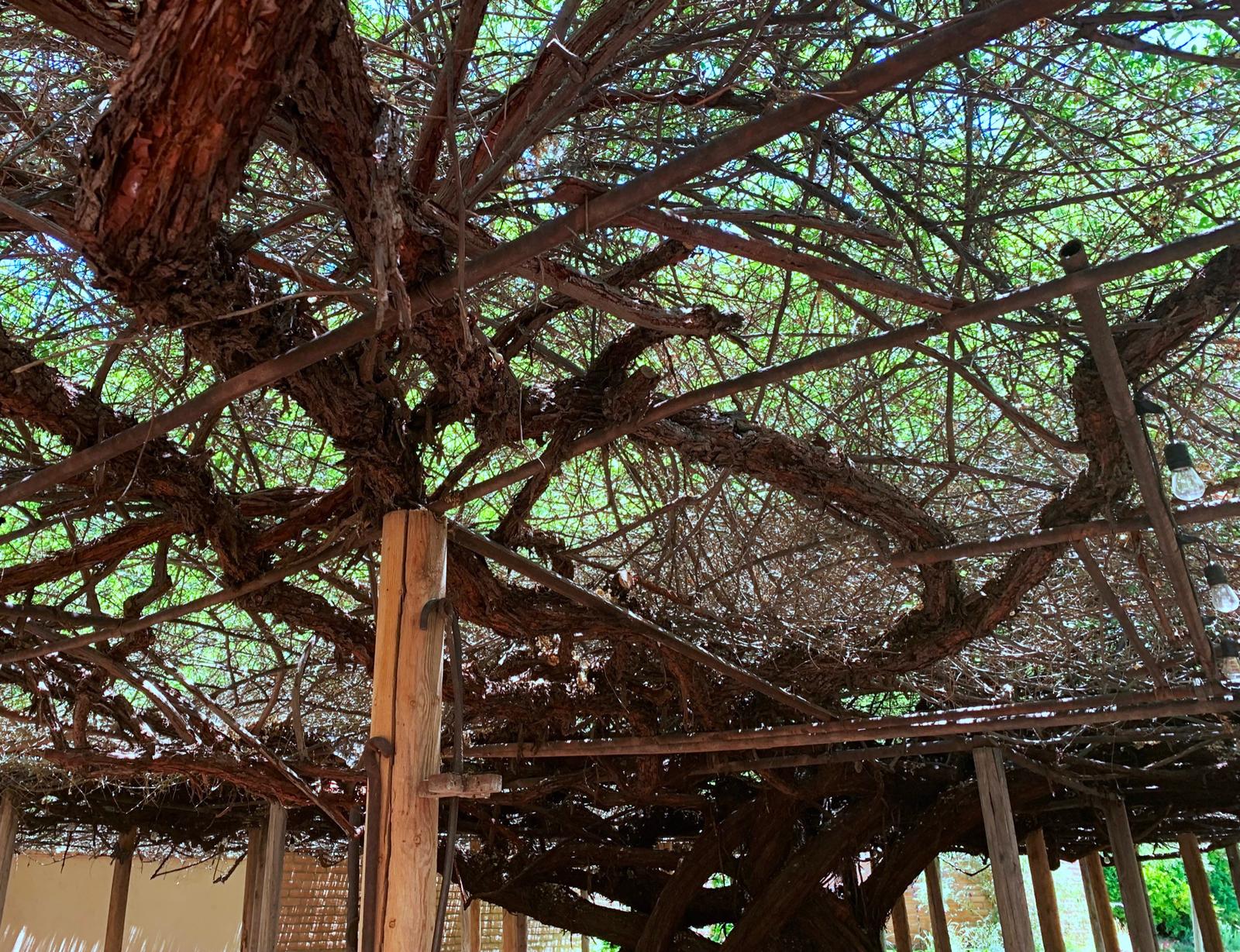
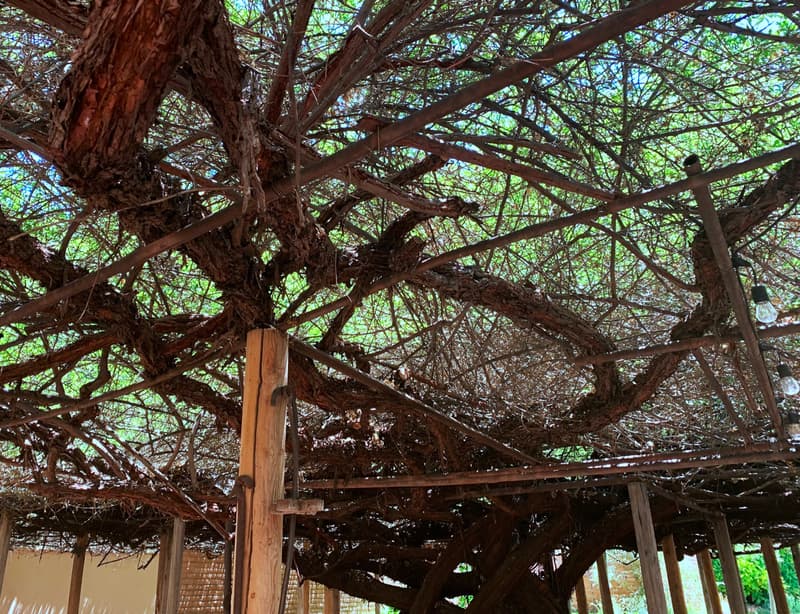
Do you love the smell of roses? The roses at the Rose Tree Inn in Tombstone have something special going for them: they are in the Guinness Book of World Records as the largest rose tree in the world.
We passed up the Rose Tree Inn for a long time when we first began visiting Tombstone. A rose museum just did not fit our idea of what to tour in historic, Wild West Tombstone. Once we moved to town, we thought we should take a look and see what this place is about, so that we could help our readers appreciate every unique feature of the historic area we love.
Why Visit the Rose Tree Inn
Maybe, like us, you’ve put off stopping in here. There’s so much to see in historic Tombstone, from the Bird Cage Theatre to the Wyatt Earp house. So what is it about the Rose Tree Inn and Museum that should pique your interest?
- The Guinness Book of World Records lists it as the largest rose tree in the world.
- It has a romantic history, both the rose itself and the adobe home that houses the museum.
- If you love roses, this rose tree will amaze you. It blooms every spring, and Tombstone holds a Rose Festival at that time. See our current Tombstone events guide for the dates.
- You can even arrange a stay in one of the historic rooms.
Rose Tree Inn History
Mining Days
The original Rose Tree Inn building is as old as the town of Tombstone. It was built by the Vizina Mining Company and was smaller then than it is today; there have been many additions to the original. It first served as the company’s office and boarding house. Mrs. Amelia Adamson was hired to run the boarding house. Among the first residents were the Vizina’s mining engineer, Henry Gee, and his wife Mary.
The Vizina mine claim was filed on August 8, 1878 by James M. Vizina and Benjamin Cook. It was near the Rose Tree Inn, adjacent to the Tough Nut mine. The Vizina mine was adequate at first, but its ore yield began to dwindle. Cook and Vizina leased out most of the production from 1884 on. The office and boarding building was no longer needed and was sold.
Reinvention as a Hotel
That’s when the Rose Tree Inn actually became an inn, first as the Cochise Hotel. It sat just one block from the courthouse, and many guests came to town for legal or court dealings.
By 1900 new owners of the small hotel had changed its name to the Arcade. They worried about the effect of the strong Arizona sun on the adobe walls and solved it by covering the outer walls with decorative tin. In 1919, the Macia family purchased the hotel.
Those tin walls may have offered some protection on May 20, 1924. Early that morning a fire started along Allen Street between 4th and 5th Streets and quickly spread, destroying many businesses in that block. Through the efforts of the fire department, some buildings were saved. The Arcade’s walls were seared by the flames, but the building survived.
The Macia family eventually renamed the Arcade the Rose Tree Inn, as the Lady Banksia rose was already growing on the grounds.
The Rose of the Rose Tree Inn
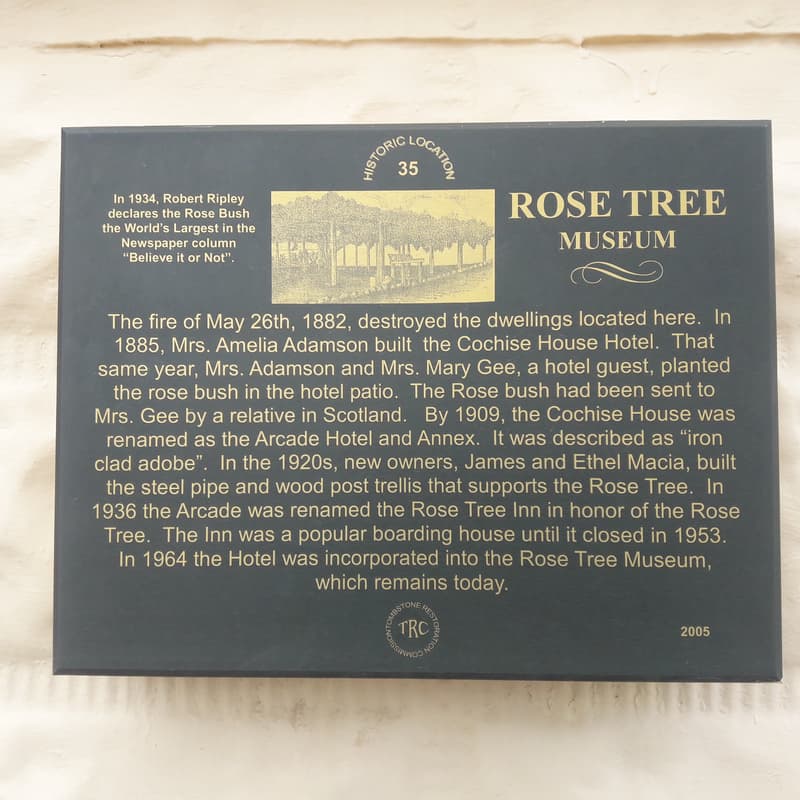
Amelia Adamson took care of the Vizina Mine’s boarding house, which is now the Rose Tree Museum. Henry and Mary Gee were among the first guests, taking up residence there while their own home was being built. Mary and Amelia became good friends. Mary was a Scottish immigrant who had only just moved to Tombstone after her marriage to Henry.
When the young couple’s own Tombstone home was finally ready, Mary received a housewarming gift from relations in her homeland. She opened the delivery box to find rootings of Lady Banksia roses sent from Scotland. She gave one of them to her friend Amelia, and together they planted it in the yard behind the boarding house. The rose took well there and grew, and today we can see the result.
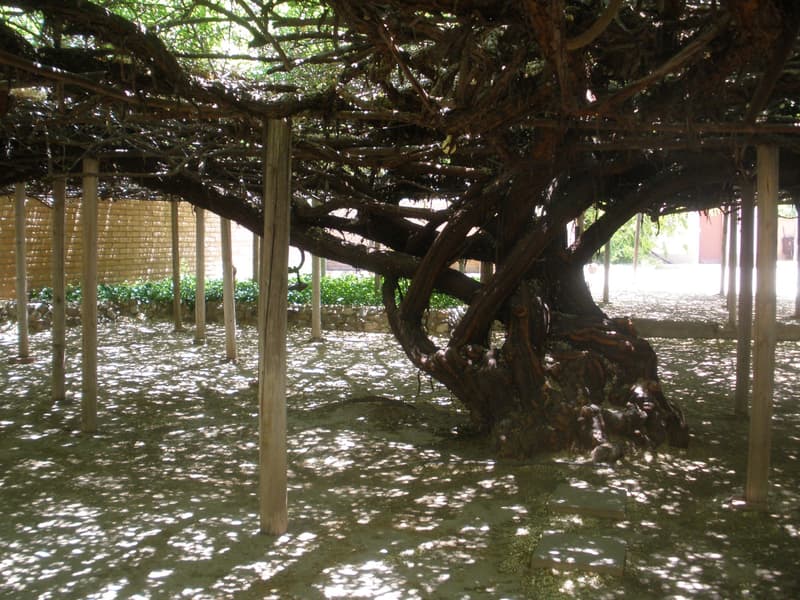
It’s called the Lady Banksia rose, Rosa banksiae. It was brought to Britain from China in the early 1800s and named for Dorothea, Lady Banks, wife of the botanist Sir Joseph Banks. It bears white flowers from the approach of spring through almost spring’s end. The Tombstone rose tree is still growing more each year, and it carries millions of white blooms at the height of the season. That’s a great time to visit, when the Rose Festival takes place.
The Robertson Family
The story of the inn’s owners started with the marriage of two original Tombstone pioneering families: the Robertsons and the Macias.
S. Cris Robertson was a Colorado man who wanted to make some money in the silver mines. He married his wife Alice in Leadville, Colorado, on October 19, 1880, and the couple moved to Tombstone, arriving on December 24, 1880. Together they had five children. The first was Ethel, born in August 1881.
When Ethel was just 14 years old, her mother Alice passed away, and Ethel took on a lot of responsibility for her younger brothers and sisters. Four years later her father was killed, and she suddenly became the head of the family. To earn a living she got a job at the Cochise County Courthouse. Her excellent penmanship gave her an advantage for the legal paperwork of the era. She and her sister were the first women employed by the county courthouse.
The Macia Family
James “Bert” Macia
James Herbert Macia (pronounced May-see) was born in Massachusetts on February 21, 1872 and was often called Bert. His family relocated to Kansas and Colorado. His father, a miner, died in a mining accident after the family moved to New Mexico.
James followed in his father’s mining footsteps. He went to Bisbee, Arizona, to work the mines at 17 years of age. From there he went on to other Arizona mines in Oatman and Prescott. His specialty was as a “shaftman,” which is why he moved to Tombstone in 1901, when a crew was needed to dig the Boom shaft.
He stayed on in Tombstone, found regular employment and met Ethel Robertson. They were married on February 4, 1904 and had three children: a son named for him and two daughters, Iris and Jeanne.

Bert began with the Tombstone Consolidated Mining Company as a mining engineer and had an eventful career there. He did well, rising to superintendent and staying in that position until the company went into bankruptcy on August 9, 1911. After that he was employed by other Tombstone mining interests, including the Solstice Mining & Milling Company. He leased the Ingersoll Mine from the Hearst-Haggin Estate in 1929, and with his success from the lease he invested in mining properties. He later invested in a local health facility. J.H. Macia Sr. was a steadfast Tombstone citizen until he passed away in 1951.
Ethel Robertson Macia
Ethel Robertson Macia bought the Rose Tree Inn in 1919, when it was still called the Arcade. Visitors were noting how well the rosebush in the yard was doing. Even Robert Ripley of the Believe It or Not column wrote about it after a visit. He labeled it the “World’s Largest Rose Tree” and began a tradition. The word spread and other news articles appeared. With all this notoriety, in 1935 Ethel changed the hotel’s name to the Rose Tree Inn.
Ethel helped the rose tree in its development by creating the trellis which supports it as it has grown over the years. She also enjoyed speaking with visitors and telling its story.
As an early resident of Tombstone, Ethel was a member of the Arizona Pioneer Society and its vice president for quite a few years. She was an active, vital person, interested in the welfare of everyone, especially those less fortunate, and served on the board of the Arizona Children’s Home. She attended the University of Arizona in 1897.
She was very interested in history and its preservation. She was a member of the Tombstone Women’s Club, serving two terms as president, on the board of directors and as the state federation’s historian. She helped organize Tombstone’s first Helldorado in 1929 and was on its subsequent board of directors. She was a charter member of the Tombstone Restoration Committee and influential in many of its decisions.
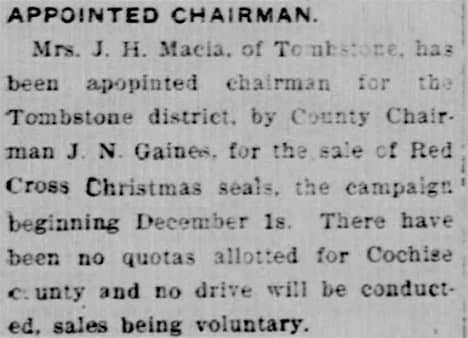
She was a well respected, influential member of Tombstone, actively involved in the community right up until her passing at 82 years old in August 1964. The tin-covered adobe building is a tribute to the pioneering Macia family, and the museum it has become shows us that. It is also an homage to the rosebush that has become a unique and famous rose tree.
Rose Tree Museum
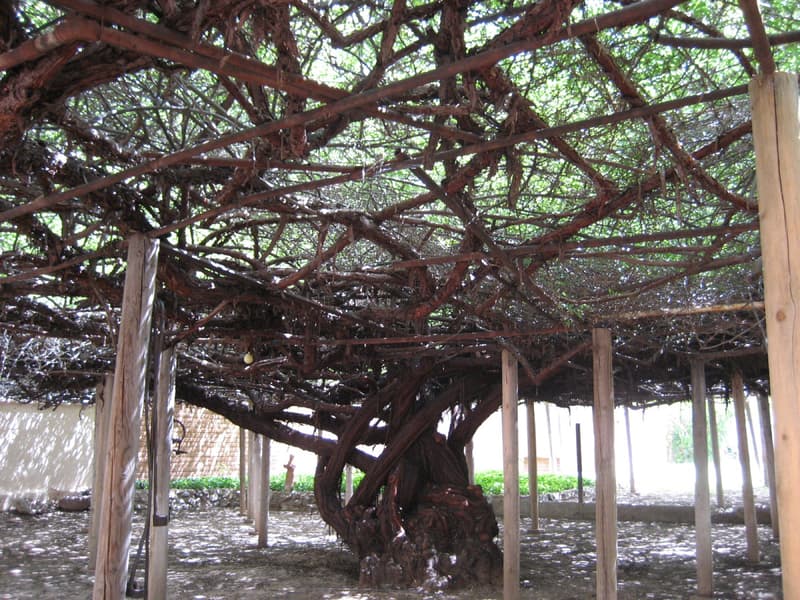
You can visit this historic place where the Lady Banksia rose grows and where the Macia family extended hospitality to many guests at the Rose Tree Inn. The museum is on Fourth Street at the corner of Toughnut Street, one block south of Allen Street and two blocks south of Fremont Street (Route 80). It is open year round and asks a small admission donation. The rose blooms in spring, usually peaking in April.
While visiting, you can purchase a cutting to grow a Lady Banksia yourself. See one of our readers’ examples. For hours, admission and other details, see the Rose Tree Museum website.
Stay at the Rose Tree Inn
Would you like to stay in this historic inn? You can. Two suites are available, right in town and a short walk to everything. Each has its own door out to Tombstone’s boardwalk and a private patio door to the rose tree courtyard, so you can relax under this famous, historic planting. The suites have a king-size bed, refrigerator, WiFi, private bathroom with shower, and a sitting area with a desk. Contact the museum through its website to book, or ask at the museum desk for last minute availability if you’re already in town.
References
1 Bailey, L.R. (2004). Too tough to die: The rise, fall and resurrection of a silver camp; 1878 to 1990. Tucson AZ: Westernlore Press.
2 Rose Tree Inn. (2016-2017). Robertson – Macia family. World’s largest rose tree. White lady banksia rose. Retrieved from tombstonerosetree.com/robertson-macia-family/ Also suites stay from tombstonerosetree.com/rose-tree-suites/
No comments yet