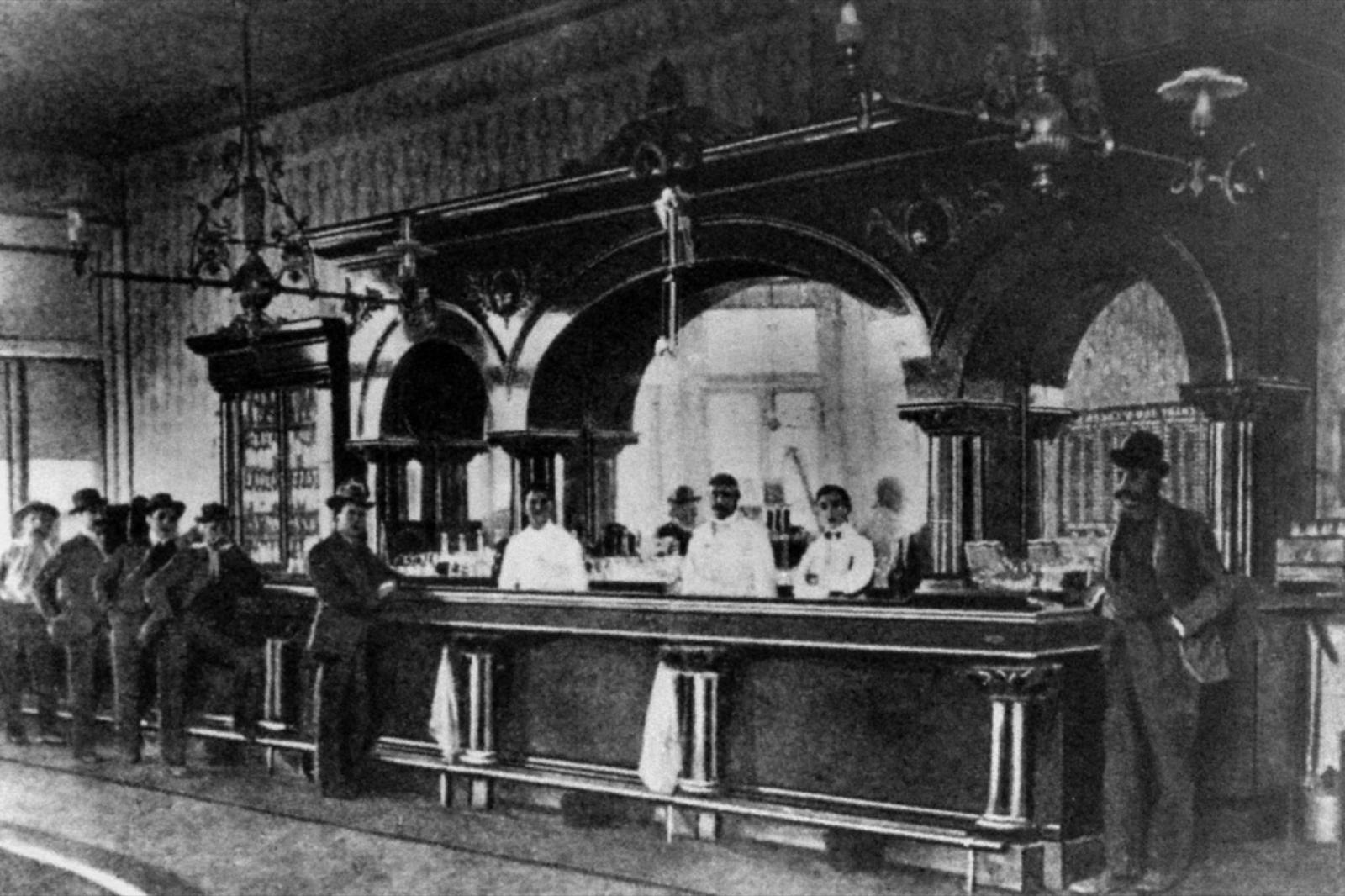
Old West saloons were about the first places in a new town to open. Businesses in new settlements catered to immediate needs, and after a hard workday, or for a newcomer with no friends yet, the saloon was the meeting place.
What were they like? Different from today in most ways, and we are glad about that. One similarity: many of them served food alongside the drinks.3 This page covers the saloons of 1880s Tombstone first, then famous saloons elsewhere in the West, and finally the historic ones you can still walk into.
What an Old West saloon was like
Customers were nearly all men. Women either were not allowed in, or “proper ladies” did not care to enter most of them. Women did not have many entertainment options in Tombstone. Clara Spalding Brown wrote that “the ladies of Tombstone are not so liberally provided with entertainment, and find little enjoyment aside from a stroll about town after sunset.”1 They did go into the more respectable, lavish establishments for sponsored events such as dances and masquerade balls, but only if properly escorted.3
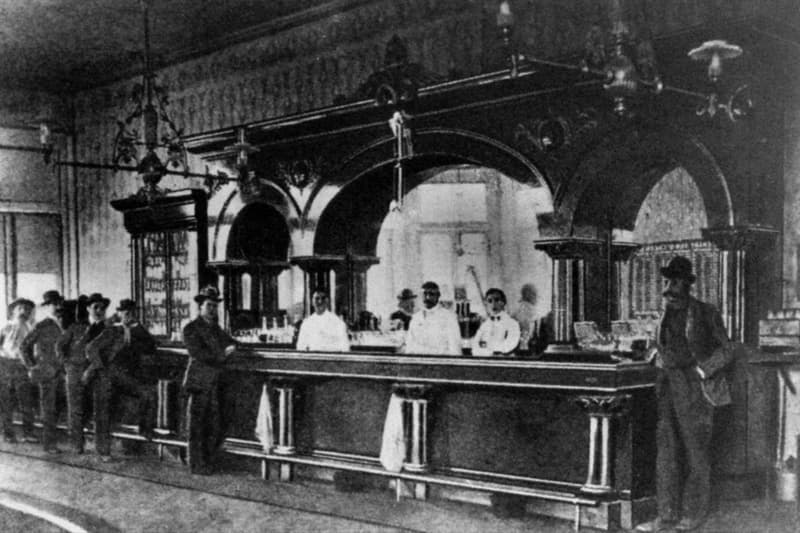
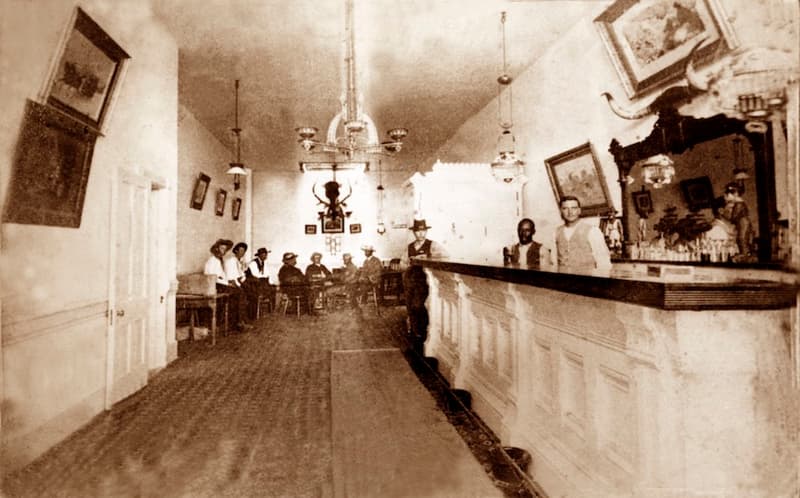
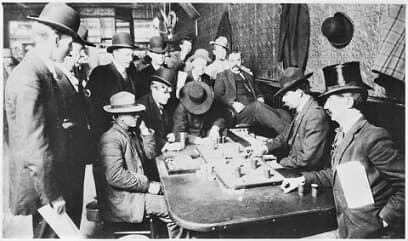
The typical saloon had no bar stools. In old photos the customers stand at the bar. Chairs and tables, if there were any, were in the back. Where gambling was offered, which was often, a section was set aside for it with card tables and chairs. Gambling was legal with a license.3 The most popular games of chance were faro and keno; roulette and poker belonged to the more exclusive places.4
Old West saloons of Tombstone
Like many Old West towns, Tombstone grew out of its silver mining operations. Adventurers came to make a living, or to uncover great wealth, and saloons and brothels followed the mining camps quickly to supply entertainment, quick meals and relaxation. The earliest Tombstone saloons were set up in canvas tents, among them the Mt. Hood Saloon, the Bank Exchange Saloon and Doling’s Saloon.3
By mid-1880 Tombstone had all the major conveniences of the era, including 18 saloons.4 By the end of that year there were more than 33, plus four breweries and six wholesale liquor stores.3 Some employed saloon girls. These women were usually not the same as “soiled doves,” yet they were not looked on as proper women of society either. They were hired to entertain, serve drinks, keep company and dance with the men in the somewhat more reputable saloons.
The Golden Eagle Brewery and the Crystal Palace
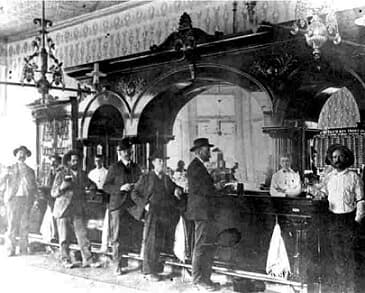
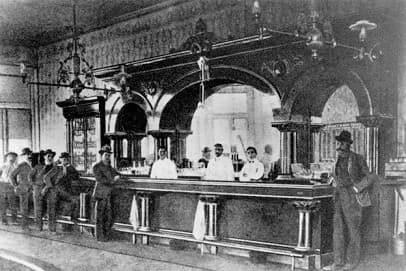
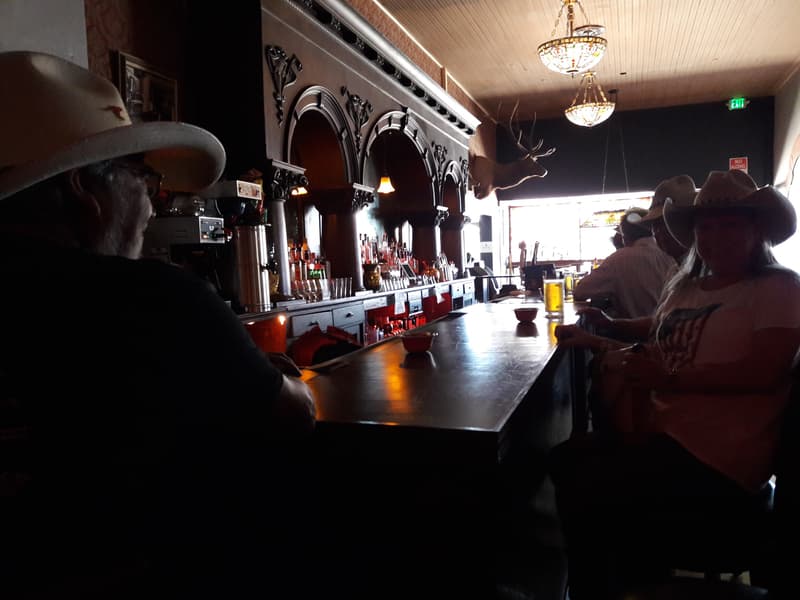
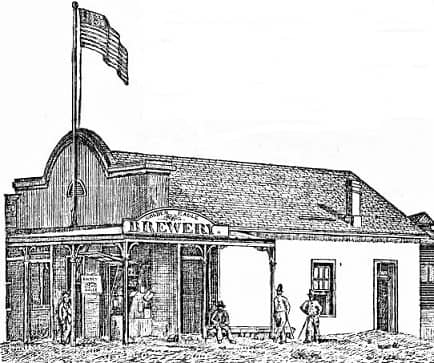
The most historic of Tombstone’s saloons began as the Golden Eagle Brewery, opened in July 1880 at Allen and Fifth by Bernhardt Wehrfritz and the Tribolet brothers. After the May 1882 fire it was rebuilt as the Crystal Palace, and it is still in business today as an eating and drinking establishment on that same historic corner. It is about the most authentic Old West saloon in town.
The other fine saloons in town
These other establishments were also in business in the early 1880s.4
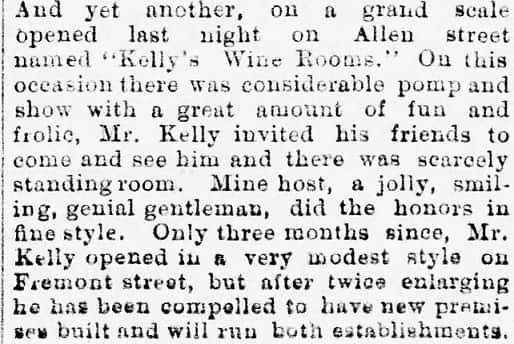
Kelly’s Wine Rooms. A small bar opened in May 1880 on Fremont Street. The owner, Julius Kelly, expanded and reopened on August 6 as Kelly’s Wine Rooms.3
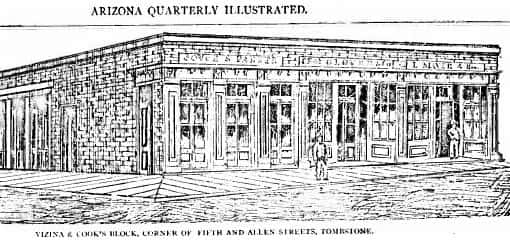
The Oriental Saloon was among the most famous, at the corner of Allen and Fifth. Milton Joyce opened it in the Vizina and Cook building on July 21, 1880.3 There is an Oriental Saloon in the same building today.
The Grand Hotel Saloon, on the first floor of the deluxe Grand Hotel, opened its doors on September 9, 1880.
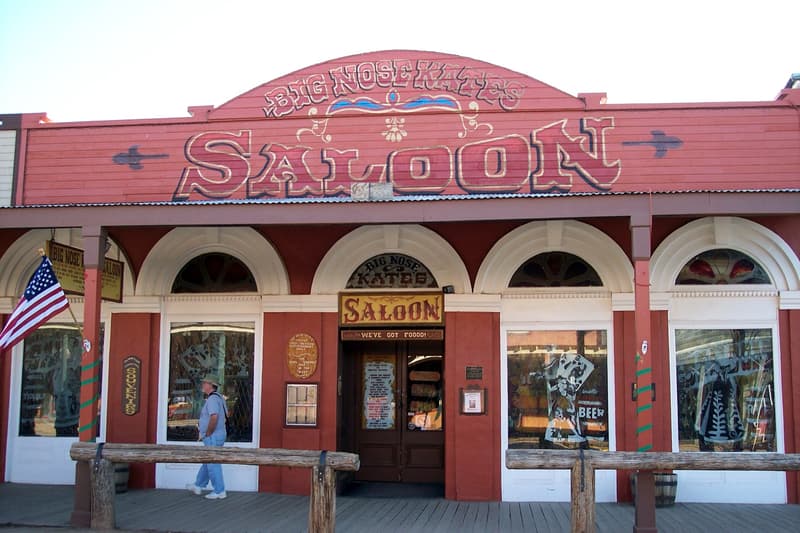
The Bird Cage Theatre was built after the 1881 fire to offer variety theater. The owner created a showy establishment at Sixth and Allen with saloon dance-hall girls on the floor,4 the usual belly-up bar, gambling rooms and a bordello.2
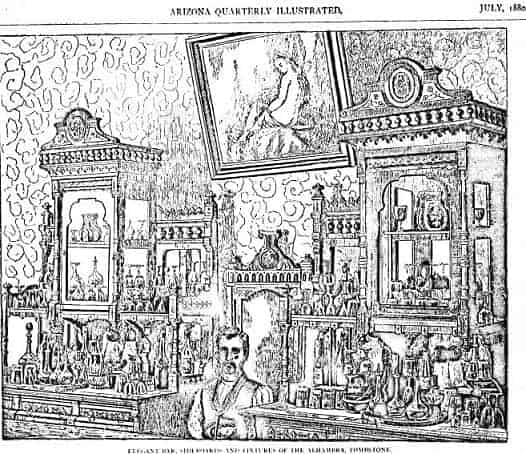
The Alhambra Saloon, on Allen midway between Fourth and Fifth, was known as the finest in town, or even in the West outside San Francisco.
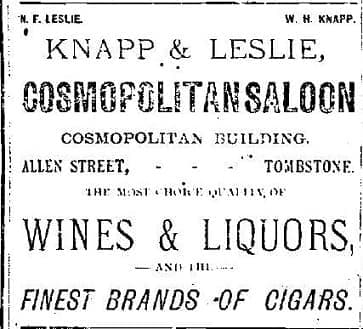
The Cosmopolitan Hotel Saloon was completed in July 1880, a fine building for its time with a garden of orange trees lining the front.
Less opulent Tombstone bars and saloons
- D.P. Walsh’s Cock Pit Saloon offered cock-fights, with wagering.
- The Arcade Saloon on Allen, between Fifth and Sixth Streets.
- The E. Fontana Dance Hall at Fremont and Sixth.
- Tivoli Gardens on Allen Street, between Fourth and Fifth.
- The Occidental Saloon, a popular spot on the north side of Allen, midway between Fourth and Fifth.
- Hafford’s Saloon, at the northeast corner of Allen and Fourth.
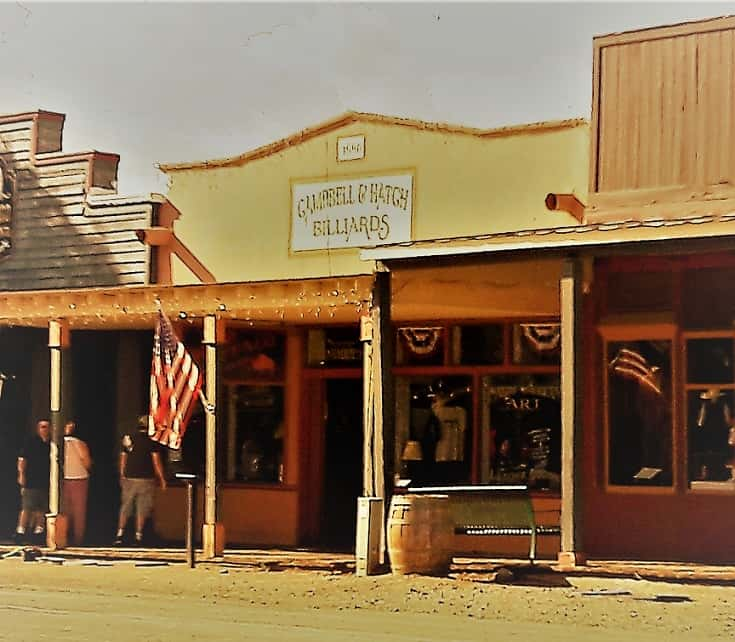
- Campbell & Hatch’s billiard parlor and saloon, on the north side of Allen between Fourth and Fifth. It is notorious because Morgan Earp was shot and killed there.
- Vogan’s Saloon, run with his partner Flynn at the southwest corner of Allen and Fifth. Over time their sampling room added a bowling alley and a shooting gallery.
- Thomas Corrigan’s Saloon and Billy Owen’s Saloon.
Which of these would have been your favorite? One way to think it over is to stay a night in town and walk Allen Street after dark.
Tombstone saloon food and drinks
Some Tombstone saloons served food along with drinks, especially at lunch. Sample rooms sold drinks by the glass rather than only by the bottle. A few saloons even had a shooting gallery or a bowling alley.4 Prices below are from the early 1880s.
- The Alhambra had a lunch counter. Drink choices: English ale, porter, excellent Scotch, Tom and Jerries.3
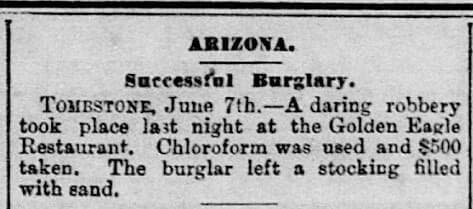
- The Golden Eagle Brewery’s lunch counter served three bottles of lager for $1. After it did well, a three-gallon keg went for $3.4 Later, after some reorganization, it offered beer in “scooners” [sic] for 12-1/2 cents, bottles for 25 cents each, or three bottles for 50 cents.3
- At the Arcade Saloon, two bits (25 cents) bought blackberry wine, other drinks or a cigar.3
- The Oriental Saloon offered hot spiced rum and Tom and Jerries.3 Its grand reopening after the 1881 fire featured one-bit drinks.
- The Grand Hotel Saloon and Wine Parlors had a menu of cocktails, wine, ale, beer and straight liquor, plus cigars.3
- Kelly’s Wine Rooms and Miley’s Wine House sold drinks for one bit, 12-1/2 cents.3 A bottle of wine was 50 cents, a half bottle half price, and grape brandy was always on special. A lunch sandwich of Swiss, Limburger or American cheese with Holland herring or sardines cost 25 cents.
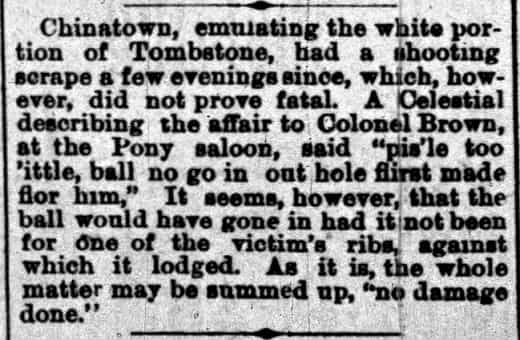
- The Pony Saloon served hard liquor in “pony glasses” for 10 cents: rye, double-stamped bourbon, gin and Russet cider.3
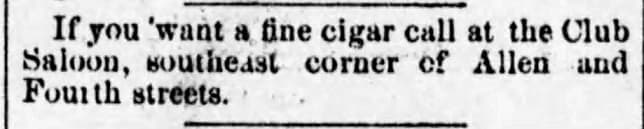
After the 1881 fire several saloons ran specials to win customers back.3 The Club Saloon, which had a lunch counter, reopened quickly and celebrated with 12-1/2 cent drinks. Vogan’s reopened four days after the fire advertising two-bit drinks. The Bonanza Saloon offered a free lunch, always, plus drinks at 12-1/2 cents. The Tivoli Saloon advertised Boca Beer, a lager made with Truckee River water. At the XLN Saloon 12-1/2 cents bought a cigar or a drink such as Gold Leaf whiskey or Thistle-dew.3
Other well-known Old West saloons
Throughout the Old West, certain saloons gained fame. Gunfighters, notorious lawmen and famous outlaws drew headlines for things that happened inside them. Some no longer exist, but their renown lingers. Others can still be visited.
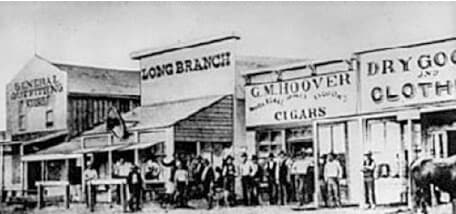
The Long Branch Saloon
The Long Branch in Dodge City, Kansas, was first built in 1874 and lasted until a fire in 1885. Chalkley Beeson bought it in 1878 with his partner William Harris, who named it after his home town of Long Branch, New Jersey. Incidentally, that is the town where husband Bill was born, in a long-defunct hospital with the unfortunate name of Hazard Hospital.
The Long Branch was a regular feature on the television show Gunsmoke. In reality many well-known people frequented its bar and gambling tables, among them Wyatt Earp, Doc Holliday, Luke Short and Bat Masterson. Beeson sold his interest to Luke Short in 1883. Dodge City today trades on that history, and a visit is worthwhile.
White Elephant Saloon
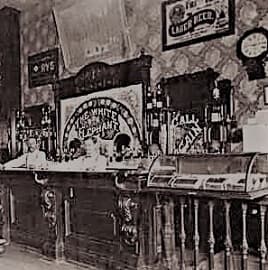
This saloon was in Fort Worth, Texas. It opened in early 1884 in deluxe style, with a Leap Year grand opening that gave cause to invite the local ladies. The gambling room was upstairs, and those trying their luck included Wyatt Earp, Luke Short, Bat Masterson and Charles Coe.
It stood on Main Street between Third and Fourth until fire destroyed it in the 1890s. The Morris Building marks the spot. A more modern rebuild opened three blocks south on Main Street in 1896, where the Winfree Building now stands between the Ashton Hotel and the Kress Building. It did not last, and closed with financial problems. The White Elephant Saloon in Fort Worth today is a modern remake at a different location, with no relation to the historic business.
Orient Saloon
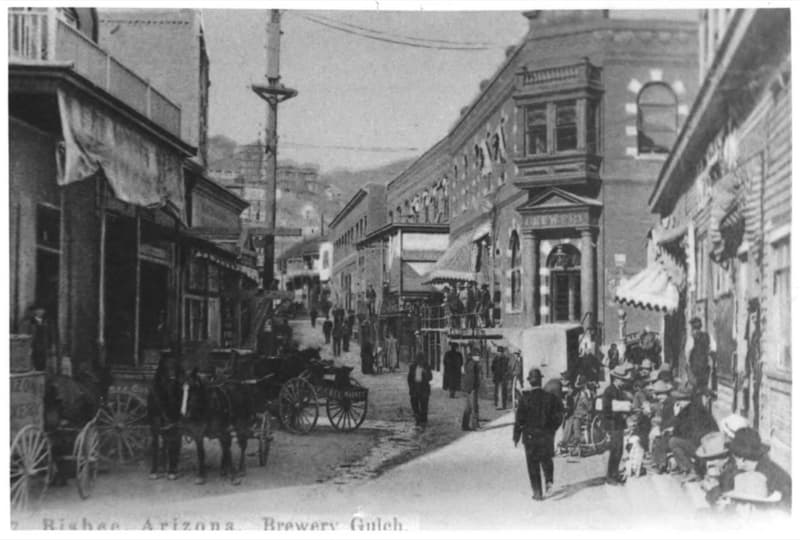
In Bisbee, the mining town southeast of Tombstone, the saloons were concentrated in Brewery Gulch. Remnants of them, and a few working historic saloons, are still there. One saloon of the era was the Orient, among the roughly 50 that operated in Bisbee’s wild days. Its raucous reputation attracted gamblers such as Dutch Kid, Charlie Bassett and Smiley Lewis.
Express St. James
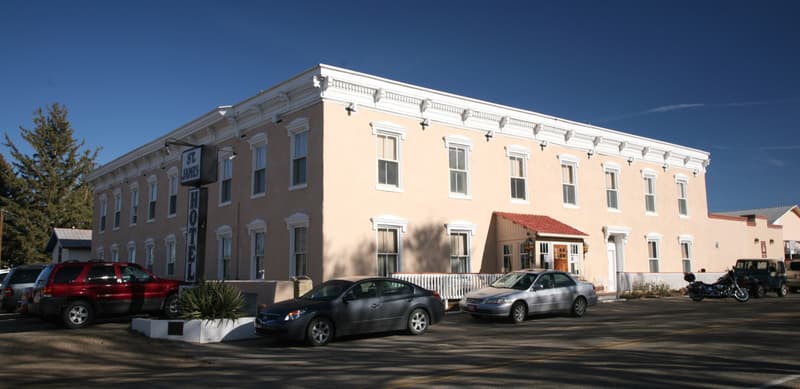
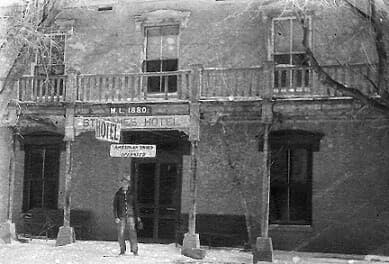
In Cimarron, New Mexico, this hotel and saloon attracted action. Many famous lawmen, gamblers and desperadoes spent time there, and Buffalo Bill Cody and Black Jack Ketchum stopped in. It was built in 1872 by Henri Lambert, who had cooked for Abraham Lincoln. Today it is part of Cimarron’s historic district on the National Register of Historic Places. You can stay the night and have a drink at the bar. Look up: the bullet holes in the ceiling are from its gunfighting days.
More Old West saloons you can still visit
You can visit many more Old West saloons across the Western states. Some have been restored. For some you need your imagination, standing on the site they once occupied. Others have been reworked and updated yet keep an Old West look, with their histories told in photographs and relics on the walls.
Still here today
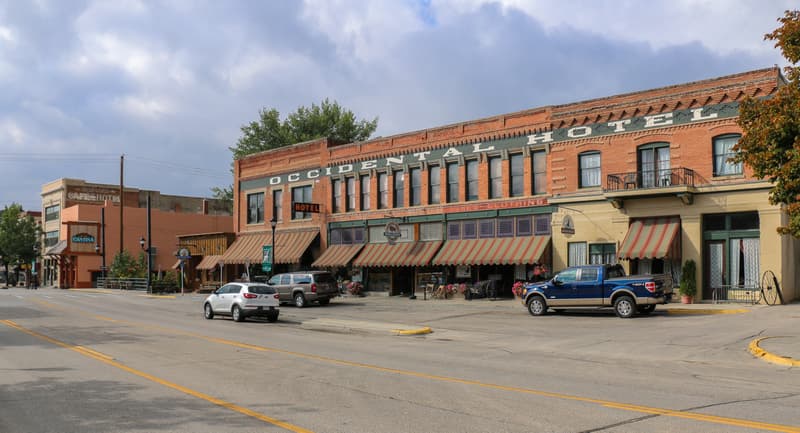
Wyoming. The Occidental Hotel and Saloon in Buffalo was a popular and sometimes wild saloon, and the bullet holes are still there as testimony. Butch Cassidy and the Sundance Kid were guests; Calamity Jane and Buffalo Bill Cody were customers. The original 1880 bar-room was basic, but it was finely refurbished in 1908.
California. The Buckhorn Saloon in North Fork, in the Sierra Nevada foothills near Yosemite’s south entrance, has been around since the late 1800s. Les Smith started it, and at least eight more owners have followed. It has been refurbished and has a good menu.
Texas. The Buckhorn Saloon in San Antonio first opened in 1881 on Dolorosa Street. It has moved five times since, the last time just down the street from the original, and it still has the first back bar and its historic trappings. It is on East Houston Street.
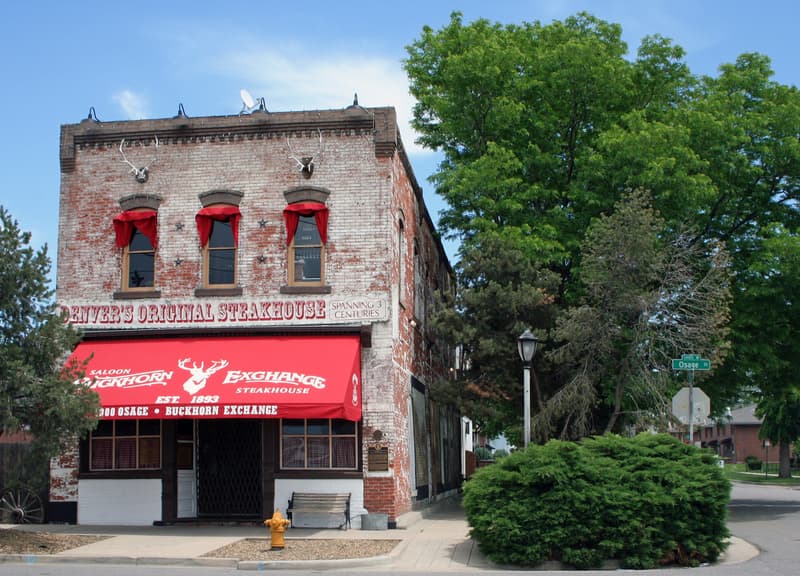
Colorado. The Buckhorn Exchange in Denver, at Osage Street and 10th, has been there since it opened on November 17, 1893. There is a ton of history in its walls, and the menu does not disappoint. Go upstairs to find the original 1857 German-made back bar in the Victorian Lounge.
Also in Colorado, the Board of Trade in Leadville is now the Silver Dollar Saloon. It opened in 1879 on Harrison Avenue. The bar was shipped by covered wagon from St. Louis, and the upstairs gambling rooms offered faro and chuck-a-luck. It survived Prohibition with stills outside town for supply, trap doors under the bar to hide the evidence, and private booths for customers.
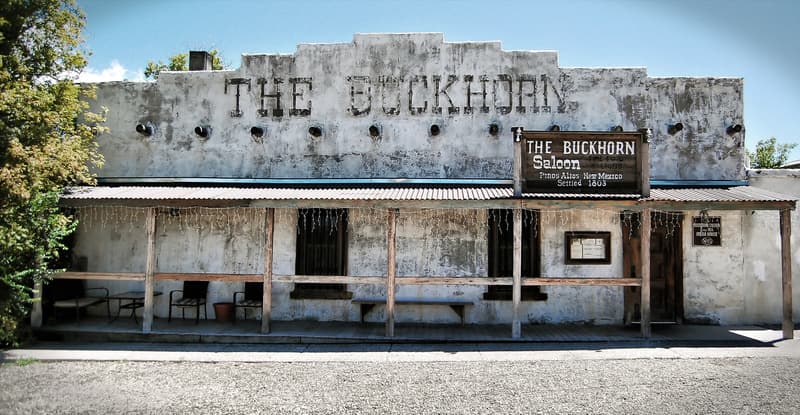
New Mexico. The Buckhorn Saloon in the small historic village of Pinos Altos, just north of Silver City, traces its main bar to 1865. The original adobe walls still stand, with newer additions such as an expanded dining room. The bar and back bar by the Brunswick-Balke-Collender Company were shipped in by wagon. It has plenty of atmosphere and serves food and drinks. Bill spent a happy while studying the menu.
Nevada. The Genoa Bar and Saloon sits in a beautiful spot at the base of the eastern Sierra Nevada, 10 miles south of Carson City. It was built in 1853 as Livingston’s Exchange and became Fettic’s Exchange when Frank Fettic bought it in 1884, with many more owners since. Its guests have included Mark Twain, Ulysses S. Grant, Teddy Roosevelt, Clark Gable, Cliff Robertson, Raquel Welch (who left her bra behind), Willie Nelson, Charlie Daniels, Merle Haggard, Waylon Jennings and Johnny Cash. It served as a movie set for The Shootist with John Wayne, Till the River Runs Dry with Ann-Margret, and Honkytonk Man with Clint Eastwood.
The Santa Fe Club Saloon is in Goldfield, the old mining town south of Tonopah where Wyatt Earp and his brother Virgil lived in the early 1900s. This combined saloon and motel opened in 1905. Turn off Highway 95 onto North Fifth Avenue, and be warned that it becomes a dirt road. It has off-the-wall Old West charm with modern comforts and cold drinks. The beer selection is basic, but they do have the hard stuff.
The Overland Saloon in Fallon, about 60 miles east of Reno, is in a historic hotel near downtown dating from around 1908. Its second owner, local politician George Sherman, made it a success, and it was called the finest stay in town. There is a Basque dining room as well as the saloon, and the old-style jukebox is still there.
The Old Globe Saloon in Carson City, on North Curry Street, is the oldest Western saloon in town, though in some ways it does not reflect that. It draws a crowd of local regulars, and there are some history remnants on the walls. It has been there since 1875, so I would think it would show that a little more. What do you think?
The J.T. Basque Bar and Dining Room in Gardnerville, 15 miles south of Carson City, is a wonderful and unusual historic place. Hans Nelson moved the 1896 building from Virginia City, and it began as a dining room, saloon and hotel. In 1955 the Jaunsaras and Trounday families bought the business and it became the J.T., after the owners’ initials, a French Basque operation. The Lekumberry family bought it in 1960, kept the name and restored the whole building in the Basque pioneer tradition.
Reinvented
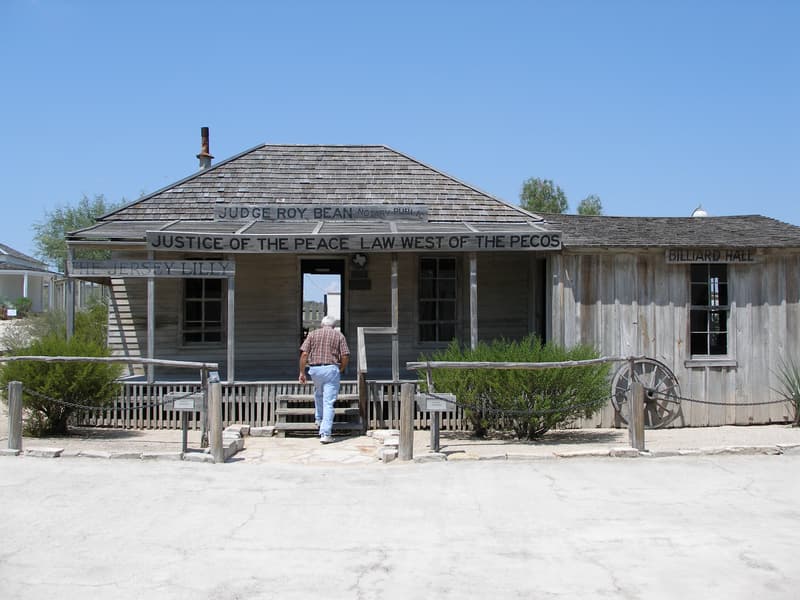
Texas. The Jersey Lilly Saloon in Langtry dates from the 1890s and is named after the English singer Lillie Langtry. Judge Roy Bean, a man of dubious legal accountability, set himself up as the law west of the Pecos in his saloon and courthouse, proclaiming himself justice of the peace. Naming his saloon after Langtry fixed it forever in history and folklore. Today it is a Texas Highway 90 rest stop, not far from the Rio Grande and the international border.
Nevada. Indian Maggie’s, 46 miles northeast of Tonopah, housed the local newspaper, the Belmont Courier, from 1867 to about 1901. It is now part of the Belmont ghost town.
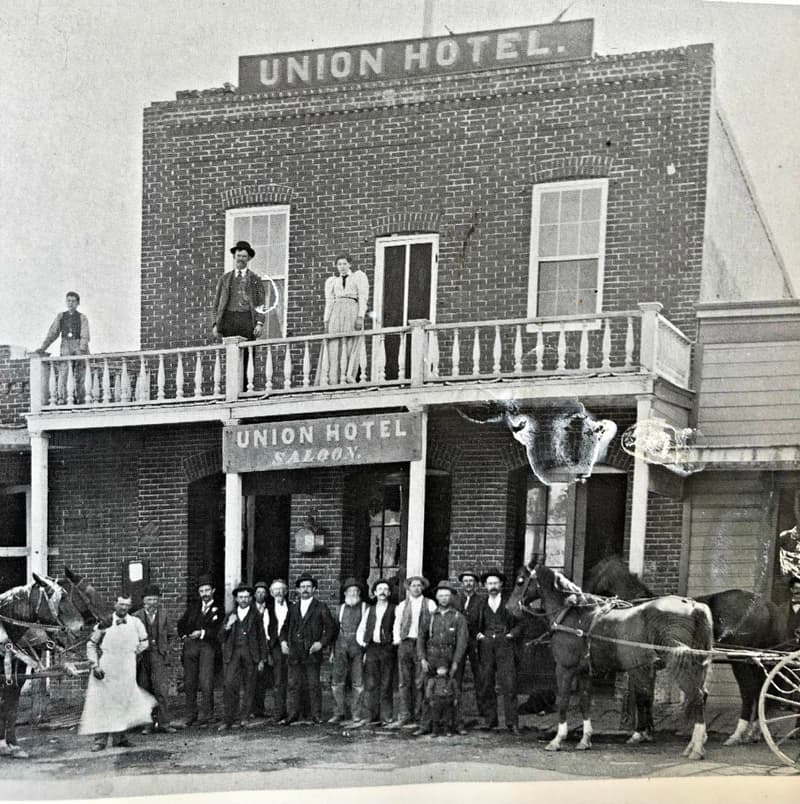
The Union Hotel Saloon in Dayton, about 15 miles east of Carson City, was a popular hostelry in the late 1800s and early 1900s and is among the state’s oldest buildings. It had a two-story outhouse, a saloon and eight small rooms, most of them only eight feet square. After standing empty for a while it was bought by a young couple who converted it, with the required permit, into their home. The saloon became their living room. It is private property now.
Long gone
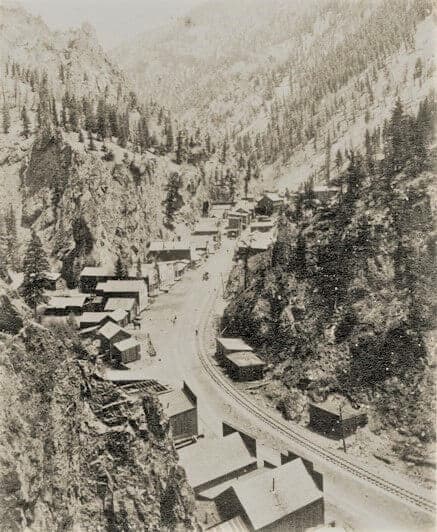
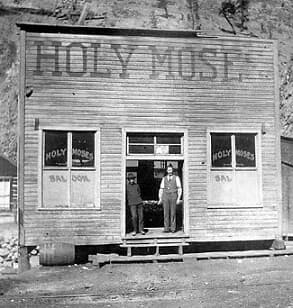
Colorado. The Holy Moses Saloon was in Creede, a silver boom town near the source of the upper Rio Grande. Bob Ford, Bat Masterson and Soapy Smith all owned saloons in town. Despite its name, the Holy Moses ran a brothel whose soiled doves went by names like the Mormon Queen, Poker Lulu Swain and Timberline. It had no need for a front door, since it never closed.
New Mexico. The Buffalo Bar in Silver City kept its building and facade, but there is no hope of it reopening: the liquor license was sold to a drugstore chain. The building’s front had safety problems and the iconic neon sign was taken down. It proudly called itself a dive bar, with the motto “The Oldest, The Baddest, The Best,” and it was popular in its day.
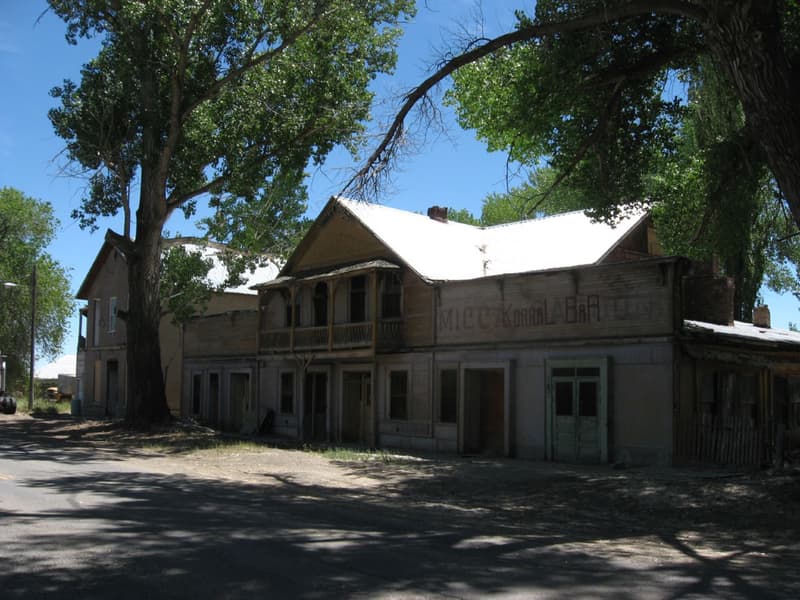
Nevada. The Micca House Korral Bar’s building still stands in Paradise Valley, 40 miles north of Winnemucca, and is on the National Register of Historic Places. Built in the 1880s, it held a saloon, a department store, a post office and a government office, something like a mall of its day. At various times it also housed the courthouse and jail, a doctor’s office, a barber shop, a dress shop, a saddle shop, a warehouse, a brewery, a chop house (an Old West steak house), a butcher, a bakery and a hotel. The bar closed long ago, and the building is privately owned.
References
1 Bailey, L.R. (1998) Tombstone from a woman’s point of view: The correspondence of Clara Spalding Brown July 7, 1880 to November 14, 1882. Compiled and edited by Bailey. Letter to San Diego Union Letter, July 7, 1880. Tucson AZ: Westernlore Press.
2 Tombstone Birdcage (2004-2020). Birdcage Theatre. Retrieved from tombstonebirdcage.com/
3 Underhill, L.E. (2012) Tombstone Arizona saloons 1879 – 1882. Gilbert AZ: Roan Horse Press.
4 Bailey, L.R. (2004). Too tough to die: The rise, fall and resurrection of a silver camp; 1878 to 1990. Tucson AZ: Westernlore Press.
No comments yet