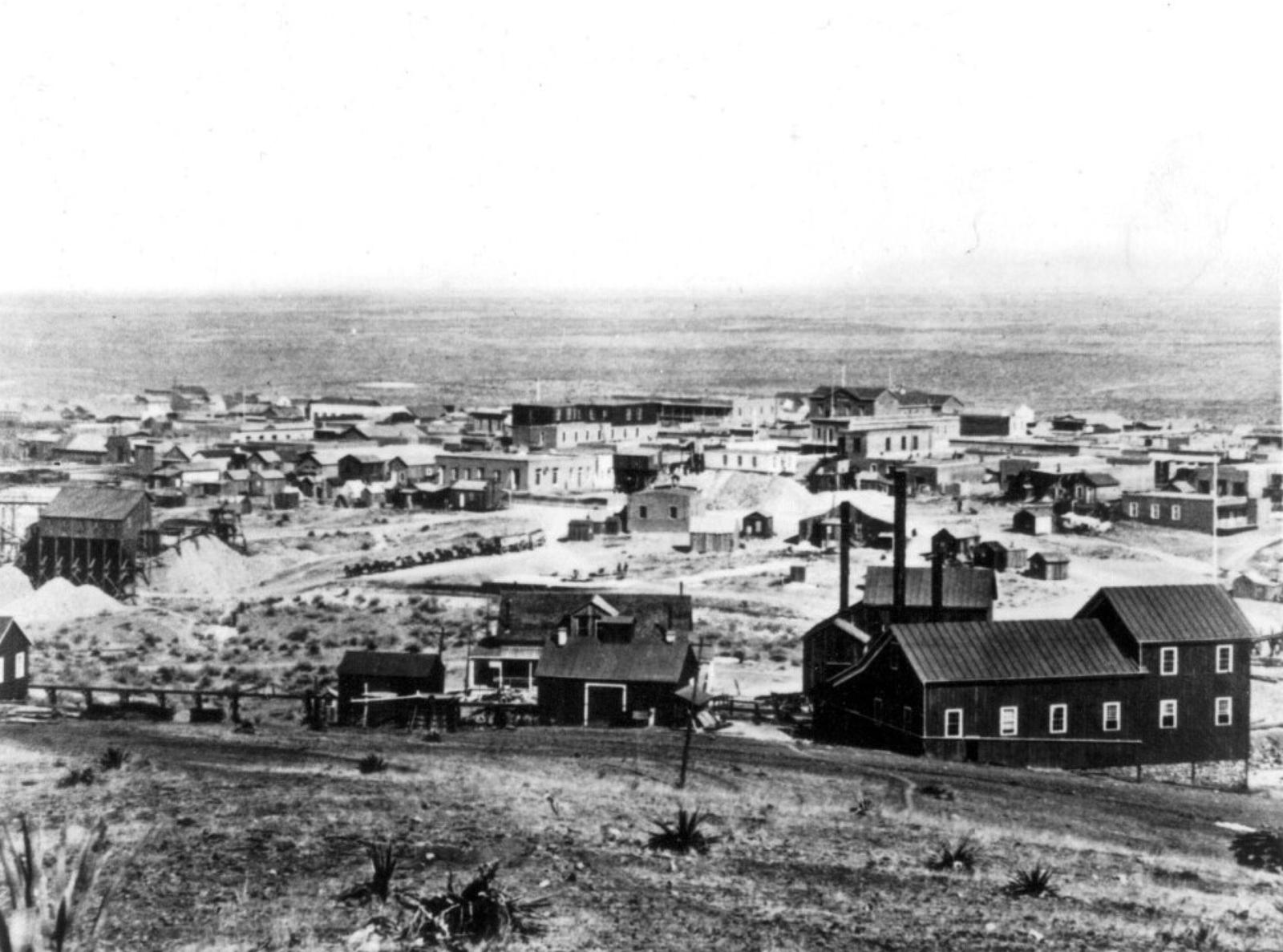
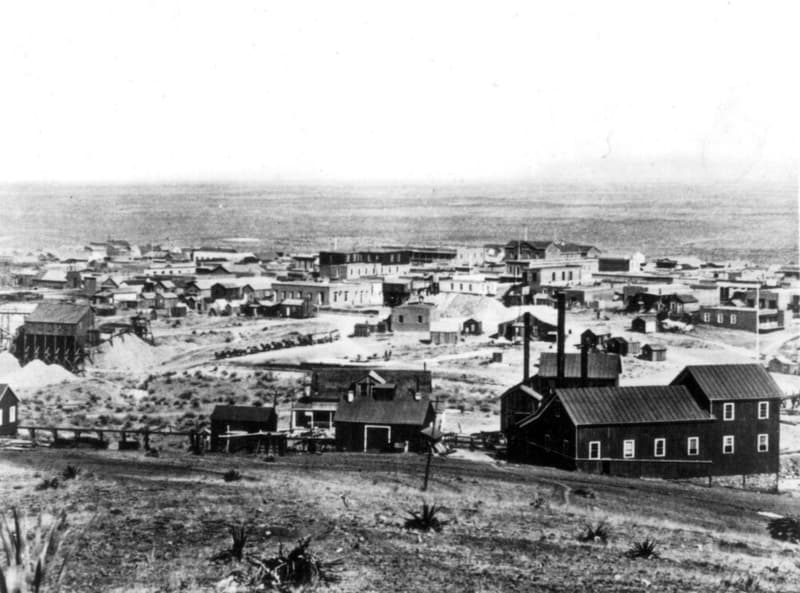
The Alhambra Saloon was one of the three deluxe saloons of early Tombstone, on the north side of Allen Street between Fourth and Fifth. It saw knife fights and record poker stakes, burned in the great fire of 1882, and was the first business to rebuild.
Here’s its story, told largely through the newspapers of the day.
The Finest Saloon Outside San Francisco
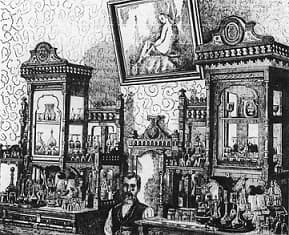
The editors of the Arizona Quarterly Illustrated were impressed. The Alhambra’s illustration took up half a page in their first issue, made from “a photograph by Fly, of Tombstone.” Of Tombstone’s 18 saloons at the time, three were considered deluxe: the Alhambra, Kelly’s Wine Rooms and the Oriental. The Quarterly wrote that the Alhambra “certainly has no equal, for style and elegance, outside of San Francisco.”
The owner and creator of the Alhambra was Thomas H. Corrigan. Born in Ireland, he immigrated to New York State, then came west and went into mining. He made money and went into the bar business.
Corrigan stocked the best alcohol available, importing top brands of whiskey, wine and brandy, and served them in fine French and Italian glassware. He kept imported cigars on hand too. The bar was in front, and the club rooms for gambling were at the back: everything the sporting man of the time needed. Cowboy stockmen coming into Tombstone stopped in too.
Even the Best Saloons Had Trouble
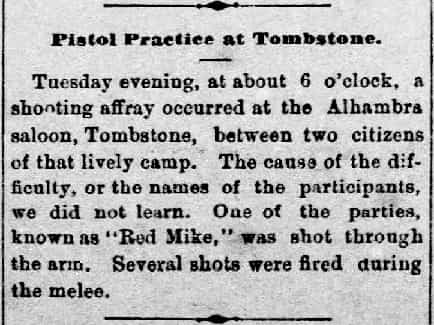
All that luxury didn’t prevent an incident with a patron known as “Red Mike.”
That wasn’t all. The Epitaph reported a knife fight over a card game between the dealer, Willis Lawrence, and a player nicknamed “Whistler,” and the Tucson papers picked up the story.
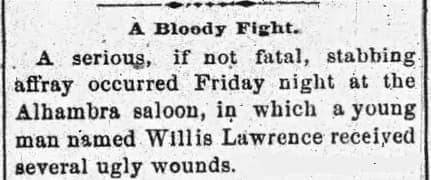
After some words and name-calling, the dealer Lawrence slapped the gambler Henry Newman, “Whistler,” in the face. Newman pulled a knife and slashed Lawrence’s head. Then he stabbed him in the stomach so hard that his “bowels were protruding,” and again in the right side of the chest, and slashed his arms several times before he ran off.
Lawrence was taken for medical care and was expected to recover. A deputy sheriff found Whistler in an opium den, and he was arrested and jailed.
The Sporting Life
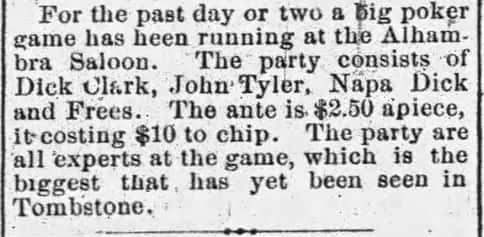
Gambling was a popular pastime in the Alhambra’s back rooms. Many people have heard of the famous high-stakes poker game at the Bird Cage Theatre. But have you heard about the one at the Alhambra?
In the spring of 1881, the Alhambra hosted the biggest-stakes poker game Tombstone had yet seen. Among the players were Dick Clark, one of the town’s leading gambling men, and John Tyler, a well-known gambler; you may remember his character, Johnny Tyler, from the Tombstone movie. Chips were $10 and the ante $2.50, serious money in 1881; allowing for inflation, that $10 chip would be worth a few hundred dollars today.
The Fire of May 1882
Wooden construction and the lack of a working city water system made early Tombstone a fire trap. A few fires broke out without endangering the Alhambra. That changed in May 1882.
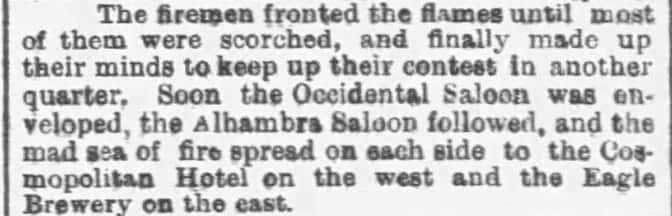
The fire started behind the Tivoli Gardens saloon, on the same block of Allen Street. It spread eastward, and nothing could stop it on the block between Fourth and Fifth. It went on to ravage much of the town, as our article on Tombstone’s historical fires describes.
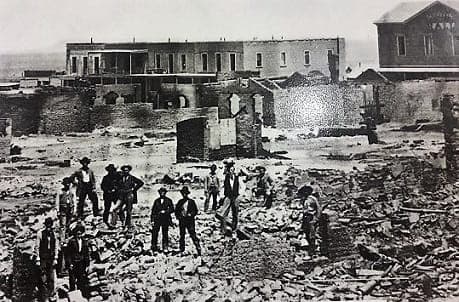
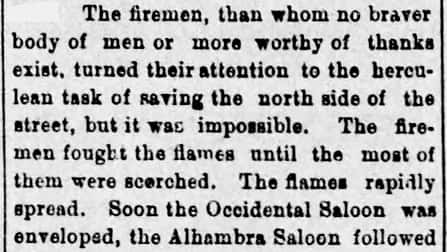
The fire made news across the country, not just in Arizona.
Right Back to Building
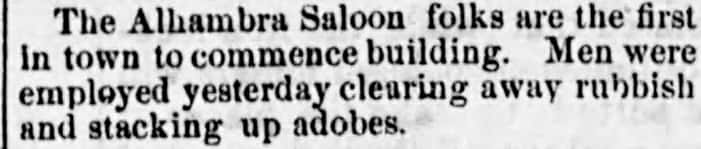
You know the motto: the Town Too Tough to Die. It started back then. The Alhambra went right to work rebuilding, the first business to do so according to the Epitaph. Builders realized that so much wood wasn’t a good idea, and adobe took hold as the better material.
Corrigan Loses Interest
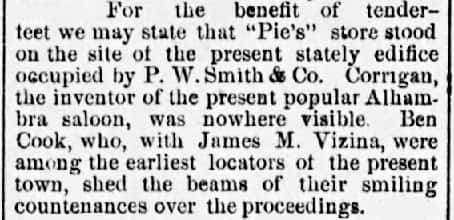
As Tombstone rebuilt, it was also getting a new courthouse, and in August 1882 the town celebrated the laying of the cornerstone. The Epitaph had praised Thomas Corrigan’s fast rebuilding, but it couldn’t help pointing out that he missed the cornerstone celebration.
In the mid-1880s, Corrigan gave up his saloon interests and left Tombstone. He moved to Sonora, Mexico, married there, and went back to mining at the Trinidad Mine. On November 6, 1889, for no apparent reason, he was killed by a man named Smith Gray.
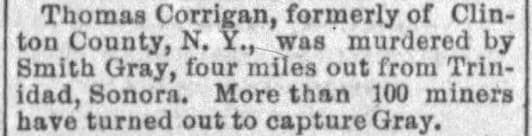
Why would a Nashville paper report it? Maybe Corrigan spent time there on his way west from New York to Tombstone.
The Epitaph reported that Gray, an American known in Tombstone, had been drinking and boasting that he would kill Corrigan. Then he went out, found him and shot him in the back. Everyone who knew Tom was outraged; he was well liked by the townspeople and his fellow miners.
Historic places like the Alhambra make us curious about the people who roamed Tombstone and the Old West. What’s the true story, and what happened to them? We enjoy digging up the authentic history and sharing it with you. When you’re in town, walk Allen Street between Fourth and Fifth and picture the Alhambra in its glory.
No comments yet