Milton E. “Milt” Joyce opened the Oriental Saloon at the corner of Fifth and Allen in 1880, and it made him one of the best-known men in early Tombstone. He was a fireman, a county supervisor and a militia captain, and he tangled with Doc Holliday and the Earps along the way.
Here is his story, and what became of the Oriental after he left town. For the saloon’s own history, see our guide to the Oriental Saloon in Tombstone.
Before Tombstone
Joyce family research finds Patrick Robert Joyce born on October 16, 1847, in County Cork, Ireland. The potato famine drove the family’s immigration. They settled in Richmond, Virginia, where the boy’s name became Melvin Edward; we don’t know where “Milton” came from. That’s why the 1880 Arizona census lists him as born in Virginia.
He enlisted in the Confederate army at 15 and moved to Louisville, Kentucky, after the war. In his 20s he headed west to California, where he learned blacksmithing and mining. Then he heard about the silver strikes in Tombstone.
Milt Joyce and the Oriental Saloon
M.E. Joyce came to town in 1879 for the silver mining and got in on a few claims. What he’s best known for in Tombstone, though, is the Oriental Saloon. That’s where he made his money.
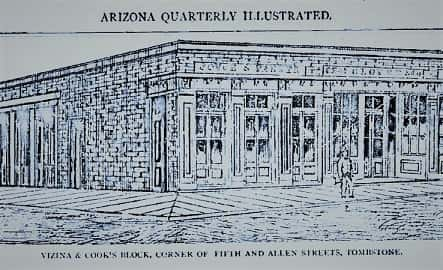
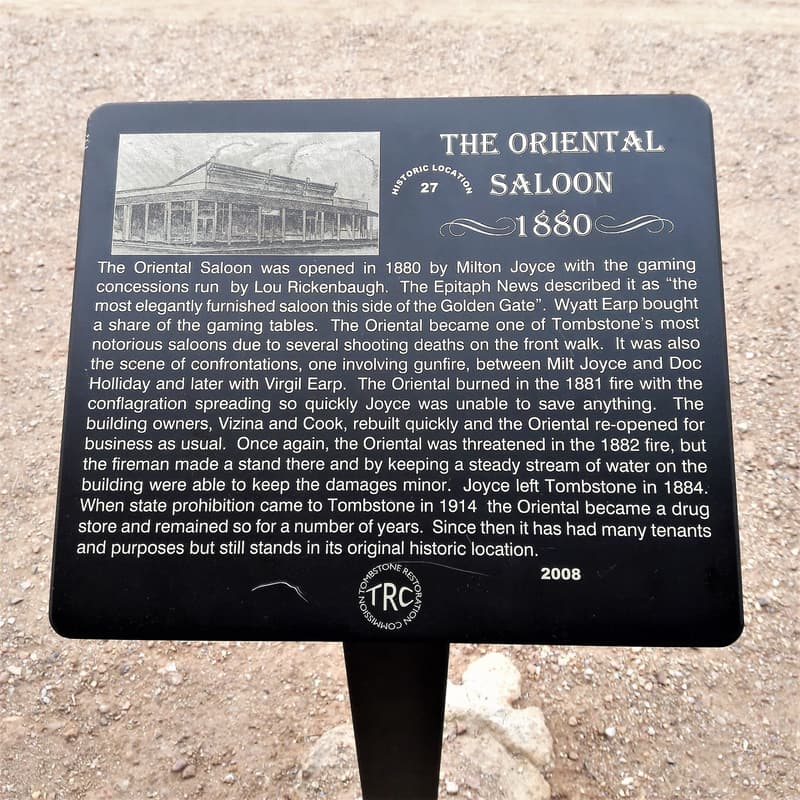
He didn’t own the building. The Vizina & Cook Building on the northeast corner of Fifth and Allen had several units, and in June 1880 Joyce leased the one right on the corner. It held a bar and restaurant, and he granted the gambling concession to Lou Rickabaugh’s group.
Joyce spared no expense on the decor, and he hired a pianist to play in the evenings. But the saloon seemed to attract more than music lovers.

A busy start
The Oriental gave Joyce a way to meet many of Tombstone’s important people. He quickly became well known and was an active citizen.
When Tombstone Engine Co. No. 1 formed on September 1, 1880, Joyce was elected assistant foreman. Other notable members were Wyatt Earp as secretary and James Vogan as treasurer.
Doc Holliday shoots Milt Joyce
Milt Joyce wasn’t known for holding his tongue, or for keeping his opinions to himself.
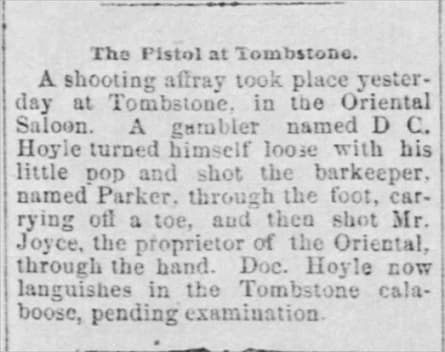
In October 1880 that led to a famous altercation with Doc Holliday. Doc and the gambler Johnny Tyler (remember him from the movie Tombstone, played by Billy Bob Thornton) were arguing, and guns were about to come into play. Joyce told Doc to leave. Doc refused, and Joyce threw him out. Doc came back and shot Joyce in the hand and the bartender in the foot.
According to the diarist George Parsons, things at the Oriental had become quite bad by March 1, 1881: “Oriental a regular slaughter house now.” He said Joyce shut down the gambling, though not for good. By the end of June Joyce had stepped back for a while, perhaps with politics as his main concern.
The fires of 1881 and 1882
In June 1881 Tombstone had its first serious fire. It started a few doors east of the Oriental. The saloon’s adobe walls held, but the ornate interior burned quickly, and the cash Joyce kept in a safe inside was lost. Afterwards he sold his interest in the Oriental to Rickabaugh, who rebuilt it. Read more about Tombstone’s historic fires.
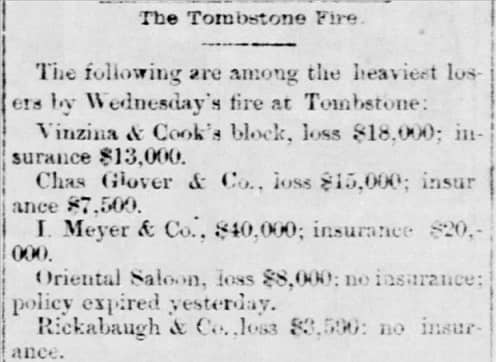
Soon after the fire, the town organized another fire company, and Joyce turned out in uniform to help at its New Year’s Ball.
The Oriental was in danger again when the May 1882 fire swept through town. The firefighters’ front line was right in front of the saloon’s corner. It mostly held, and the Oriental survived with minimal damage. A grateful Joyce rewarded the firemen with drinks.
Joyce and the Earps
After the gunfight at the O.K. Corral, Joyce made his strong feelings known. When the Earps ordered drinks at the Oriental, Joyce made a sarcastic comment, and an Earp slapped him. Joyce backed away, saying, “You won’t get to shoot me in the back as you’ve shot everyone else.” That’s according to Deputy Sheriff Billy Breakenridge.
County supervisor, ranger captain and businessman
When Cochise County was formed in February 1881, Joyce was named one of its supervisors, and by April he was chairman of the board. Still the businessman, he bought back the Oriental in mid-January 1882, after Rickabaugh ran into trouble and left Arizona.
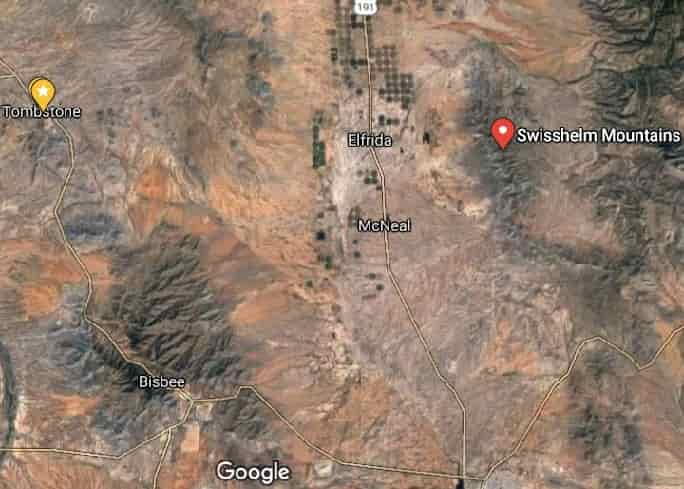
Joyce volunteered on the Irish Land League’s St. Patrick’s Day committee. When General Sherman visited Tombstone on April 10 and 11, 1882, Joyce was grand marshal of his reception. The next month he was vice president of a board buying the Tombstone Epitaph. He was instrumental in planning the county courthouse, today Tombstone Courthouse State Historic Park. By mid-1883 he was also ranching, on a place he bought near Horseshoe Pass in the Swisshelm Mountains.
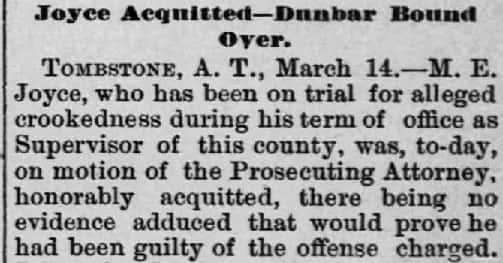
Joyce’s legal troubles came after politics. In February 1883 he was arrested on forgery and fraud charges from his time as board chairman. He posted bond, insisted he was innocent and was acquitted.
Captain of the Tombstone Rangers
In the spring of 1882 the territory authorized a volunteer ranger company in Tombstone, known locally as the Tombstone Rangers. Apaches had broken out of the San Carlos Reservation and attacked settlements in southeastern Arizona. In early May the Rangers were given a 60-day task: scout the border reliably for Apaches, and work with the troops if any were found. By late May the money ran out.
In March 1883 Apache warriors launched a series of attacks across southeastern Arizona. On April 3 a meeting was called at Schieffelin Hall, and Joyce attended. The proposed solutions were to do away with the San Carlos Reservation and to reactivate the Rangers. Joyce was elected captain, and on April 10 he led 60 men out. The reservation’s Apache scouts had been warned to keep the Rangers off the reservation.
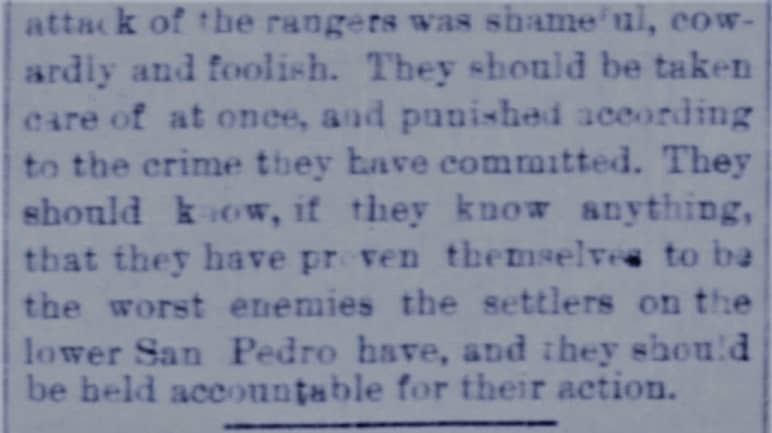
When Joyce learned of the scouts’ plans to block them, he abandoned the march on the reservation, which deflated the eager Rangers. A group of ten later set off on their own to attack other Apaches, and their attack ended up on a cornfield scarecrow. Local settlers were furious and criticized the Rangers sharply in the newspaper. It reflected badly on Joyce, too.
Baja California and San Francisco
In late April 1883 Joyce, Nellie Cashman and 31 others set out for Baja California, chasing a promising mining opportunity at Mulegé. Things turned very rough: the guide vanished, the water ran out or was undrinkable, and they found little gold. The trip was a failure. Joyce didn’t return to live in Tombstone and went to San Francisco instead.
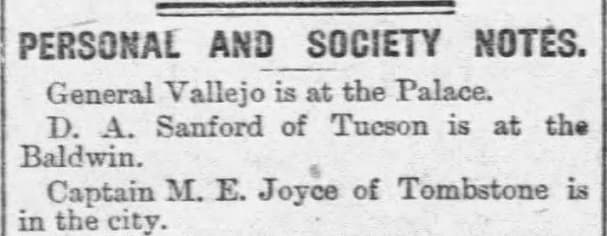
In the Bay Area, Joyce and some Tombstone friends opened the Baldwin Billiard Parlor. When Lucky Baldwin took it over, Joyce and a partner opened the Cafe Royale, a saloon and billiard hall.
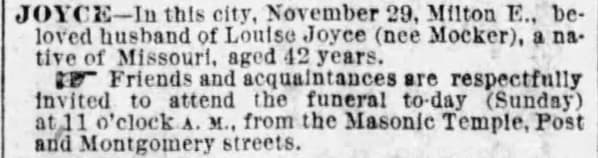
In February 1889 he married. Later that same year he died of consumption, as tuberculosis was then called. He packed a lot of life into those years, and he never had children.
The Oriental Saloon after Joyce
New owners took over after Joyce left town; one prominent name was Mr. Melgren. Arizona’s statewide prohibition, which began in 1915, put the saloon out of business. When national Prohibition ended in 1933, the Oriental was mentioned as “still standing.”
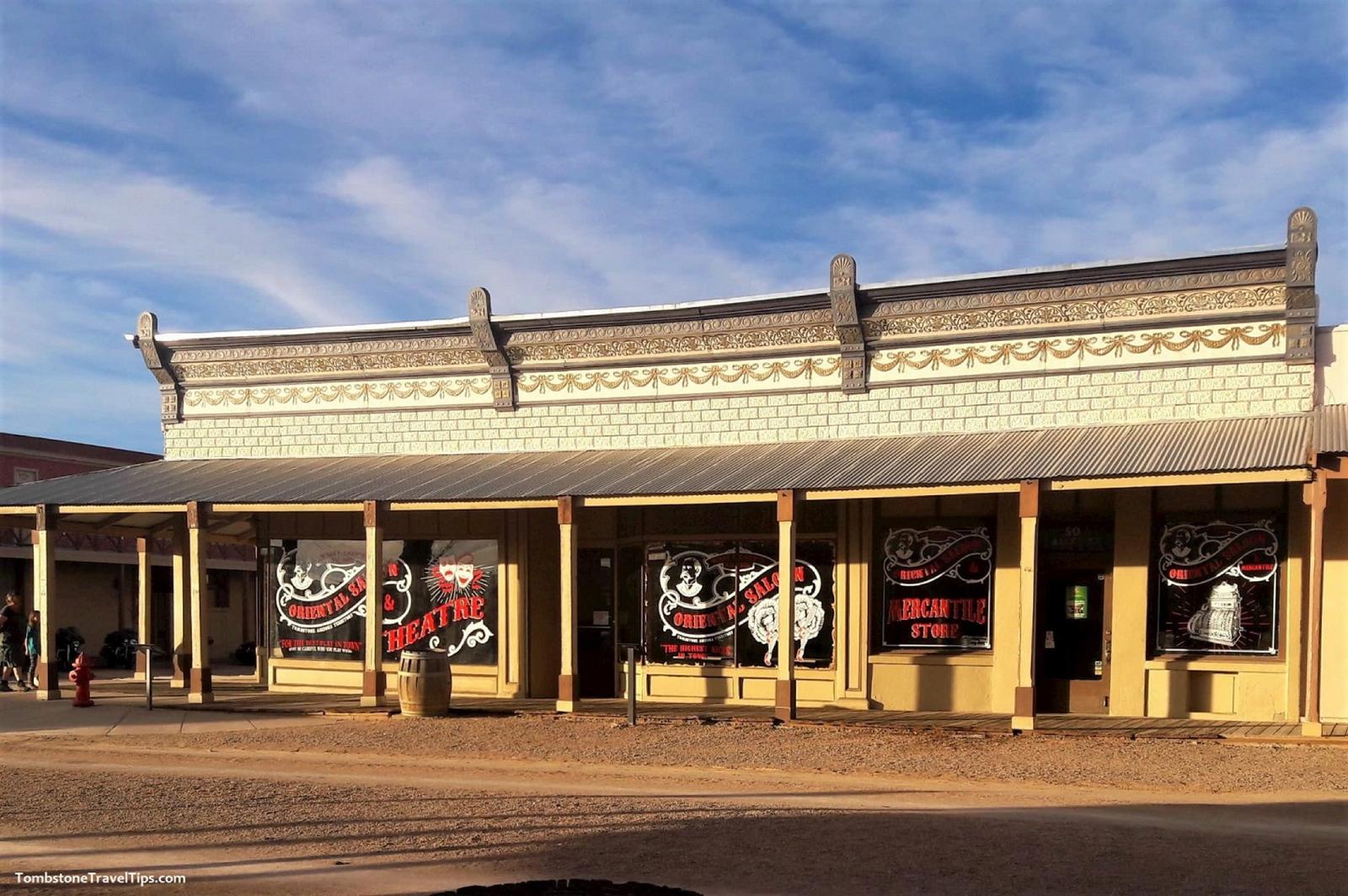
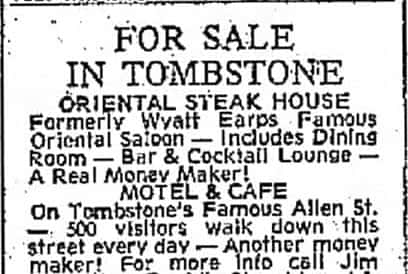
By 1948 it was “now Tombstone Drug Store.” Some time later it became the Oriental Steak House, with the Oriental Saloon lounge for a cold one. By 1988 it was a drug store again, and later a gift shop and then a dress shop.
Did Wyatt Earp own the Oriental Saloon?
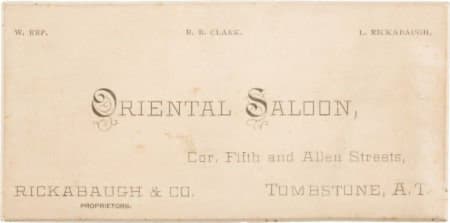
Wyatt Earp is often called the “owner” of the Oriental, especially in Arizona writing from the 1920s through about the 1980s. That’s not accurate. The gambling concession was a separate business from Joyce’s bar. Morgan Earp’s interest in it is documented, and Wyatt held a share too: an 1881 Oriental Saloon business card, sold at auction, lists “W. Erp” alongside R.B. Clark and L. Rickenbaugh.
The Oriental today
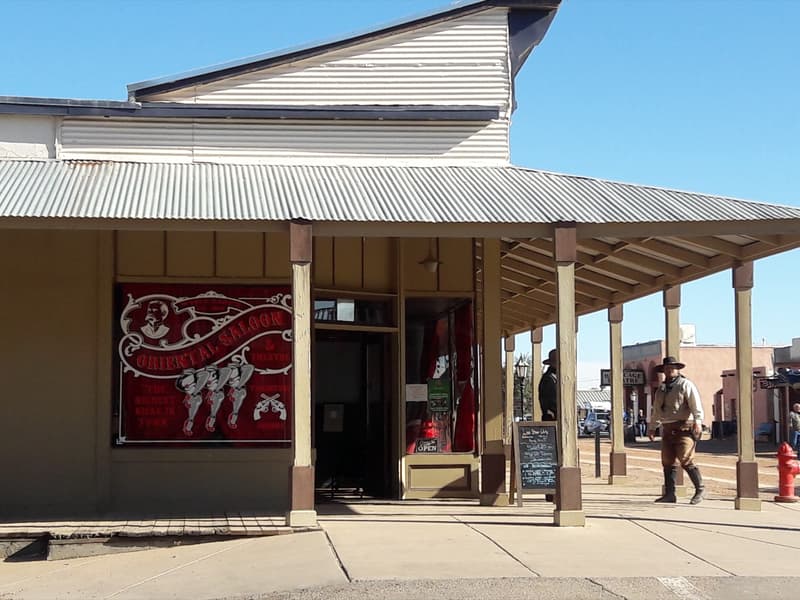
The building has since been returned to an 1880s atmosphere as Wyatt Earp’s Oriental Saloon. It isn’t an exact historic re-creation, but it’s reminiscent of those times. For its latest news, see the Oriental Saloon’s Facebook page.
Places like this make us curious about the people who roamed Tombstone and the Old West, and about the true story behind them. We enjoy sharing what we find, and we hope you’ll visit the places where they spent their time.
No comments yet