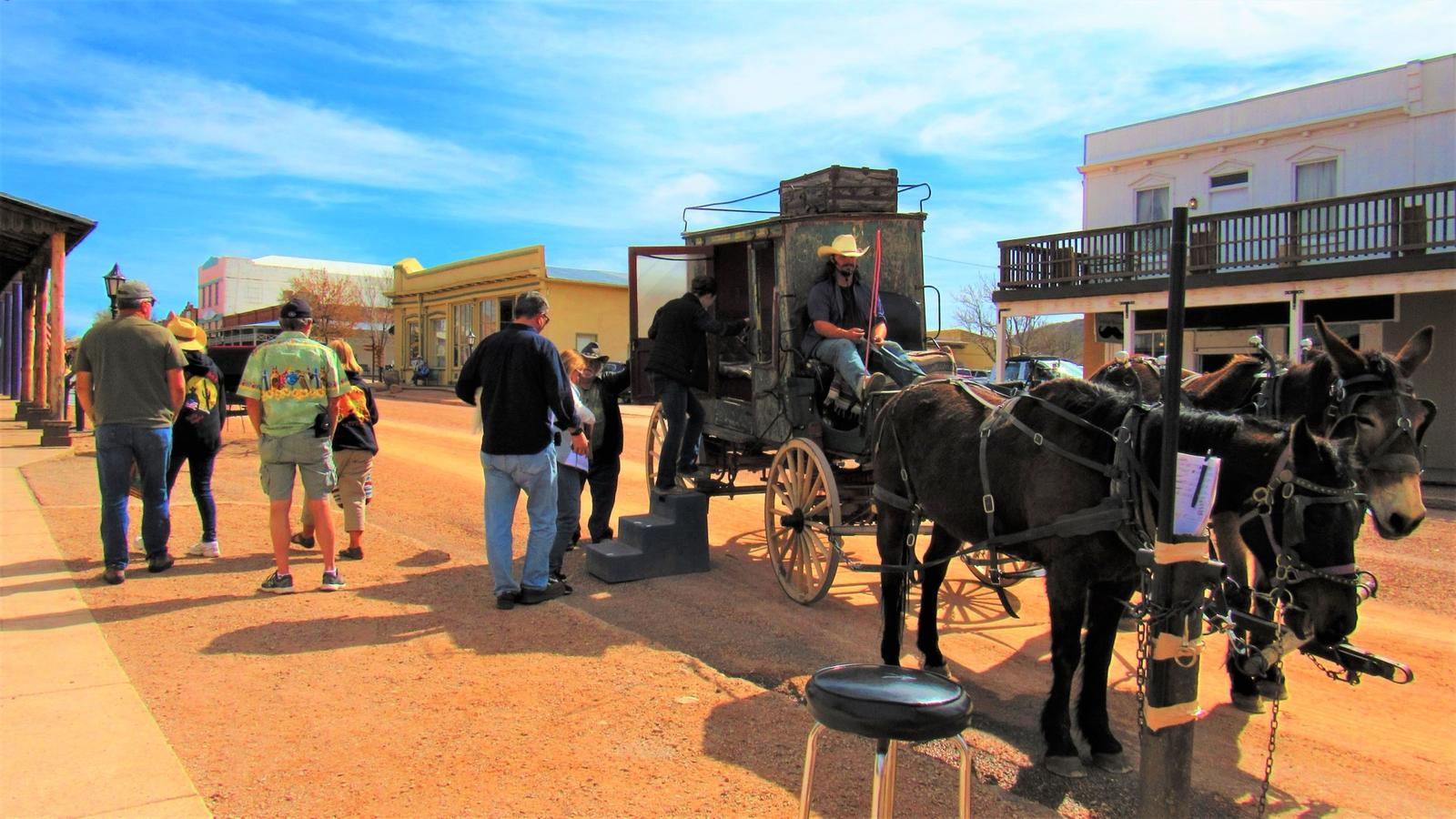
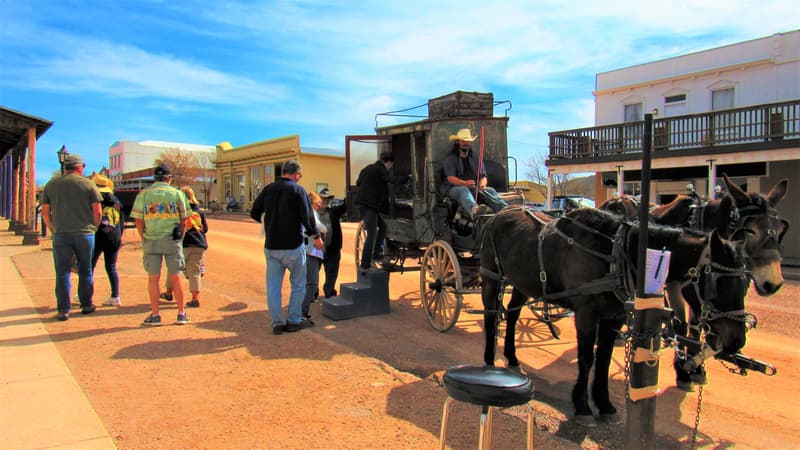
Stagecoaches were the prime means of transportation in the Old West. These four-wheeled coaches were designed for many purposes, and they were used for all of them: mail, freight, payroll and passengers.
People are still drawn to them today. In Tombstone you can watch one roll down Allen Street, or climb aboard for a stagecoach tour of town. Here is the history behind the coaches, how they were built and driven, and where to see them.
History of Stagecoaches
The stagecoaches of the American frontier are a tradition in their own right. Yet their origins are in the Old World, in England.
Stagecoaches were first mentioned as early as the 1200s. The first regular stagecoach route in Great Britain is documented in the early 1600s.1 As soon as multiple settlements were established in the New World, people and goods needed to move between them. The stagecoach was the vehicle recognized for its practical utility.
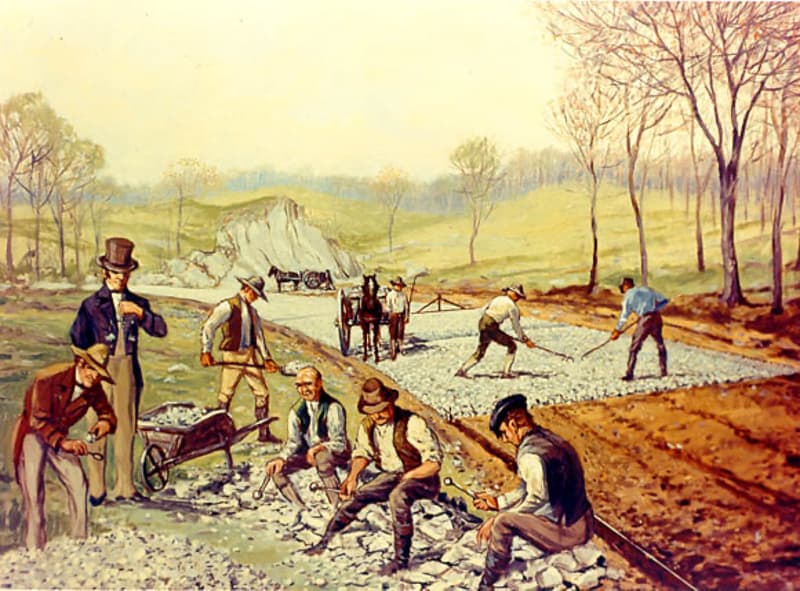
Routes between villages were created and roads were built. At first they were basic and rugged. As stagecoach traffic grew, the roads extended farther and improvement became essential. Crews were hired to improve the Eastern roads, where stages traveled first and most often.
As expansion moved West, stagecoach routes were formed to supply those areas. The government in Washington became involved by offering contracts to move the mail. First, steamships had contracts to carry the mail West, which took a great deal of time. Then entrepreneur George Chorpenning entered into an overland contract in 1854, using horse and mule transport. Before long he began using wagons too.9
In mid-1857 a stagecoach company secured a contract: the California Stage Company, owned by James Birch. He met some logistical difficulties, and the operation ended after Birch drowned in a shipwreck later that year.9
With earlier mail delivery falling short, Congress authorized a specific contract. The Butterfield Overland Mail was given the main government contract for hauling the mail through the West.8,9 Its southern route passed through what is now Cochise County, and the stage stations along it are part of the local landscape to this day.
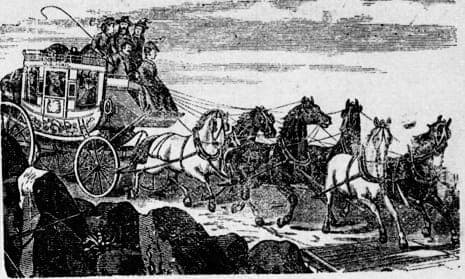
Stagecoach Construction
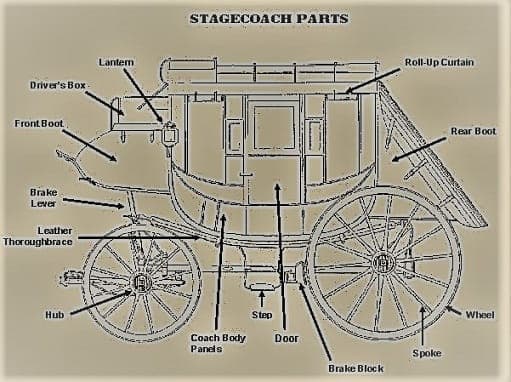
Stagecoach axles were first made of wood, with iron covering the areas of rough wear. Wheels and spokes were also wood. The Concord brand built its wheels to a particularly high standard, from well-dried and seasoned white oak that did not warp or crack.5 The outer rim was lined with steel as reinforcement where it rolled on the ground.
The larger the wheel, the easier it is for the horse or mule to pull the coach. But the front wheels are always smaller than the back wheels, which makes turning possible.4
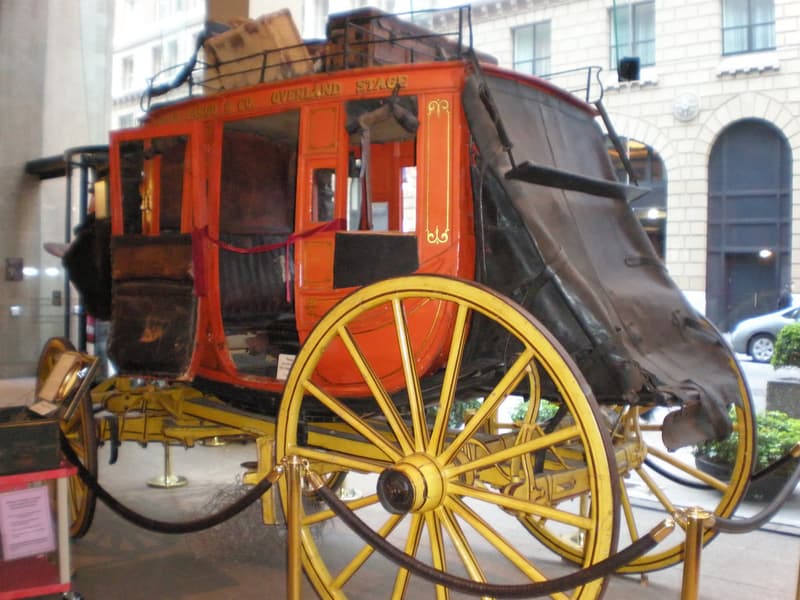
Steel springs formed the suspension on many coaches, and they made for a bumpy, unstable and uncomfortable ride. Concord stagecoaches instead hung the body on thick leather straps called thoroughbraces. Their true purpose was to ease the burden on the horses. A side benefit was a rocking motion that made the passengers’ ride more comfortable.5
A few types of braking systems were used. Concord created a foot pedal for the driver that pressed a wooden block against the rim of the wheel to slow the coach. All stress points had iron reinforcement.4
Building a Stagecoach
Building a coach by hand is quite a process. This film follows one from bare wood to finished coach.

Types of Coaches and Wagons
A variety of stagecoaches were available. When ordering or building one, the buyer considered the terrain to be traveled, the usual and unusual weather, the main purpose of the coach, what (or who) it would be hauling, whether the cargo invited danger and so called for speed and maneuverability, and how far it was expected to travel on a regular run.2
The builders constructed their coaches accordingly. Among the many choices that became available were:
- Conestoga Wagon – The long-haul truck of its time (1750s to 1840s), it carried up to five tons of freight. Its sturdiness came from the bowed under-shape.3,4
- Prairie Schooner – Adapted from the Conestoga for pioneering families traveling West. Lighter, it got over the higher, more rugged Western terrain.4
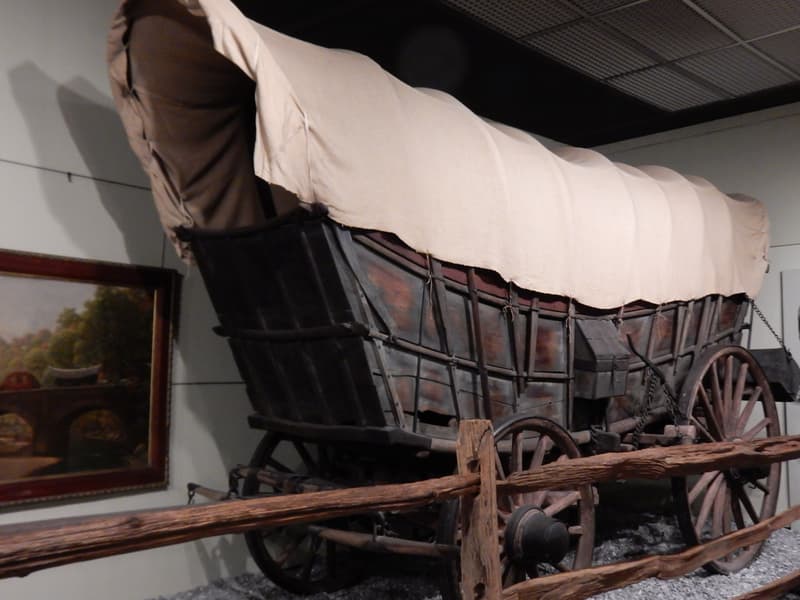
- Farm Wagon – A basic but strong transport in rural areas, useful to farming families in every area of life.
- Covered Wagon – A repurposed farm wagon for a farm family heading West to a new life, and an affordable method of migration in the 1800s. A frame was built over the top of the wagon and covered with heavy cotton canvas.4
- Ambulance Wagon – Used by the Army to transport up to four wounded or sick troops on cots. Open sides had canvas covers for bad weather.4
- Spring Wagon – Two removable seats made it versatile, for business, delivering goods, or a farmer’s family and field work.4
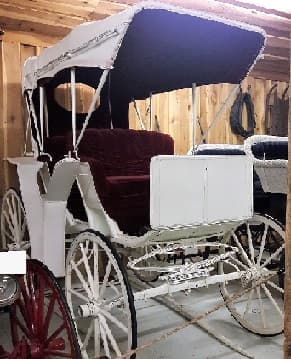
- Phaeton – Originated in 1700s France. A lightweight four-wheel, one-horse coach with wide, open entry sides in front of a single seat. Room for only two, the driver and a passenger. It had a top, convertible on some. Varieties included an Easy Entry (liked by women), a Crane Necked style, and a High Perch liked by sporty young men. By the 1800s it had caught on with the wealthy set in America.6
- Chuck Wagon – In 1866 Texas cattle rancher Charles Goodnight made this wagon from a used Army wagon to supply his cowboys on the range. It was a roving kitchen, with room for tools and bedrolls.4
- Yellowstone Stagecoach – Yellowstone became a national park in 1872, and people traveled there to see the wonders they had heard about. The park’s concessioners carried them by stagecoach tour.
- Buckboard – Popular for work or family since it was adaptable. No suspension except springs under the seat, but the boards of the wagon were flexible and gave it a springy feel.4
The Horses Pulling a Stage
Horses were changed at each stagecoach stop. Stops were a minimum of 10 miles apart, and normally not more than 15 miles from the last one.7,8 That meant a horse pulled the stagecoach for a shift of about two or three hours.
The government mail contract required a team of four horses.8 Sometimes there was a six-horse team, and sometimes the team consisted of mules. Team size depended on terrain, length of route and expected weather.
Mules are more sure-footed than horses, handle heavy loads better and have more stamina. They are also more intelligent, which gives them a cranky reputation, since they will try to make their own decisions. They were the preferred team if the route was particularly rough.
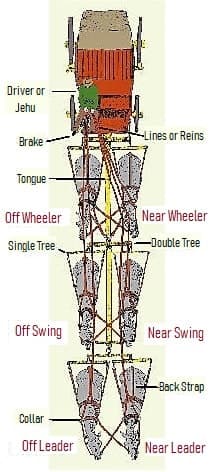
Teams were referred to by the number of animals in them:5
- 2-Up – two horses or mules pulling the stage
- 4-Up – four horses or mules, the minimum for the government contract
- 6-Up – a six-horse or six-mule team
Positions in the Team
Each horse or mule was trained for and suited to its position in the team. They knew it, were used to it, and that was what they wanted to do.5 They were set in their ways.
- The two in front led the team, so they were called the Leaders. They were the smallest pair of animals.
- The two closest to the coach were the Wheelers, the biggest and strongest of the set. They pulled most of the weight of the stage and did most of the steering.
- In a 6-Up, the middle pair were the Swing Team, the next biggest pair. They helped with steering by starting the pivot when the stagecoach went around a corner.
- Imagine you are the driver looking out at your team. The left side of the horses or mules is the Near side. The right side is the Off side.
Stagecoaches for Kids
Kids love to play with little toy stagecoaches. They act out scenarios with cowboy and cowgirl figures and plastic horses, meeting Native people as they drive along the trails of a pretend Old West.
Do you remember doing that as a child? We sure do. We played with miniature wagons of all sorts, and we watched the Saturday morning Westerns. The television Westerns of the 1950s, such as Tombstone Territory, Broken Arrow, Wyatt Earp, The Lone Ranger, The Rifleman, Roy Rogers, Sky King and Fury, were some of our favorites.
Drawing and coloring a stagecoach is a good way for parents and grandparents to spend time with the young ones, and to start a conversation about the parts of the coach and how they were painted in the Old West. Better still, visit a museum with vintage stagecoaches, or take a ride on one when you vacation in an Old West town like Tombstone, Arizona.
Vintage Stagecoach Photos and Films
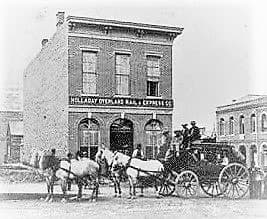
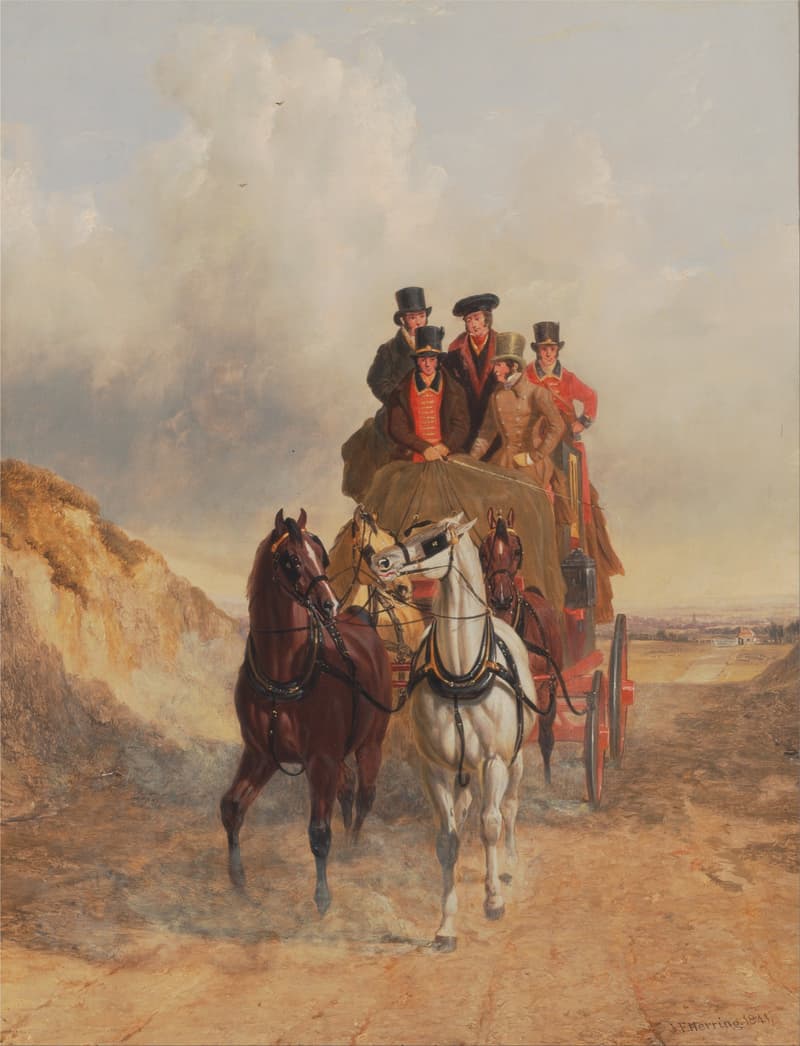
The National Stagecoach and Freight Wagon Association keeps a terrific gallery of historic stagecoach photos from the Old West. A few of our favorites from the period are below.
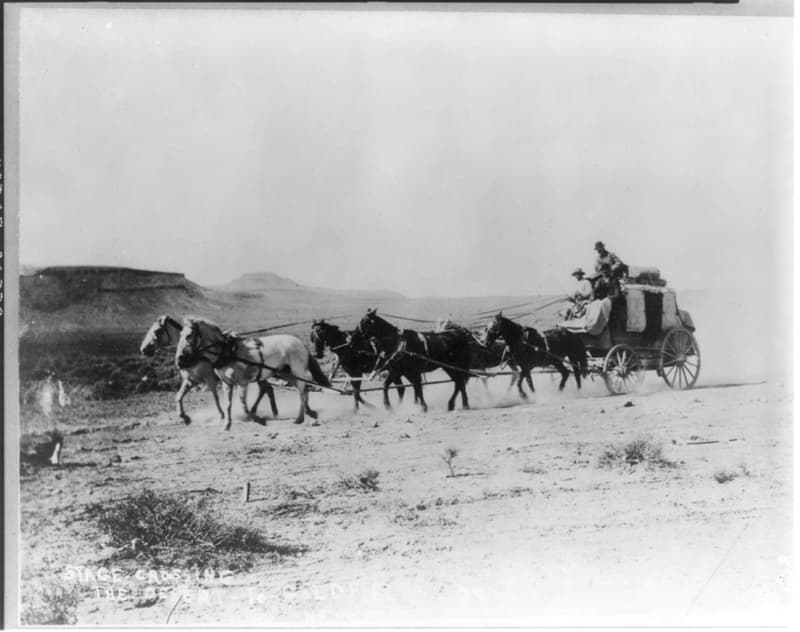
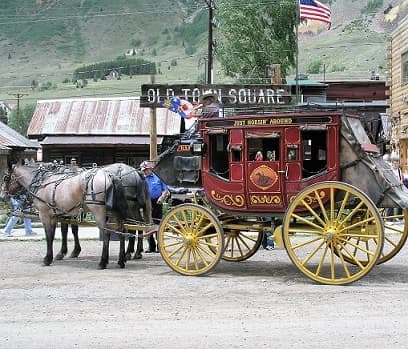

Stagecoach Festivals
Because of its Western connotation, the word stagecoach, or a related word, turns up in festivals built around Western music, Western life and Western history. A few of them:
- Stagecoach Country Music Festival – A yearly three-day outdoor event in Indio, in Southern California, featuring big names from the country music world. It began in 2007 and has grown into one of the largest country festivals in the United States, with on-site camping, vendors and a dance hall. Passes range from general admission to standing room in front of the stage, and they sell out.
- Wild West Days – Held every autumn at the historic Mahaffie Stagecoach Stop & Farm in Olathe, Kansas. Family fun with stagecoach rides, a chuckwagon cook-off, cowboy encampments and 1860s living-history demonstrations.
- Chuck Wagon Festival – A weekend event each May in Oklahoma City, sponsored by the National Cowboy & Western Heritage Museum.
- Western Legends Roundup – In Kanab, Utah, a festival that centers on the old Westerns. More than 200 films were shot around Kanab. Over three days in August you can meet veteran stars, ride a wagon train and see the old film sets.
- Llano Chuck Wagon Cook-Off – A spring event in Llano, in the Texas Hill Country, that focuses on authentic chuck wagons of the Old West and their cooking techniques. You get to sample the results. It is run by a nonprofit, and tickets go fast.
Closer to home, Tombstone’s own celebrations such as Wyatt Earp Days and Helldorado Days bring stagecoaches and wagons onto Allen Street. For dates, see our current Tombstone events guide.
References
1 Gascoigne, B. (From 2001, ongoing). History of transport and travel. HistoryWorld. Retrieved from www.historyworld.net/wrldhis/PlainTextHistories.asp?ParagraphID=kwq#1973
2 Helmich, M.A. (2008). State styles – Not all were coaches! California Department of Parks and Recreation. Retrieved from www.parks.ca.gov/?page_id=25449
3 GEO*Trailblazer1 (2008). Mile marker M to B 82 – U.S. Historic Survey Stones and Monuments. Retrieved from waymarking.com/waymarks/WM3A0A
4 Nelson, A. (2012). FAQs & wagon history. Retrieved from hansenwheel.com/resources/faqs-wagon-history#frontwheelssmaller
5 Larson E. (1996-2001). The Concord coach. Retrieved from www.over-land.com/ccoach.html & horses.html
6 Grace, M. (2011-2018). Know your phaeton from your curricle. Retrieved from randombitsoffascination.com/portfolio/know-your-phaeton-from-your-curricle/
7 Wells Fargo (2018). Stagecoach era. Retrieved from wellsfargohistory.com/since1852/stagecoach-history7.html & resources/stagecoach_brochure.pdf
8 King, H. (1857, April 20). Report of the Postmaster General: Contract with J. Butterfield and Co. P. 1-4. Congressional Series of United States Public Documents, Senate, 35th Congress, 2d Session, Ex. Doc., No. 48, Volume 984, page 151. Retrieved from Google Books.
9 United States Postal Service Historian (2010, Aug.) Overland mail to California in the 1850s. USPS. Retrieved from about.usps.com/who-we-are/postal-history/overland-mail.htm#08
One comment
Thousands of miles of stagecoach routes had existed east of the Mississippi for at least a century before they went West.