As people moved into the West in the 1800s, life was hard. Most of the migrants were men: miners, soldiers, explorers, opportunists, teenaged orphans. Entrepreneurs looked for the right circumstances for a business.
With free time on their hands, entertainment was what many of these men were after, and proprietors were quick to supply it. Gambling establishments opened in mining camps and new towns across the West, most often inside the saloons. Here are the Old West gambling favorites, particularly in Tombstone.
Gambling’s Old West Popularity
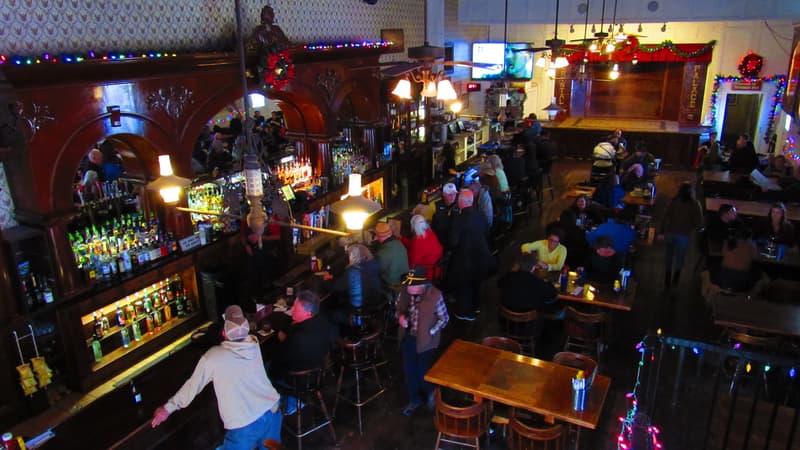
Wagering was most popular between 1850 and 1910. Almost every town had at least one Old West bar with a gambling game, and many saloons had gambling halls to while away free hours.2 As a Western town filled up, gaming tables went up in tents. Then as the money flowed, the bar-men upgraded. They built fine lounges, like the Crystal Palace, where regular games of faro, roulette and poker were established.
Many men gambled after their work day. Others were professional gamblers. When Wyatt Earp came to Tombstone, he planned to earn money by gambling.1 He had done it before. His friend Doc Holliday was a professional gambler.7
A Somewhat Respectable Sport
In the Old West, gambling was viewed as a legitimate way to make a living. Not everyone who ran the games was honest, and some were outright con-men. Others tried to give the trade an air of refinement by setting up gambling halls with quality decor.3 Saloons followed suit.
In certain respects gambling was considered a fine night’s entertainment. Gentlemen in particular went to a quality establishment for this type of night out. They called it sport.
Those running the games invested their own funds to start the bank and relied on their reputations as honest dealers. The saloons promoted their dealers as running a respectable game. They knew it brought in business.
The Old West Gambling Town of Tombstone
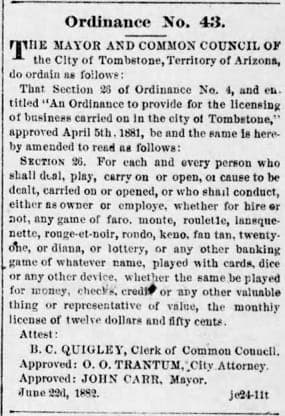
Gambling halls were scattered through Tombstone. By 1880 there were nearly 18 places to get into a good game of faro or poker, or try your luck at roulette.1
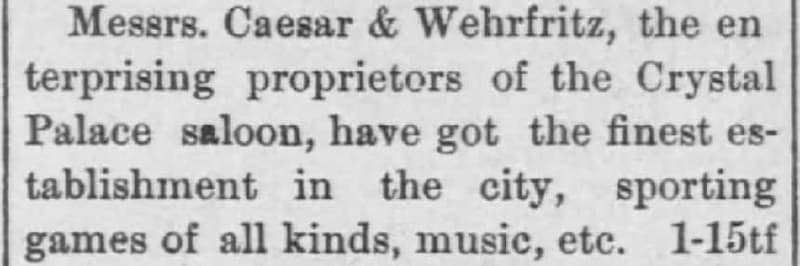
Look at the history of the Crystal Palace, for instance, and notice the regular assortment of games running there. Local newspapers advertised them. One early partnership, Bernhardt Wehrfritz and Julius Caesar, was big on marketing. Their ad below lists all kinds of sporting games, plus music for entertainment.
Women gamblers
Some women gambled, and some were professionals in the business too. Their personalities were as varied as the men’s. But they did not get the same reception because of their gender. Even with professional skill, they were not accorded the same respect.
Two lesser known but notable women who took up gambling professionally in the Old West:5
- Lottie Deno, alias Carlotta J. Thompkins, ended up in Texas in the mid 1860s. She started by running a San Antonio hall owned by the Thurmond family. She married Frank Thurmond, and they traveled the state, both wagering as professionals. In Fort Griffin, probably where she met Doc Holliday, she made her reputation. By 1882 the Thurmonds had tired of that life and settled in New Mexico. She is buried in Deming.
- Kitty Leroy first dealt faro in Dallas, Texas, where she gained excellent wagering skills. She had a quick temper and often wore men’s clothing. Married five times, she shot one husband, and she was not known for being faithful. In Deadwood she was at her most successful financially, opening a saloon. That ended at age 27, when she was shot and killed by her fifth husband.
Gambling Games of the Old West
Faro, the most popular game
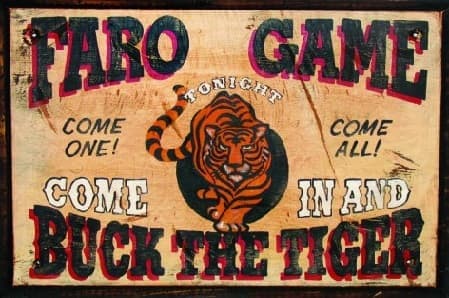
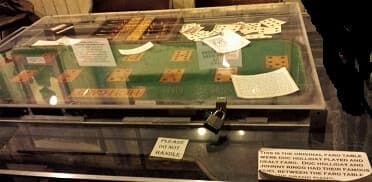
Faro was well liked. It had 18th century French origins and traveled through Europe before reaching the U.S.4 In the gambling days of the Old West, it was probably the most common and popular game around.1 Gamblers referred to the gaming hall as a faro bank, but technically that meant the dealer’s stake in the game, the cash supplied to run it.3
It was easy to learn, hands went by quickly, and the players’ odds were the best of any game. It was the favorite of the 1800s.4 The original card decks had a Bengal tiger illustration on the back, hence the nickname “bucking the tiger.” Sometimes a tiger picture in a window announced a game.8
After a while, problems surfaced because of those odds. Dealers began using all sorts of cheating systems, and equipment makers got involved by building cheat dealing boxes. In return, players began to cheat too.8
A well known faro “shark” was Bat Masterson. He would talk up a tale to the dealer during games as a distraction. On the next round, the absorbed dealer would forget to shuffle, and Bat, remembering the previous card turns, won the plays. In Tombstone, Bat witnessed his two friends Luke Short and Charlie Storms in a gunfight over a faro game at the Oriental Saloon.8
Legitimate gaming sponsors warned players that virtually all faro games were dishonest. Cheating dealers were prosecuted, and cases went as far as the Supreme Court. By the end of World War II only a few games could still be found, all in Nevada. By the 1980s there were none, even there.2 It was not worth it to the gaming houses.
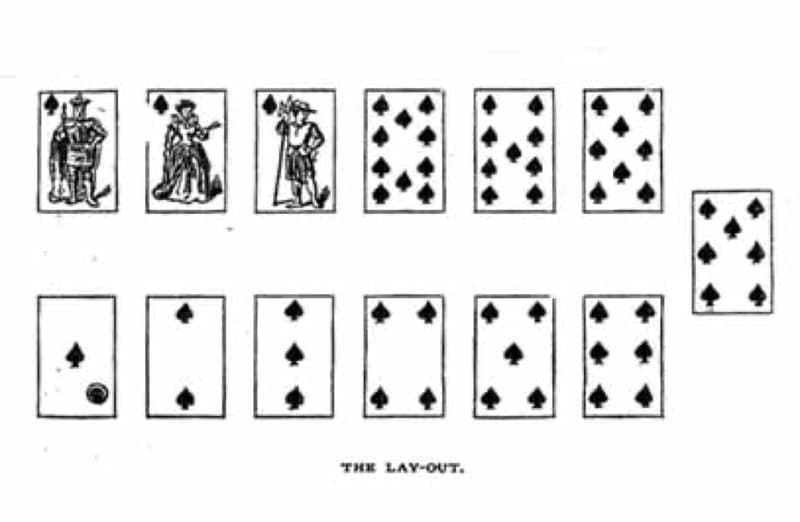
How to play faro: the basics
- Place your chips on the card or cards on the faro board that you are betting on to win. You can also bet a card to lose by placing a penny (a “copper”) on top of your chips.
- The dealer draws a card from the deck that loses. If your chip is on that card to win, you lose the bet. If you bet it to lose, you win.
- The dealer draws a card that wins. If your chip is on that card to win, you win the bet. If you bet it to lose, you lose.
- Cards already played are tracked on a case-keeper, so you can judge the chances of a card coming up.
- There are ways to bet on several cards at once.
- When three cards are left in the deck, it is time for “calling the turn.” Each player guesses the order of the last three cards. Get it right and you win four times the stake.
If you want to practice, there is a faro app for your phone.
Today some people play faro for fun, with no money involved. You will find people who teach the game in many of the Old West towns that were once gambling draws. In Tombstone, faro demonstrations turn up in the saloons and at Tombstone Monument Guest Ranch. Check our current Tombstone events guide for what is on.
In the small community of Cochise, Arizona, the historic Cochise Hotel was run for years by an expert in faro instruction. We bought our own faro board from him. He kept a room on site that was like an Old West faro museum. At our house, we have played once a week with friends. It is a good time.
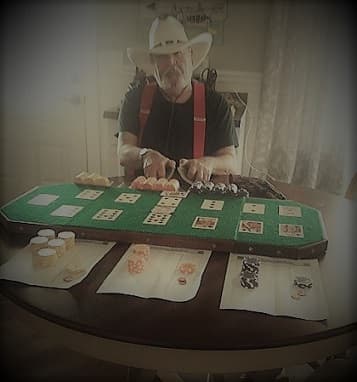
The record poker game
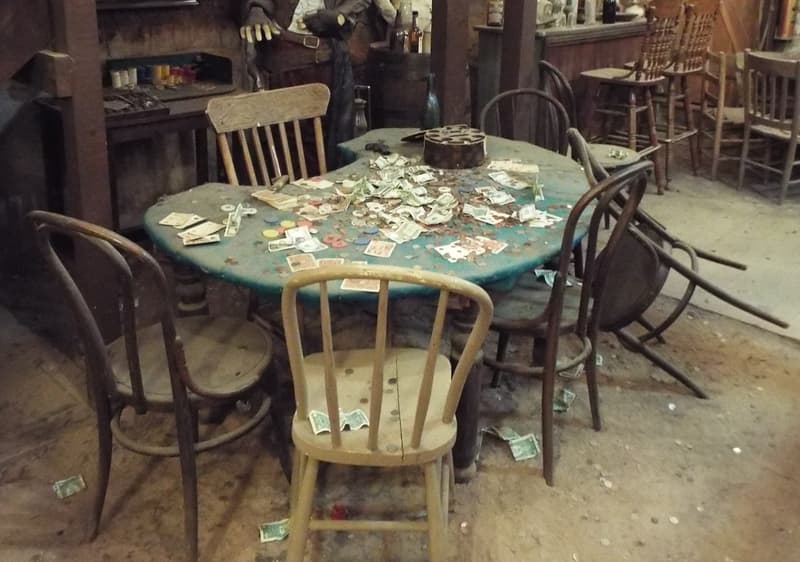
Tombstone’s Bird Cage Theatre was, among other things, a place for gambling. The exclusive game was high-stakes poker in the basement. It took $1,000 to get into the game.
The longest poker game in the Old West was played there. It ran continuously for 8 years, 5 months and 3 days. Bat Masterson, George Randolph Hearst and Diamond Jim Brady were regular players. Players came and went, but the game itself continued.
Keno
Another popular option was keno. In Tombstone, the gaming halls publicized keno games by employing a sort of town crier who roamed the main streets. One observer found it amusingly odd, saying he heard a “sonorous voice proclaim… that a keno game is about to commence, and ring a large bell as though he were calling… to a free dinner, or an auction….”1
The game came with Chinese immigrants who arrived to work on the transcontinental railroad. The Chinese government had long sponsored a lottery game called baige piao to raise money, and the immigrants brought it with them.6
The Americans they dealt with could not quite pronounce the Chinese words, and the slurred pronunciation turned into something like “keno.” In the early 1900s it became an official game under that name.6
Frontier Gambling Towns
Bisbee, Arizona
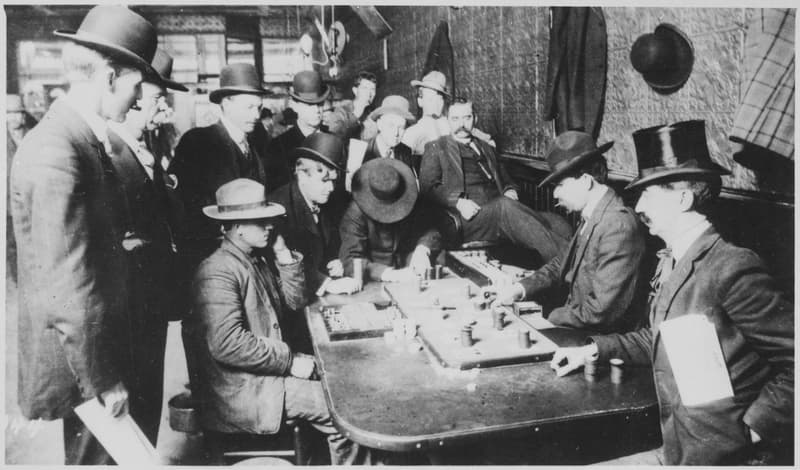
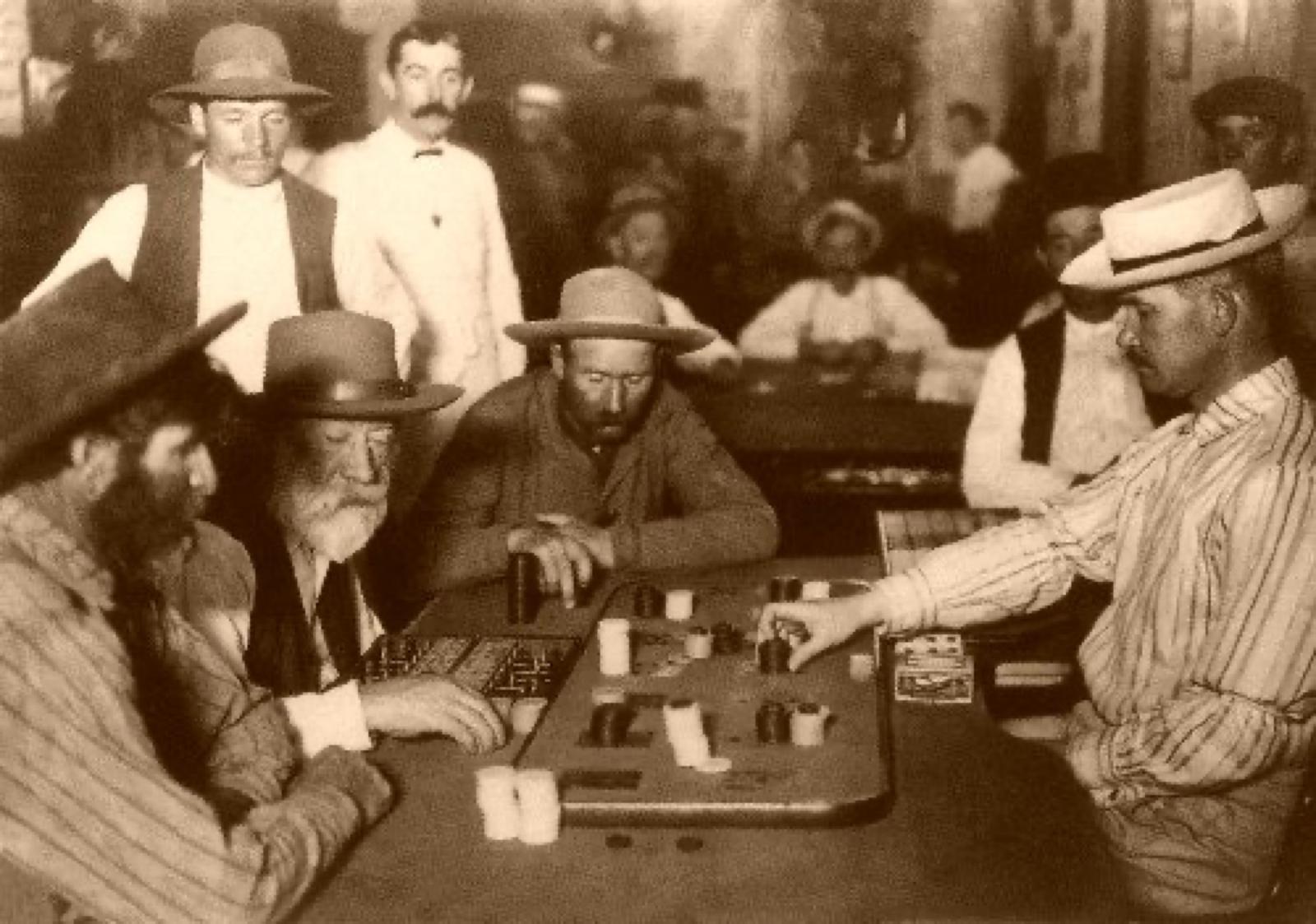
Bisbee, a copper mining town, lies about 23 miles southeast of Tombstone. Brewery Gulch was its booming saloon and gambling district. Another saloon strip ran along Main Street, and that is where the Orient Saloon was. It opened March 11, 1902.15
The National Archives photo above was taken by C.S. Fly. It shows John Murphy dealing. Others identified, left to right:
- Tony Downs, part owner of the Orient, standing and wearing a derby.
- Doyle, a concert hall singer in a derby hat, sitting at the table’s corner.
- The Dutch Kid, standing behind Doyle.
- Sleepy Dick, the Orient’s porter, toward the right behind the man with his head down, in a light felt hat.
- Charlie Bassett, in the soft felt hat, standing at the rear by the wall.
- Smiley Lewis, seated and placing his bets, in the silk top hat.
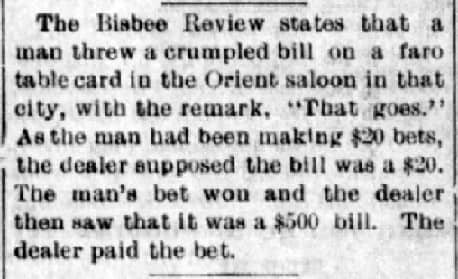
Prescott, Arizona
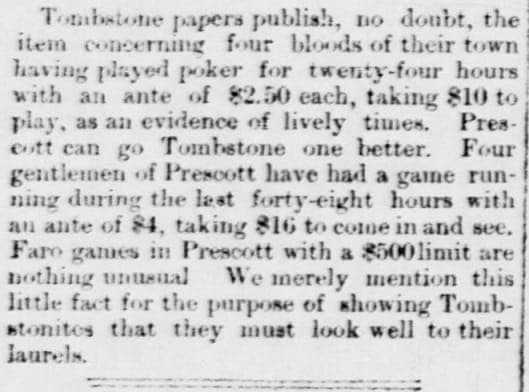
Prescott’s newspaper even viewed its own gambling halls as rivals to Tombstone’s. In the clipping above it promotes a poker rivalry: who has the longest games, and who has the highest stakes? Think again, Tombstone.
North Platte, Nebraska
Along the railroad construction routes, towns sprang up just as gold and silver mining created new towns elsewhere. Like the miners, young railroad workers looked for excitement in their off hours, and the entrepreneurs who followed them included professional gamblers.
North Platte was a prime example. In the mid 1860s it sprang up with a slew of unmarried men flush with railroad earnings. A newspaper reporter noted “every known game under the sun is played. Every house is a saloon and every saloon is a gambling den.”3
Cheyenne, Wyoming
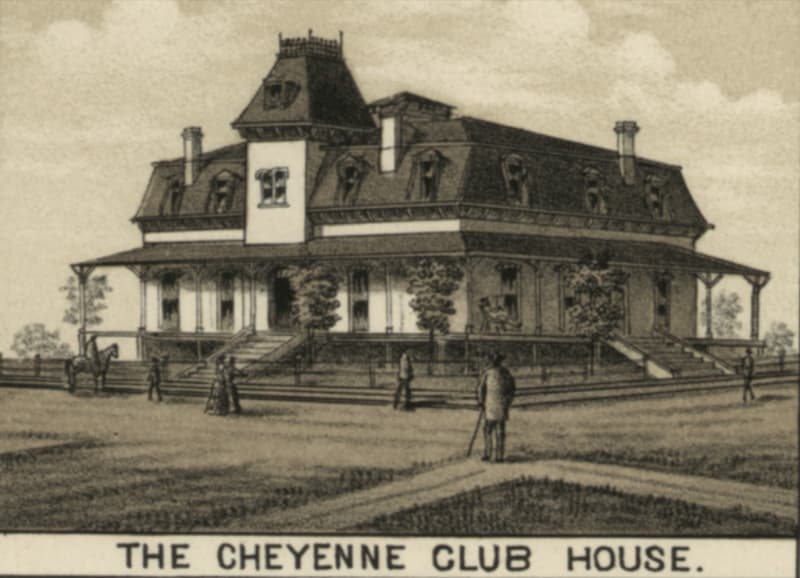
The railroad reached Cheyenne in the late 1860s, and gambling houses came with it. Professionals ran games in every saloon, which a newly arrived preacher was dismayed to find meant almost every house in town.3
One of note was the Cheyenne Club, a private men’s club built in 1881 at 17th Street and Warren Avenue. Those who made big money in town, from the railroad and especially the cattle barons, became members.9 It was one of those exclusive venues with deluxe amenities: a covered wrap-around porch, a billiards room, a library and fine dining. The card rooms were appointed with luxuries,10 and the stakes were high for those who were up for it.11 The club was torn down in 1936.9
Gambling Comes to an End
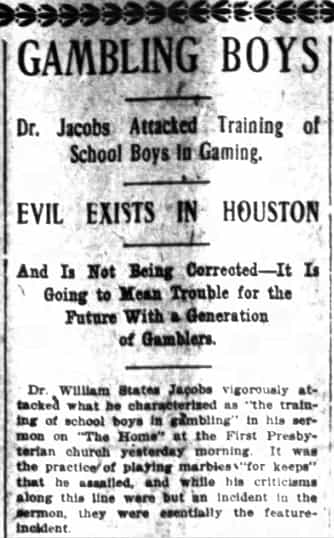
In the early 1800s, religious groups began opposing gambling on moral grounds. Their ire was aimed at the lotteries prevalent in the Northeast.13 Government officials in the West were influenced by what was happening back East and kept an eye on any gaming around. States started to enact laws banning wagers.12
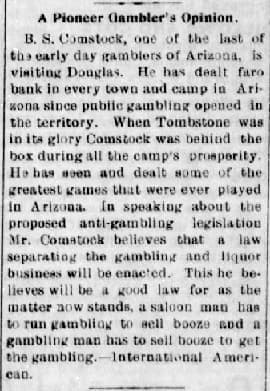
A Globe, Arizona newspaper published an interview giving one gambler’s view as the opposition grew. When Arizona became a state in 1912, gambling was officially outlawed.12
Gambling laws today
The laws have gone back and forth ever since. Each state now has its own regulations on gaming, and sovereign Native American nations regulate their own.13
Arizona permits gambling only in specific forms, such as tribal casinos and the state lottery. One exception is Class II gaming, sometimes called bingo-rules games. There must be at least two players who play against each other, not against a bank or house.14 That rule covers the kind of friendly poker game you will sometimes find in a Tombstone saloon. See our current Tombstone events guide for what is running.
References
1 Bailey, L.R. (2004). Too tough to die: The rise, fall and resurrection of a silver camp; 1878 to 1990. Tucson AZ: Westernlore Press.
2 Thompson, C. (2016, Dec. 1). Ask Clay: What is ‘coppering a bet’ and faro? The Republic/azcentral.com. Retrieved from azcentral.com/story/opinion/op-ed/claythompson/2016/12/01/ask-clay-what-coppering-bet-and-faro/94631726/
3 Williamson, G.R. (2018). Gambling in the Old West. Kerrville, TX: Indian Head Publishing.
4 Benford, S. (May 1, 2010). Faro stacked old west with winners, cheats. The Arizona Republic. Retrieved from pressreader.com/
5 Sumner, L. (March 13, 2017). Outrageous Gambling Women of the Old West. Cool Cat Casino. Retrieved from coolcat-casino.com/articles/outrageous-gambling-women-of-the-old-west.php
6 Applegate, E. (June 16, 2017). What Is Keno. Cool Cat Casino. Retrieved from coolcat-casino.com/articles/what-is-keno.php
7 Traywick, B. (Oct. 1977). Doc Holliday. Wild West. Retrieved from historynet.com/doc-holliday
8 Sanders, J.R. (Oct. 1996). Faro: Favorite gambling game of the frontier. Wild West. Retrieved from historynet.com/faro-favorite-gambling-game-of-the-frontier.htm
9 Funk, J. (June 30, 2017). Opera House, Cheyenne Club, more, failed to last test of time. Wyoming Tribune Eagle. Retrieved from wyomingnews.com/opera-house-cheyenne-club-more-failed-to-last-test-of/article_3d6711aa-5a93-11e7-8aee-4f5524b3dc7d.html
10 Greater Cheyenne Chamber of Commerce (2018). About Cheyenne. Retrieved from cheyennechamber.org/about-cheyenne-wyoming
11 Branigan, J. (May 11, 2011). The Cheyenne Club. Nagle Warren Mansion Bed & Breakfast: Enjoy the life of a cattle baron, at least for a few minutes. Retrieved from naglewarrenmansion.wordpress.com/2011/05/11/the-cheyenne-club/
12 Rose, I.N. (1997). Gambling and the law: Pivotal dates. Whittier Law School. Retrieved from pbs.org/wgbh/pages/frontline/shows/gamble/etc/cron.html
13 HG.org (1996-2019). A history of American gaming laws. Legal Resources. Retrieved from hg.org/legal-articles/a-history-of-american-gaming-laws-31222
14 FindLaw Team (2019). Arizona gambling laws. Thomson Reuters. Retrieved from statelaws.findlaw.com/arizona-law/arizona-gambling-laws.html
15 Bisbee Daily Review (March 12, 1902) Orient opening. Pg. 1, Bisbee, Arizona. Retrieved from www.newspapers.com/image/40677005
No comments yet