
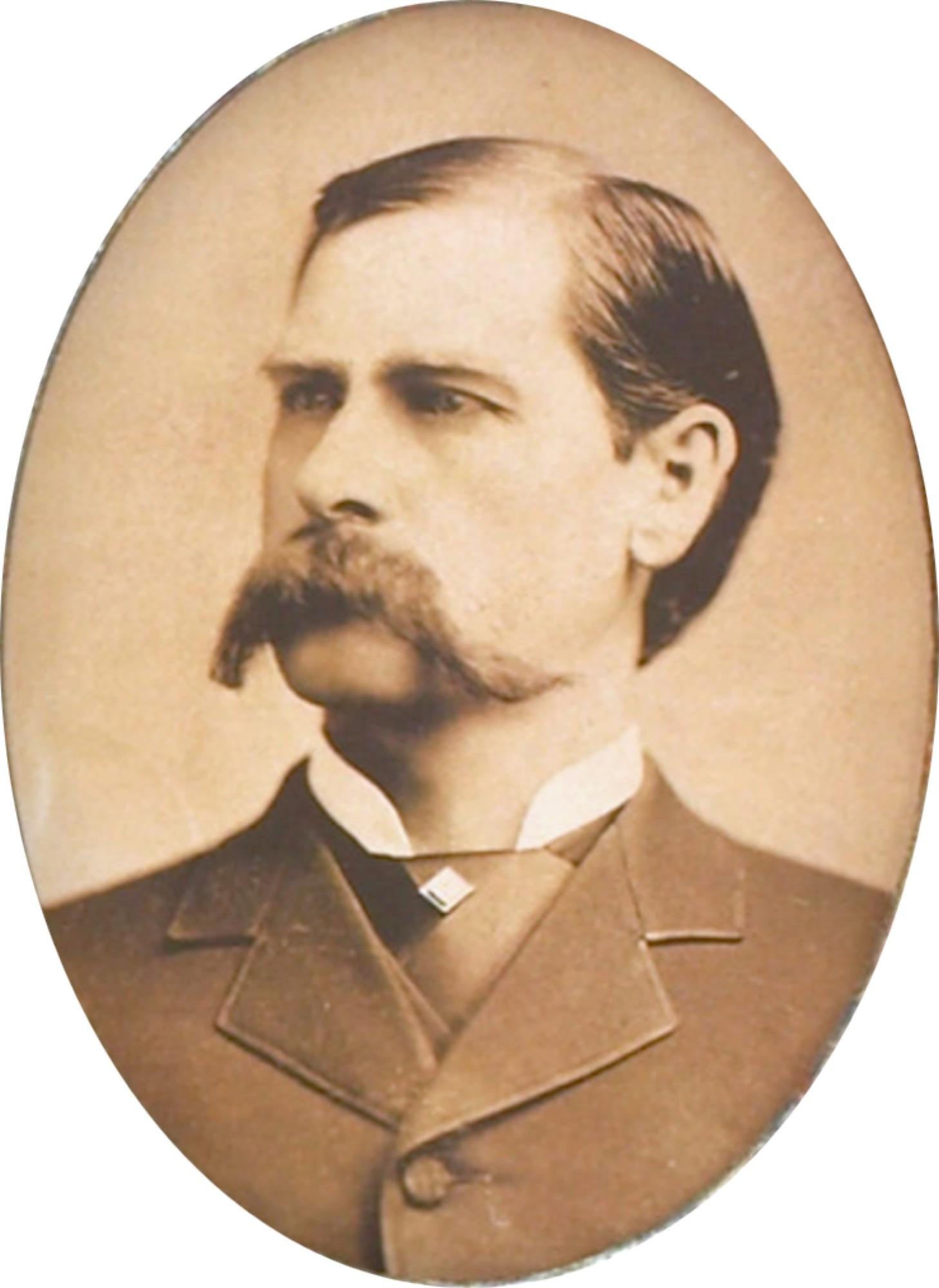
Long before Tombstone, Wyatt Earp spent his first years as a lawman in the Kansas cow towns. Wichita was where he first wore a policeman’s badge, and where he made some very public mistakes.
When Wyatt came to Kansas he was likely still getting over the death of his first wife, Urilla, who died in 1870 while expecting their first child. He had gone a bit wild after that and got involved in lawless activities. In Kansas he seems to have begun turning over a new leaf.
Good Boy, Bad Boy
Some sources place Wyatt in Sumner County, Kansas, in late 1872, when he was 24, working as a cowboy. Herding cattle taught him things that would serve him well in his Tombstone days.
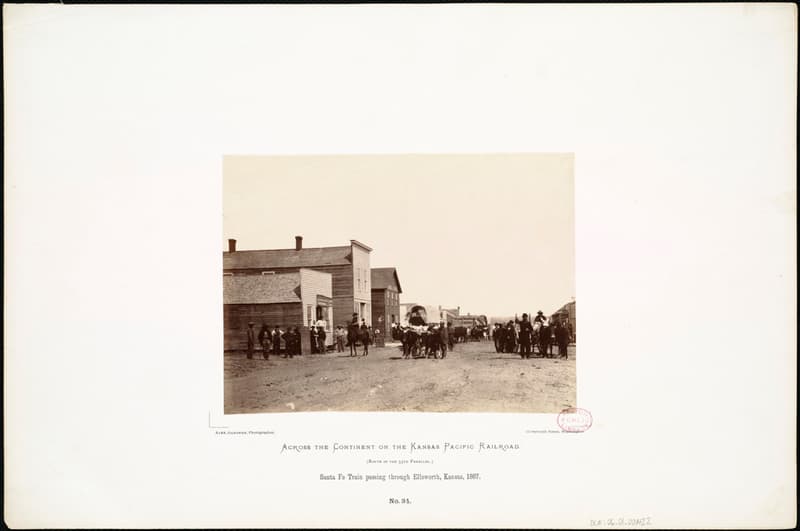
In August 1873, Billy Thompson killed Sheriff Chauncey B. Whitney in Ellsworth, Kansas. Wyatt later claimed he had a hand in arresting Billy’s brother, Ben Thompson, there, but historians doubt it. By early 1874 Wyatt was in Wichita, where his brother James lived.
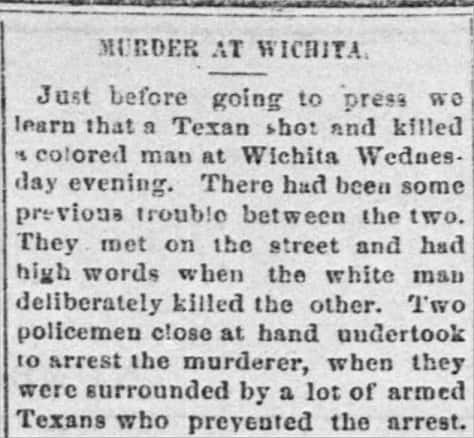
On May 27, 1874, Kansas newspapers reported the murder of Charley Sanders by a Texan. Where was Wyatt that day? By his own account, he had just had a fight with a Wichita local, and lawmen were holding him near the scene of the murder. Wyatt said he urged them to arrest the men helping the Texan escape, but it was Wyatt who was arrested, for fighting.
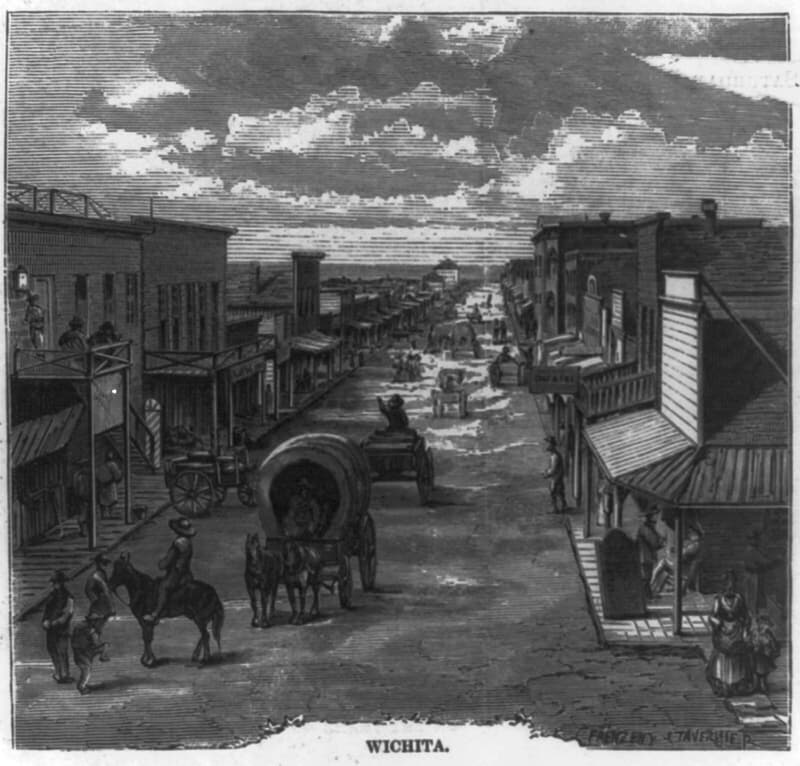
Settling in Wichita
By the summer of 1874 Wyatt clearly meant to settle in Wichita. The mayor, Jim Hope, set up a kind of auxiliary police force, and it appears Wyatt was recruited to join it.
During Hope’s tenure, signs at every entrance to town read: “Everything goes in Wichita; leave your revolvers at police headquarters and get a check; carrying concealed weapons strictly forbidden.”
On October 29, 1874, The Wichita Eagle reported that Wyatt and John Behrens had collected a debt some Texans owed M.R. Moser, so he was working as part of Moser’s private security.
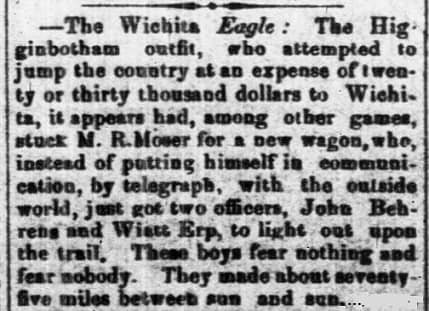
Until the spring of 1875, Wyatt and Behrens worked for Edward Ulrich, moving cattle herds during clashes known as the “Polecat War.” These experiences soon led Wyatt to ride with posses, including one into Indian Territory at a deputy U.S. marshal’s request.
Officially a Police Officer
Wyatt’s work on the fringes of the law hadn’t gone unnoticed. Judging from his own words and manner later in life, he probably enjoyed the authority, and perhaps the attention and admiration that came with it.
He may have served as one of Wichita’s special police, on short-term assignments, in the spring or summer of 1874, rather than on the regular force as he later claimed. It was April 1875 when the city council voted him onto the Wichita police force.
Wyatt served almost a year and won praise during that time. In December 1875 he got a lot of publicity for finding a drunken man carrying $500, arresting him and making sure the money was safe.
Policeman Wyatt’s Wichita Setbacks
Two incidents showed that Wyatt wasn’t always the picture of mature responsibility, and they didn’t point his superiors toward keeping him on long-term. The Wichita Beacon publicized both.
On January 9, 1876, Wyatt was at the Custom House Saloon when his revolver fell from its holster and went off as it hit the floor. The bullet went through his coat without touching him and harmed no one. It was a close shave, one of several near misses in his life, and a careless moment for a man whose job involved handling guns.
As spring 1876 approached, so did elections. Marshal Mike Meagher, Wyatt’s immediate superior, was up for reelection against William Smith, a former marshal.
When Wyatt ran into Smith, Smith began mouthing off in a mocking tone, implying that Meagher planned to fill Wichita’s police force with Earp brothers. Wyatt got angry and the two came to blows.
The newspapers reported the fight on April 5, 1876, along with the consequences for Wyatt: a $30 fine plus court costs.
The Aftermath
Nominations for Wichita policemen were published on April 19, 1876, with Wyatt Earp and two other names.
The city council approved the other two, but not Wyatt. One member asked them to reconsider, and on the second vote the council tied, so they put off further action until May.
The council also required Wyatt to turn over all the city money he had collected, probably because he hadn’t handed over collections from an earlier post.
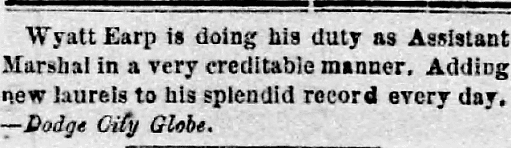
As far as the records show, he never served on the Wichita police force again. The next mention of Wyatt Earp has him in Dodge City, hired as a police officer.
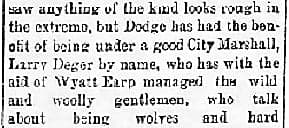
Even so, Wichita’s newspapers later remembered him fondly as one of their own.
Places and events like these make us curious about the real people who roamed Tombstone and the Old West, and we enjoy sharing what we find. Read more about Wyatt Earp and his time in Fort Griffin, Texas.
No comments yet