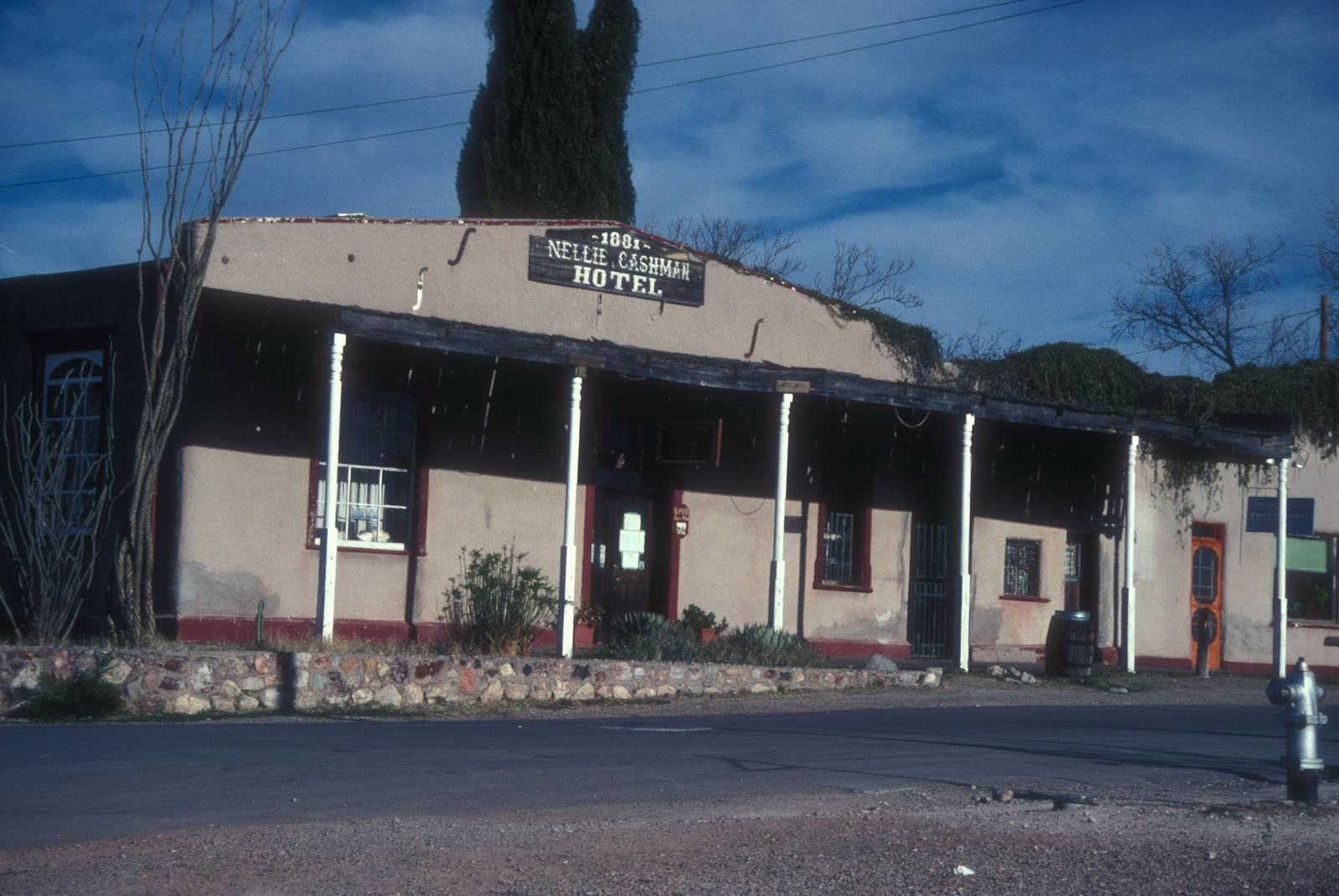
The Russ House stands on the northwest corner of Toughnut and Fifth Streets in Tombstone, Arizona. It was one of the town’s first lodgings, and it’s forever tied to Nellie Cashman, the “Angel of Tombstone.” Here’s its story, from 1880 to today.
The Russ House: Its Past and Present
To find it, walk south on Fifth Street from Allen Street. It’s the last building on the west side of the street. Look for the tallest tree on that side; it stands just outside the Russ House, shading its east wall from the hot morning sun in June.
It’s one of the most historic buildings in town, and a plaque on its wall says it has been placed on the National Register of Historic Places. If only these walls could talk. We’ll try to imagine some of what they’d tell us.
One of the Earliest Lodgings in Town
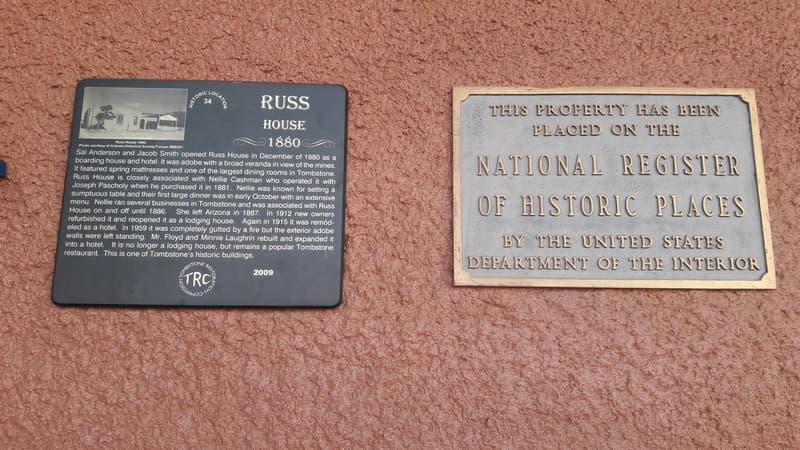
The Russ House opened on December 18, 1880. Jacob Smith and Sol T. Anderson built it across from the mines, knowing the location would draw miners.1 The rooms were comfortable and the food was good.
There was also a barroom, two street-side verandas and a reading room. The dining room was the biggest in town at the time.3
Nellie Cashman and the Russ House
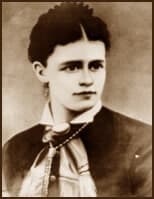
Nellie Cashman was an Irish immigrant to America. She made her way through Western mining communities, starting in Pioche, Nevada. After some time in northern British Columbia, she came to Tucson and opened a restaurant, the Delmonico. When her customers could talk of nothing but the silver strikes, she sold her interest and moved to Tombstone.2
First she opened a boot and shoe store. She had lots of energy and often ran several businesses at once. In September 1881 she went into business with the Russ House’s new owner, Joseph Pascholy.1
About the same time, Nellie’s sister Fanny came to Tombstone. Fanny was a recent widow with five children, and Nellie put her to work. Soon Fanny came down with the illness that had killed her husband2: consumption, which today we call tuberculosis.
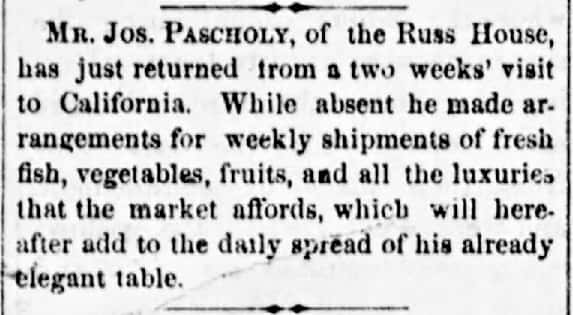
Russ House for Sale
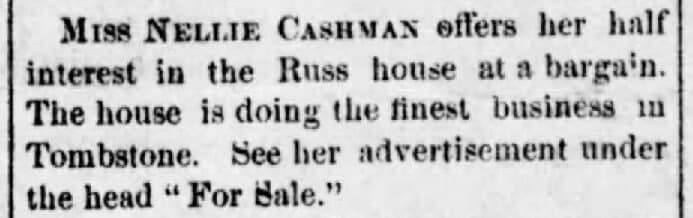
Now Nellie had her sister to care for, and her nieces and nephews to watch over. That didn’t fit with the heavy work of running the Russ House.
In December 1881 she offered her share of the Russ House for sale. Her friend John Clum2 gave her a front-page announcement in his Epitaph newspaper, and she sold her half interest. She bought back into the Russ House in 1882 and stayed connected with it, on and off, until she left Tombstone in 1886.
She was always ready to help anyone in need, and Tombstone’s citizens thought of Nellie Cashman whenever they thought of the Russ House. That’s still true today. She was so influential and popular that when people think of the Russ House, they think of Nellie. She left Arizona for the Yukon gold rush in 1898.
Reinventions Through the Years
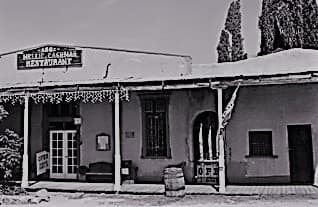
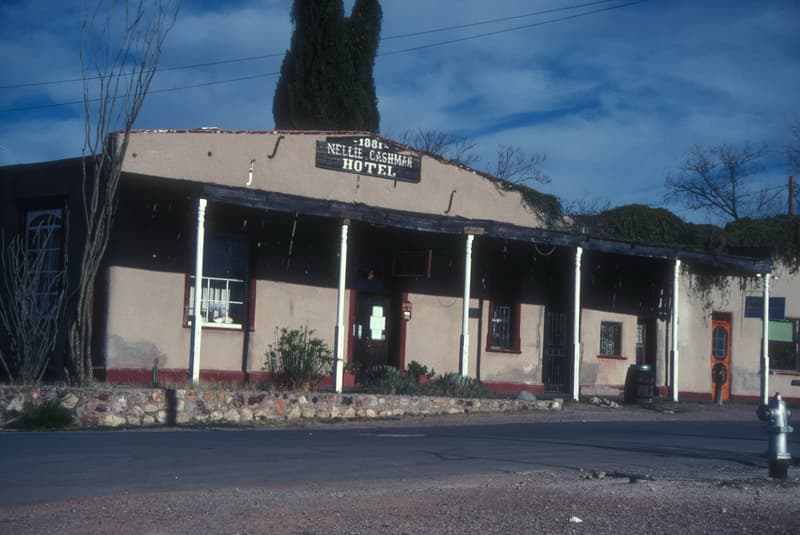
The photograph above is likely from the 1920s, when tourists were beginning to come to Tombstone. The automobile had people traveling and touring the country, looking for unusual places to discover.
The Model T was the rage: an assembly-line car, well built but affordable for many. New cross-country roads were being built, such as the Broadway of America, which came right through Tombstone, and the Mother Road, Route 66, through northern Arizona.
Interest grew in what this Old West town had to offer, especially once some local folks saw the opportunity, began developing the town for tourists and started restoring the historic areas.
The Russ House Fire
Mrs. Josephine Keagle owned the Russ House on January 20, 1959, when fire broke out and gutted the interior. Only the outer adobe walls survived.3 They still stand today, a tribute to the historic Russ House.
Two months later Mrs. Keagle sold the property to Floyd and Minnie Laughrin, who rebuilt and expanded it as a hotel.3 Over the next few decades it changed owners and purposes a few more times.
Our Years at Nellie Cashman’s Restaurant
We visited Tombstone for years before we were able to move here. Every time, we’d go to Nellie Cashman’s Restaurant for dinner. We loved the ambiance, the history and the connection to Nellie Cashman (I had always admired much about her). We liked the food and the menu too. It was our favorite place to eat in Tombstone at the time.
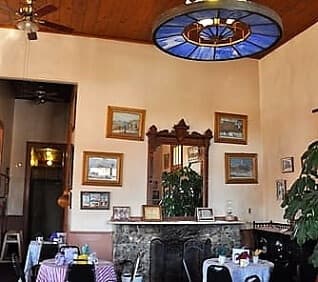
It was run by a German woman. For a while there was a piano in the corner, and an older gentleman often played classical and old-time music at dinnertime. It was a delightful touch, and a great reminder of Nellie’s days at the Russ House.
By the time we took the 2010 photo below, the piano player was gone. The dining room still reflected the history of the building and of Nellie Cashman herself, and it was still charming.
The Russ House Today
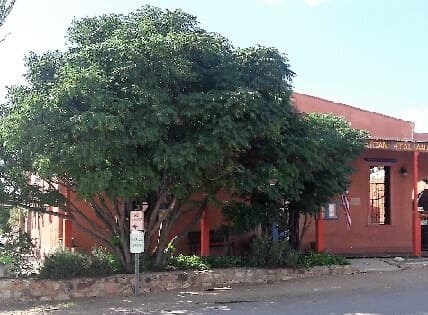
Remember, the outer walls are all that’s left of the historic Russ House. The arched patio entry on the right side still survives. Apart from the plaques on those walls, not much on this corner reminds you of its history.
After Nellie Cashman’s Restaurant, a local man who owns other businesses in town, among them Big Nose Kate’s and the Longhorn, bought the building. It became the Cafe Margarita, billed as “Mexican, Italian & a little American,” with cute but totally non-historic “Jail” and “Marshal” signs out front. Word through the grapevine was that the prior owner wouldn’t include the rights to the Nellie Cashman name in the sale.
We ate there a few times. The food was fine, neither great nor bad, and the service ranged from okay to pretty good. Once, on a packed Helldorado Days weekend, we waited well past the time we were quoted, watched at least three other groups seated ahead of us, and got a rude reply when we complained. We left and went to the Crystal Palace, which was just as busy but seated us quickly and treated us much better. We were disappointed in that change for the historic Russ House.
Today the Russ House is a lodging house again, as it was in 1880. It runs as a small bed and breakfast with five standard rooms and a master suite, and breakfast is served at the Longhorn Restaurant on Allen Street. See the Russ House website for rooms and booking. For dinner, our Mexican food pick is the Depot on Allen Street, and our Tombstone restaurants guide covers the rest.
References
1 Underhill, L.E. (2012). Tombstone, Arizona hotels and boarding houses, 1879 – 1882. Gilbert AZ: Roan Horse Press.
2 Dungan, M. (2011) How the Irish won the west. New York: Skyhorse Publishing.
3 Bailey, L.R. (2004). Too tough to die: The rise, fall, and resurrection of a silver camp; 1878 to 1990. Tucson AZ: Westernlore Press.
No comments yet